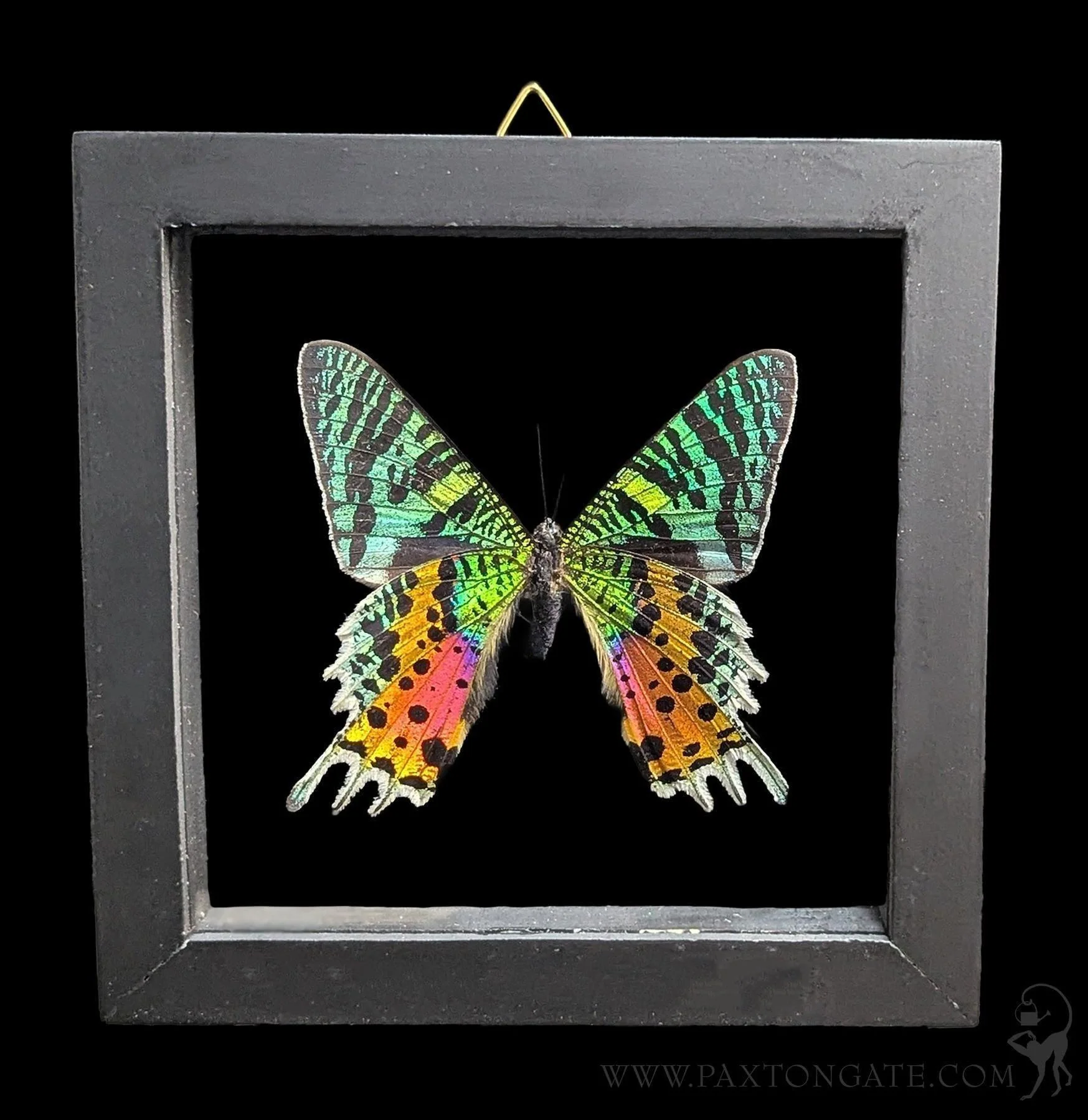
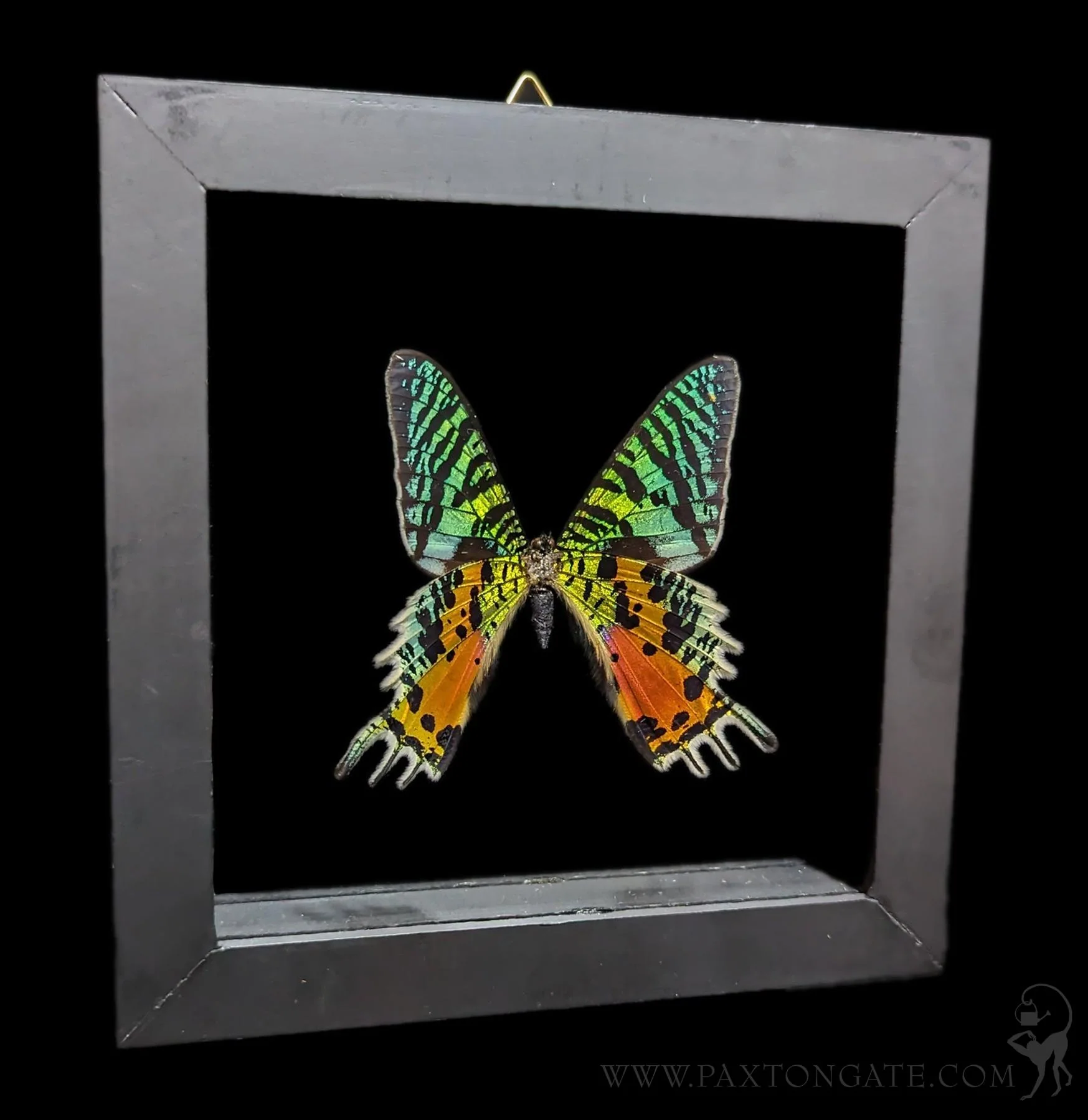
Double Glass Framed Sunset Moth
The sunset moth, or Chrysiridia rhipheus, is basically proof that moths can be just as flashy as butterflies. It’s native to Madagascar and belongs to the Uraniidae family, but most people do a double take because it really does not look like your typical moth.
It has a wingspan of about 7 to 9 cm, and its wings are covered in bright greens, blues, reds, and yellows. What makes it even cooler is that those colors are not from pigments. They come from the tiny structure of the wing scales, which bend and reflect light in a way that creates that shiny, iridescent look. It’s the same kind of effect you see in peacock feathers or opals.
Unlike most moths, this one flies during the day. Because of its bright colors and daytime activity, it often gets mistaken for a butterfly. It feeds on nectar from flowers and even helps with pollination.
Its bright colors are not just for looks either. They can act as a warning to predators that it might be toxic, which is called aposematism. The shifting, iridescent colors can also make it harder for predators to track it while it is flying.
Original: $72.00
-70%$72.00
$21.60Product Information
Product Information
Shipping & Returns
Shipping & Returns
Description
The sunset moth, or Chrysiridia rhipheus, is basically proof that moths can be just as flashy as butterflies. It’s native to Madagascar and belongs to the Uraniidae family, but most people do a double take because it really does not look like your typical moth.
It has a wingspan of about 7 to 9 cm, and its wings are covered in bright greens, blues, reds, and yellows. What makes it even cooler is that those colors are not from pigments. They come from the tiny structure of the wing scales, which bend and reflect light in a way that creates that shiny, iridescent look. It’s the same kind of effect you see in peacock feathers or opals.
Unlike most moths, this one flies during the day. Because of its bright colors and daytime activity, it often gets mistaken for a butterfly. It feeds on nectar from flowers and even helps with pollination.
Its bright colors are not just for looks either. They can act as a warning to predators that it might be toxic, which is called aposematism. The shifting, iridescent colors can also make it harder for predators to track it while it is flying.