Vintage Medical Bleeding Bowl
Measures 12 1/4" x 9" x 3"
Back in ye olden days, when you had a headache, mystery pain, or a fever, you wouldn’t have reached for a bottle of aspirin. No, you would have done the sensible thing and bled yourself into a fancy bowl. Bloodletting wasn’t just a widely accepted treatment, it was the go-to remedy for many of the common ailments we run across in our daily lives. So common, in fact, that bleeding bowls were a familiar sight in most households. And if you needed one on hand to deal with that nagging toothache, why not make it decorative?
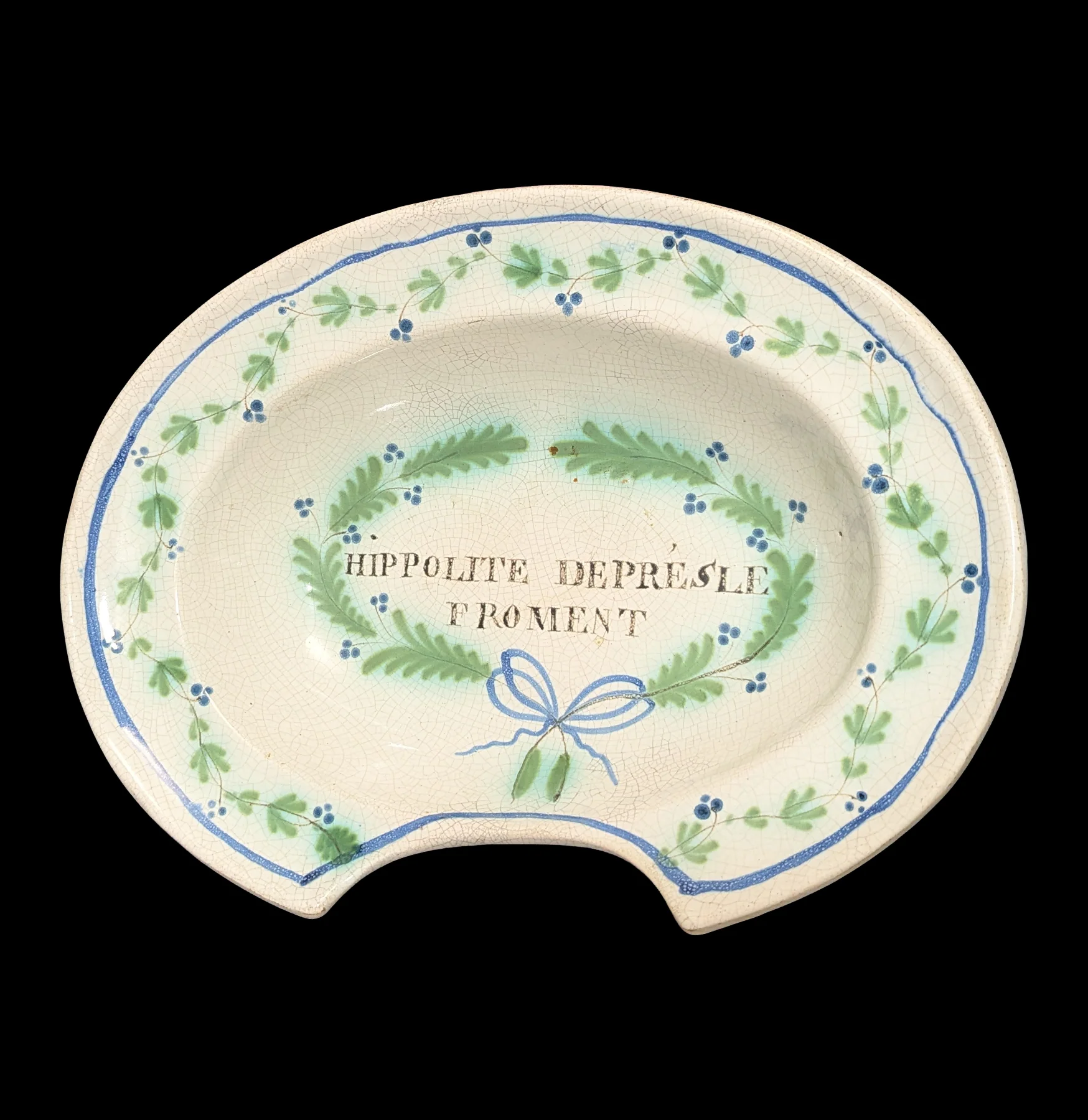
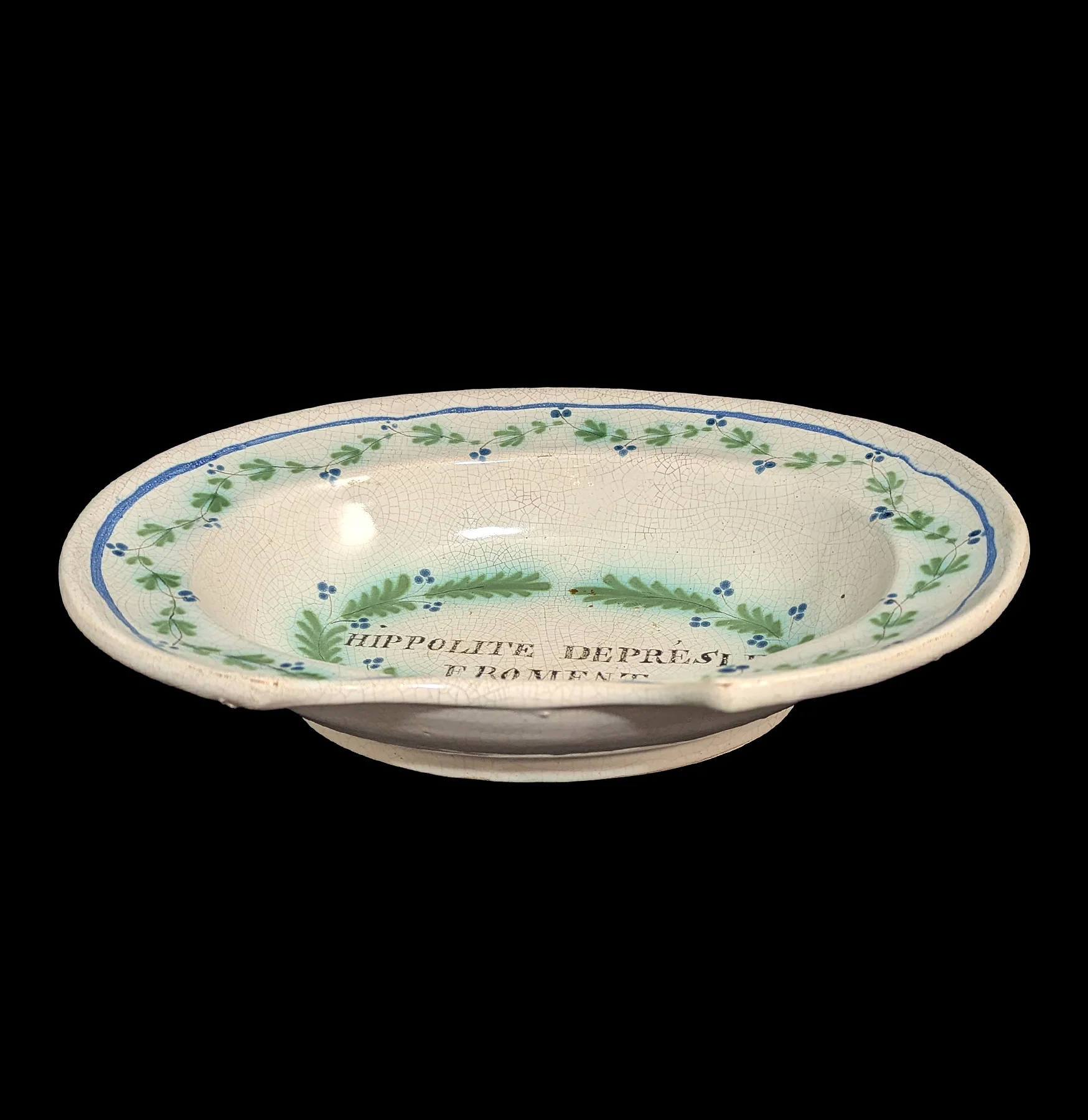
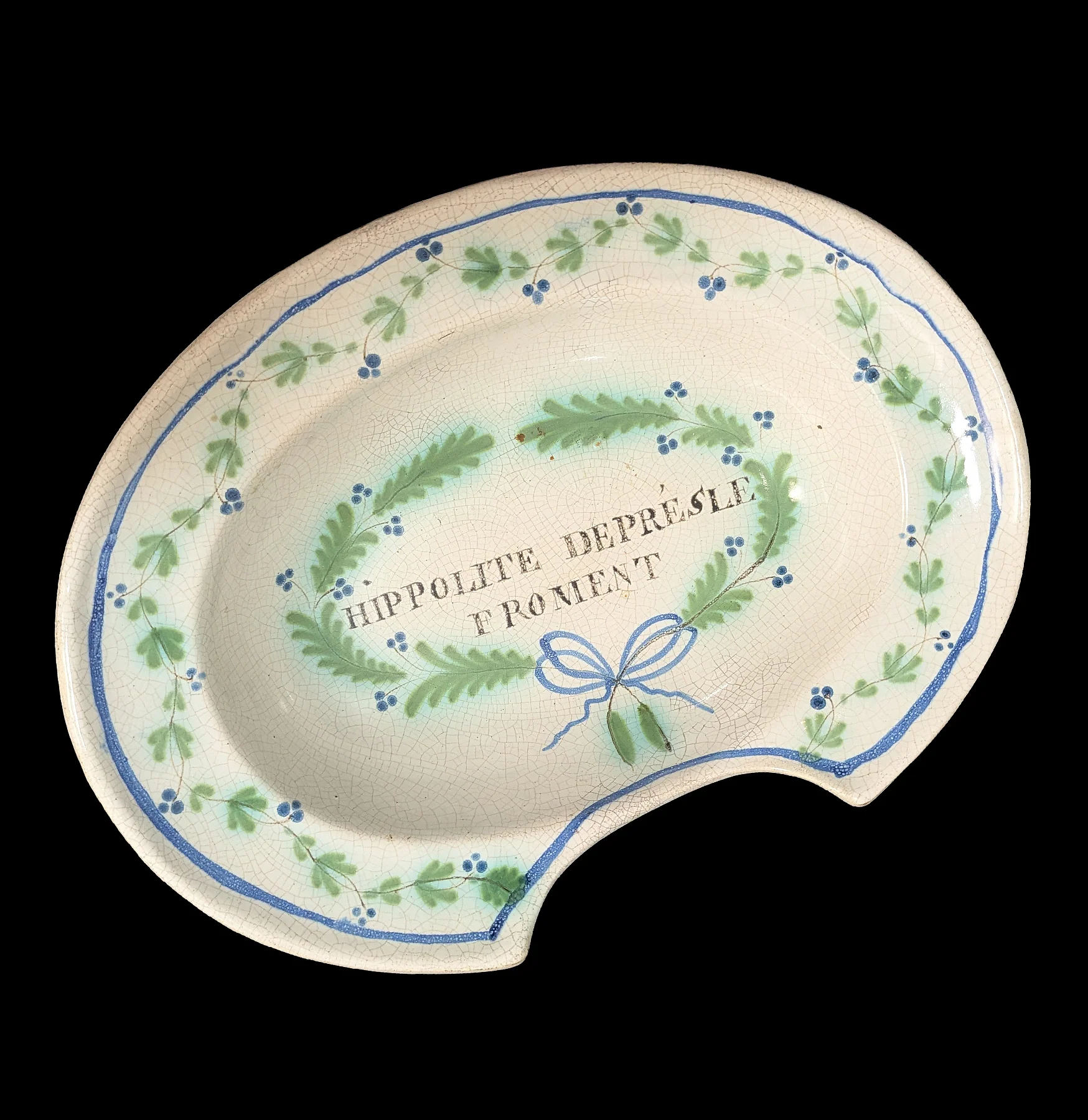
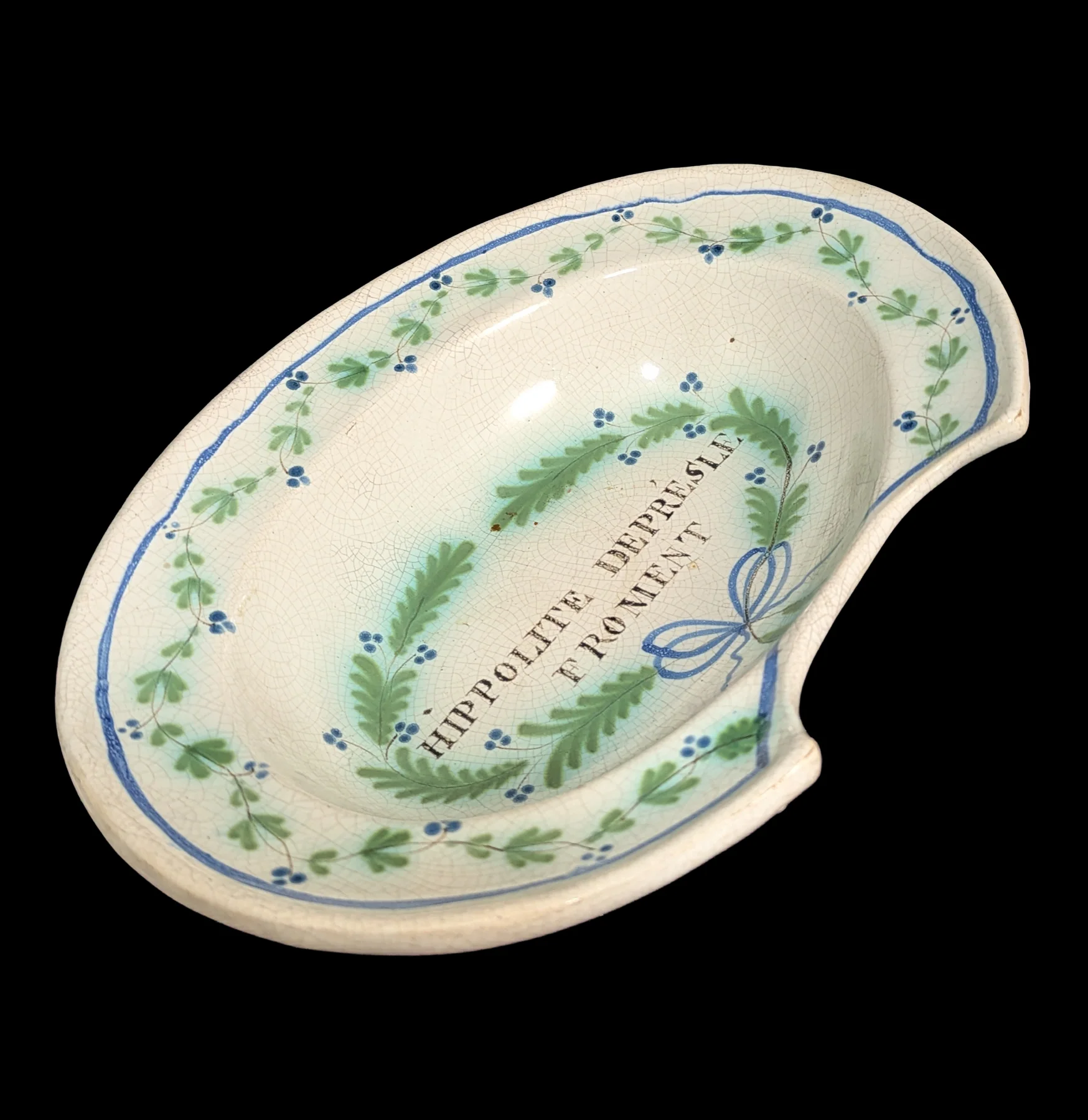
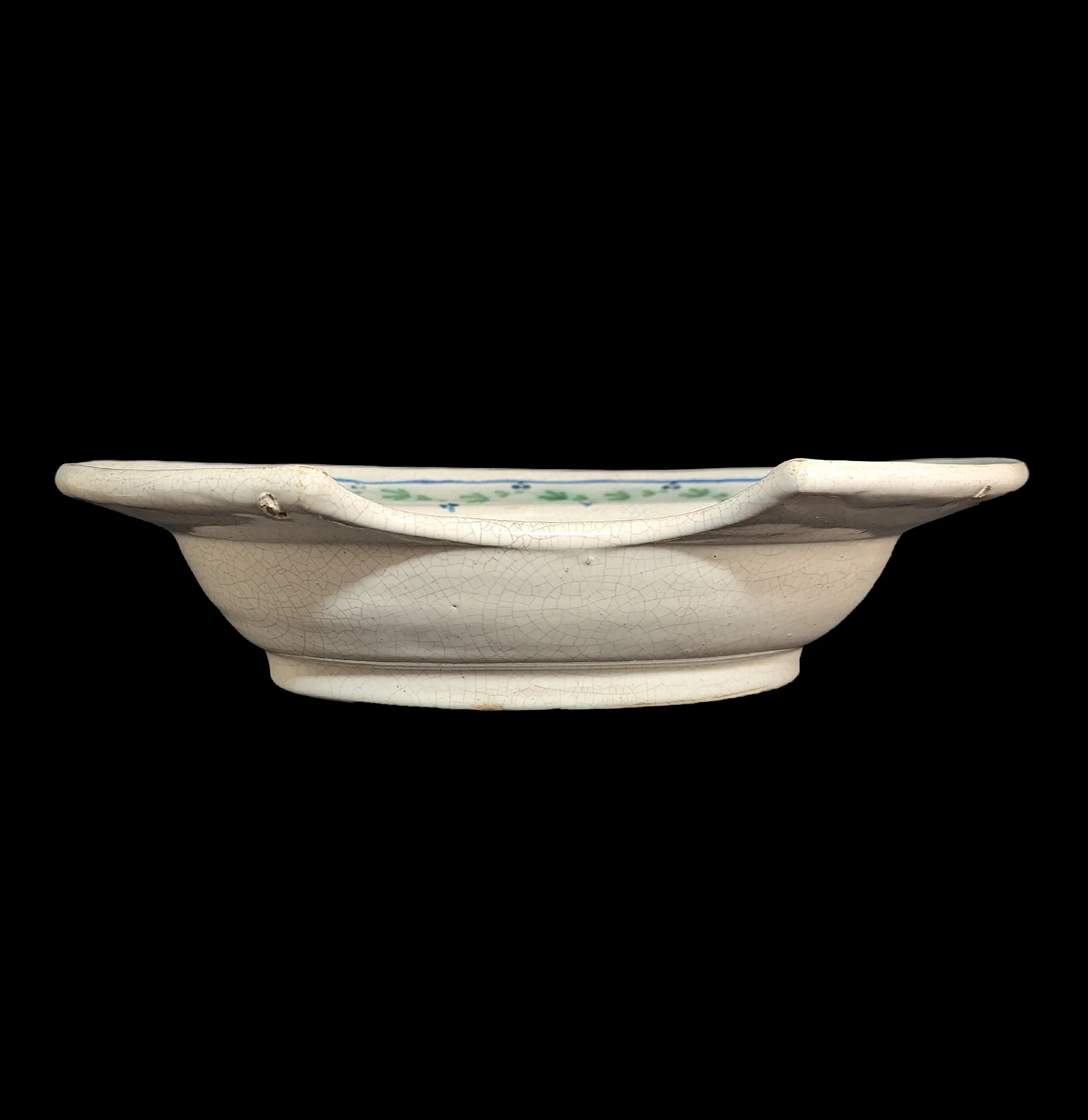
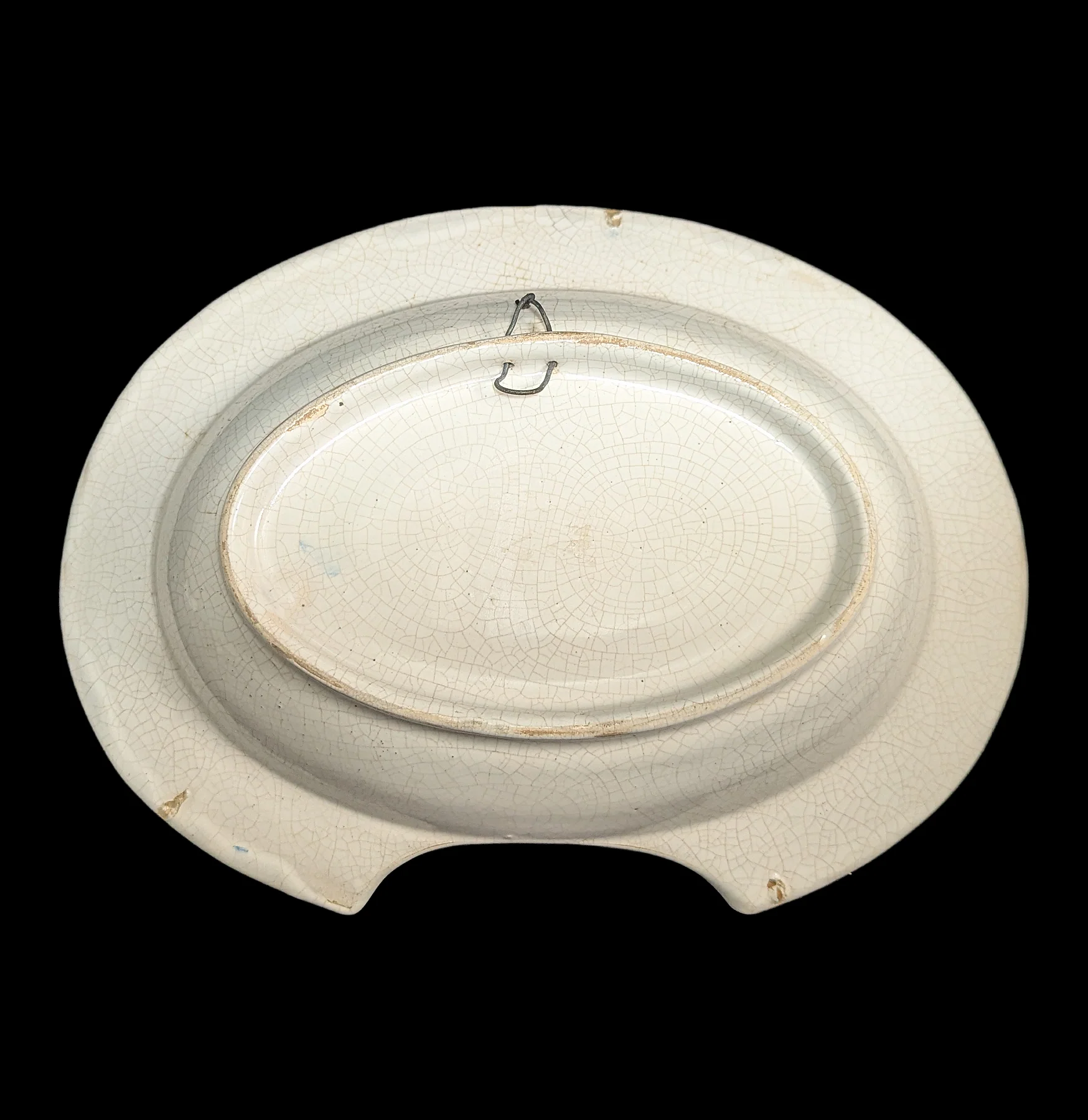
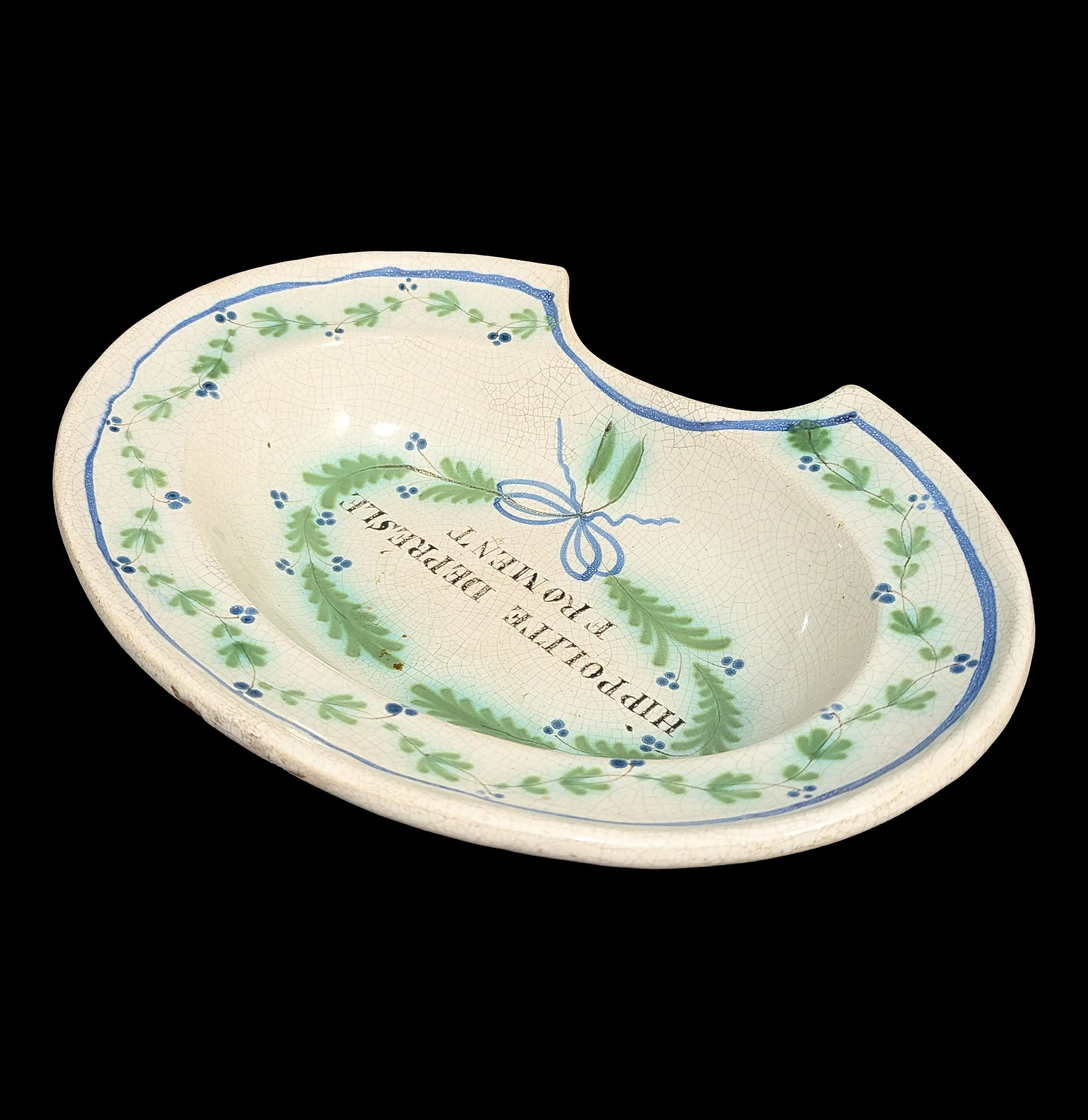
This late 1800s bleeding bowl was most likely an everyday household dish that doubled as a medical tool. Not only would it look super sick on their walls, it once collected the blood of under-the-weather patients. Don’t worry, it’s been cleaned. The bowl features the typical crazing often found in French pottery, along with a few glaze skips from its time in the kiln. It’s a neat artifact from a period when medicine and treatment often bordered on guesswork.
The wording on the bottom, Hippolite Depresle Froment, is actually a French name. It does not translate as a phrase, but its roots roughly mean “one who frees horses.” What that has to do with bleeding into a bowl is anyone’s guess, but it certainly adds another layer of intrigue to this curio.
So how did this bloody practice come to be? We can thank ancient Greek physicians like Hippocrates and later Galen for popularizing the concept of the four humors: blood, phlegm, yellow bile, and black bile. Health meant these fluids were in balance. Illness meant one was in excess. If someone had a fever, redness, or inflammation, doctors believed there was too much blood, and removing some would restore harmony. The practice remained extremely common into the 1800s. Even George Washington underwent bloodletting shortly before his death in 1799.
But here’s the real question: Did it work? Well, no. More often than not, it weakened patients and sometimes made them worse. From our modern medical perspective, that seems obvious. To physicians of the past, though, balancing the humors made perfect sense. Bloodletting is still used today, but only in rare and specific cases to treat conditions like hemochromatosis and polycythemia vera.
Regardless, this bowl stands as a fascinating curio from the past and a reminder that we should be grateful to live in the modern medical age.
Original: $310.00
-70%$310.00
$93.00Product Information
Product Information
Shipping & Returns
Shipping & Returns
Description
Measures 12 1/4" x 9" x 3"
Back in ye olden days, when you had a headache, mystery pain, or a fever, you wouldn’t have reached for a bottle of aspirin. No, you would have done the sensible thing and bled yourself into a fancy bowl. Bloodletting wasn’t just a widely accepted treatment, it was the go-to remedy for many of the common ailments we run across in our daily lives. So common, in fact, that bleeding bowls were a familiar sight in most households. And if you needed one on hand to deal with that nagging toothache, why not make it decorative?
This late 1800s bleeding bowl was most likely an everyday household dish that doubled as a medical tool. Not only would it look super sick on their walls, it once collected the blood of under-the-weather patients. Don’t worry, it’s been cleaned. The bowl features the typical crazing often found in French pottery, along with a few glaze skips from its time in the kiln. It’s a neat artifact from a period when medicine and treatment often bordered on guesswork.
The wording on the bottom, Hippolite Depresle Froment, is actually a French name. It does not translate as a phrase, but its roots roughly mean “one who frees horses.” What that has to do with bleeding into a bowl is anyone’s guess, but it certainly adds another layer of intrigue to this curio.
So how did this bloody practice come to be? We can thank ancient Greek physicians like Hippocrates and later Galen for popularizing the concept of the four humors: blood, phlegm, yellow bile, and black bile. Health meant these fluids were in balance. Illness meant one was in excess. If someone had a fever, redness, or inflammation, doctors believed there was too much blood, and removing some would restore harmony. The practice remained extremely common into the 1800s. Even George Washington underwent bloodletting shortly before his death in 1799.
But here’s the real question: Did it work? Well, no. More often than not, it weakened patients and sometimes made them worse. From our modern medical perspective, that seems obvious. To physicians of the past, though, balancing the humors made perfect sense. Bloodletting is still used today, but only in rare and specific cases to treat conditions like hemochromatosis and polycythemia vera.
Regardless, this bowl stands as a fascinating curio from the past and a reminder that we should be grateful to live in the modern medical age.