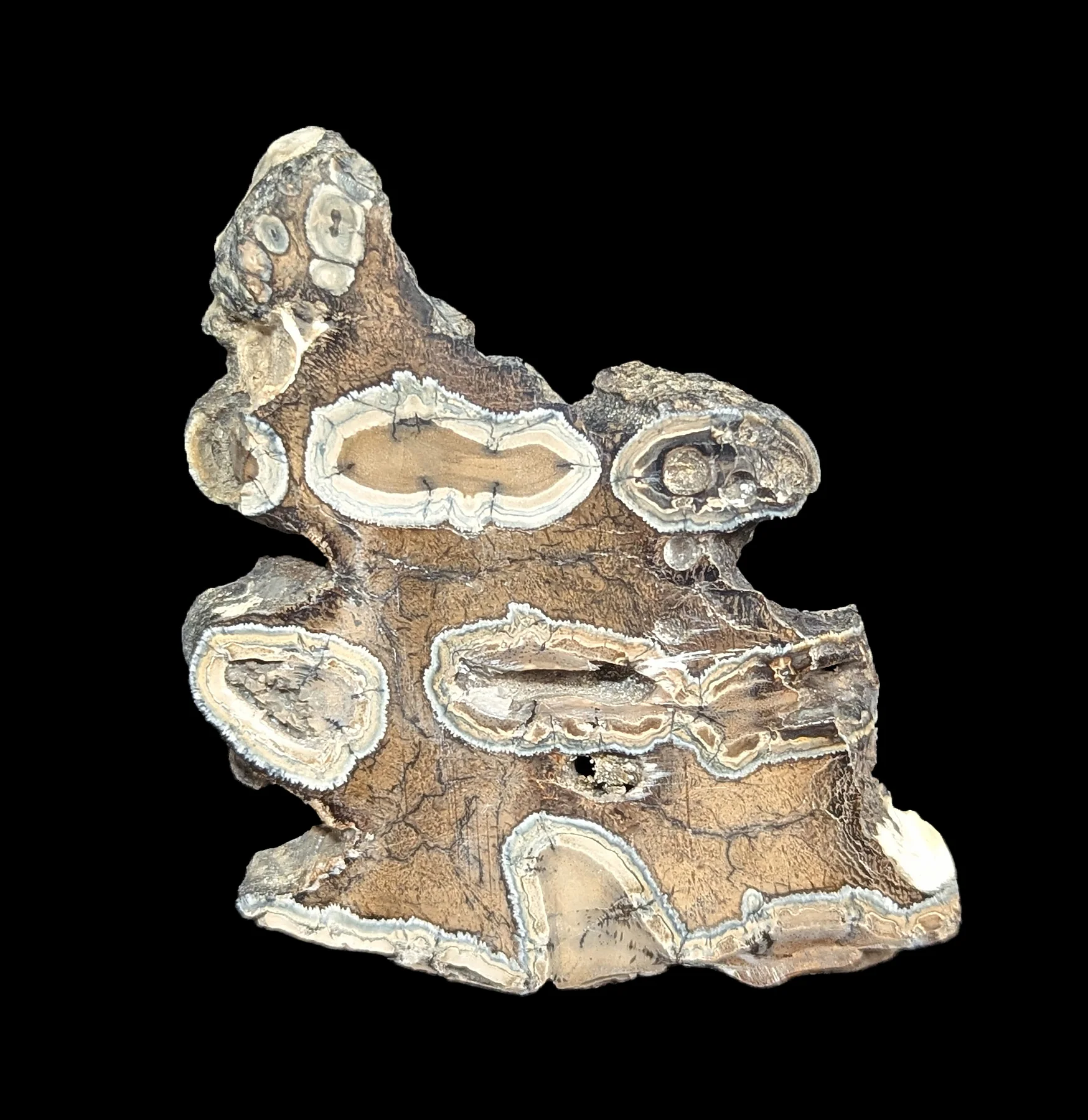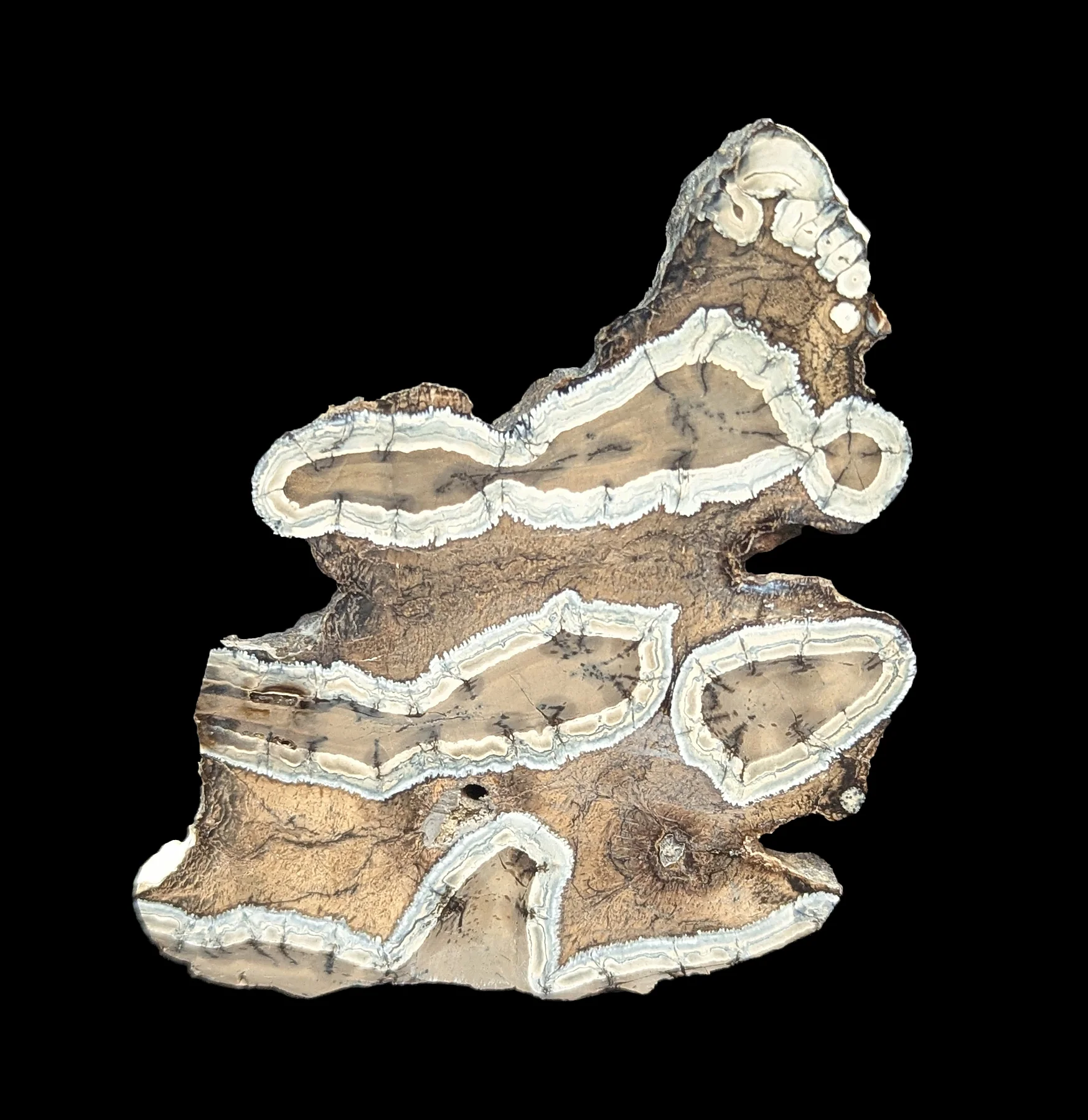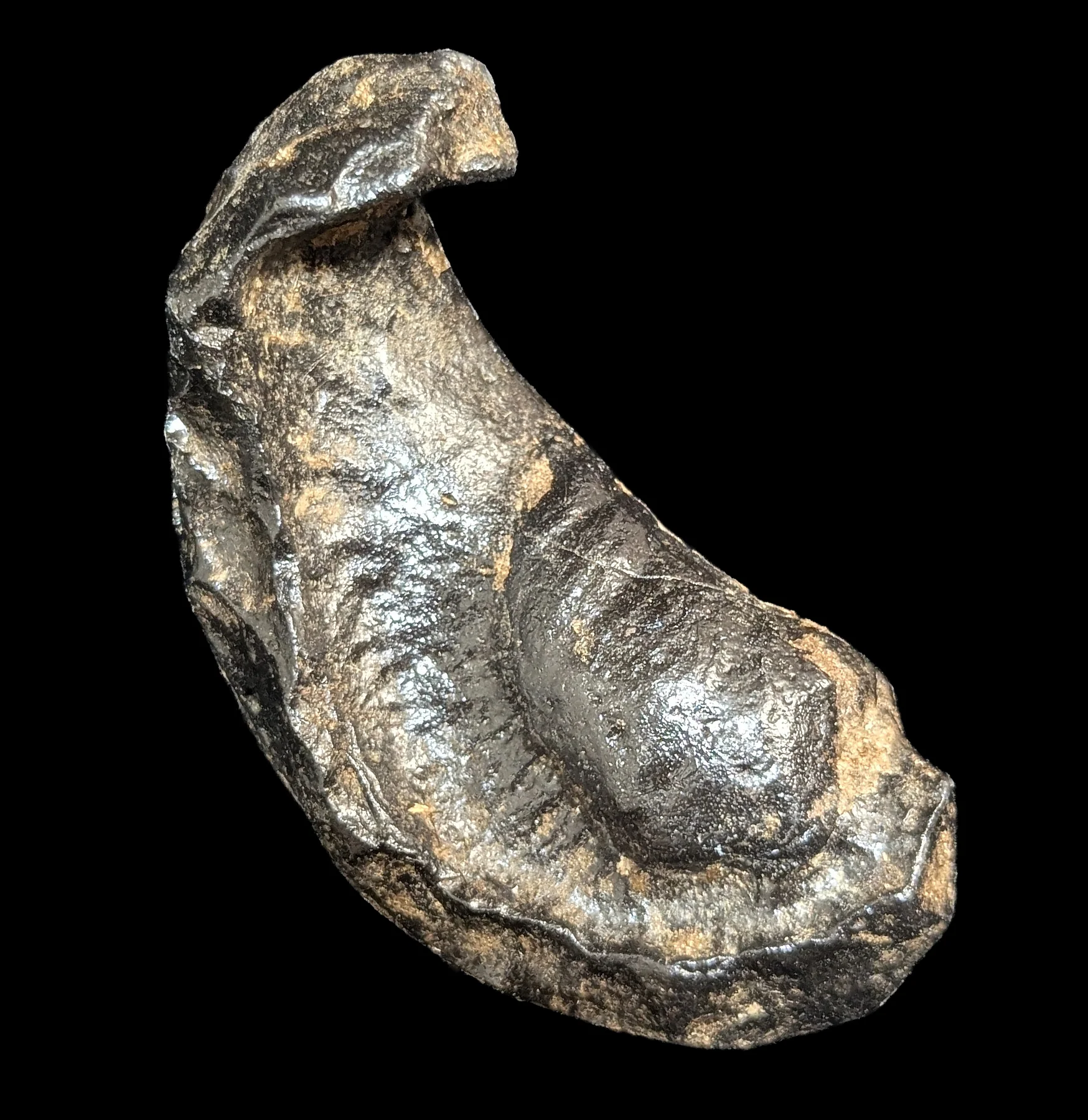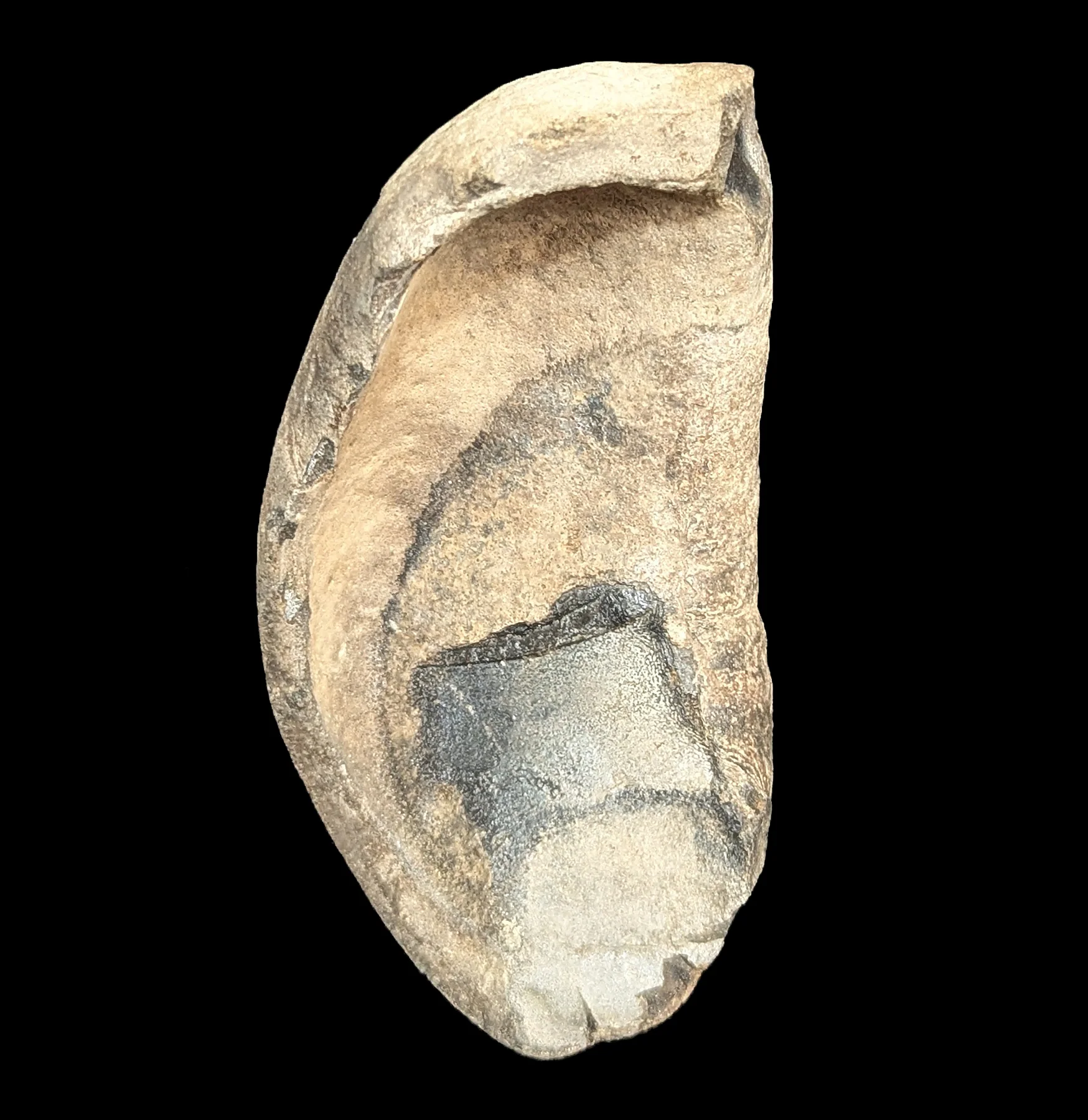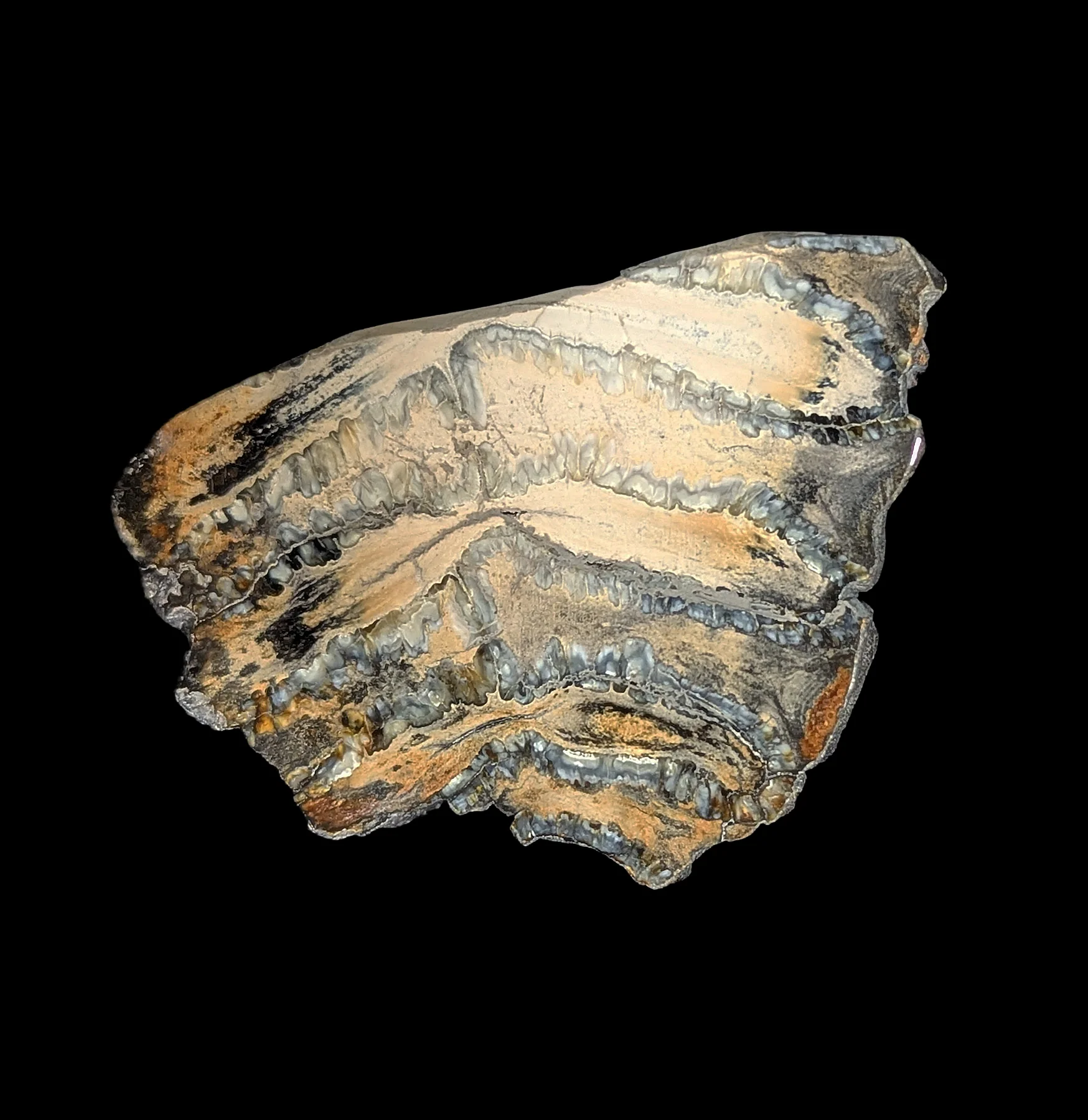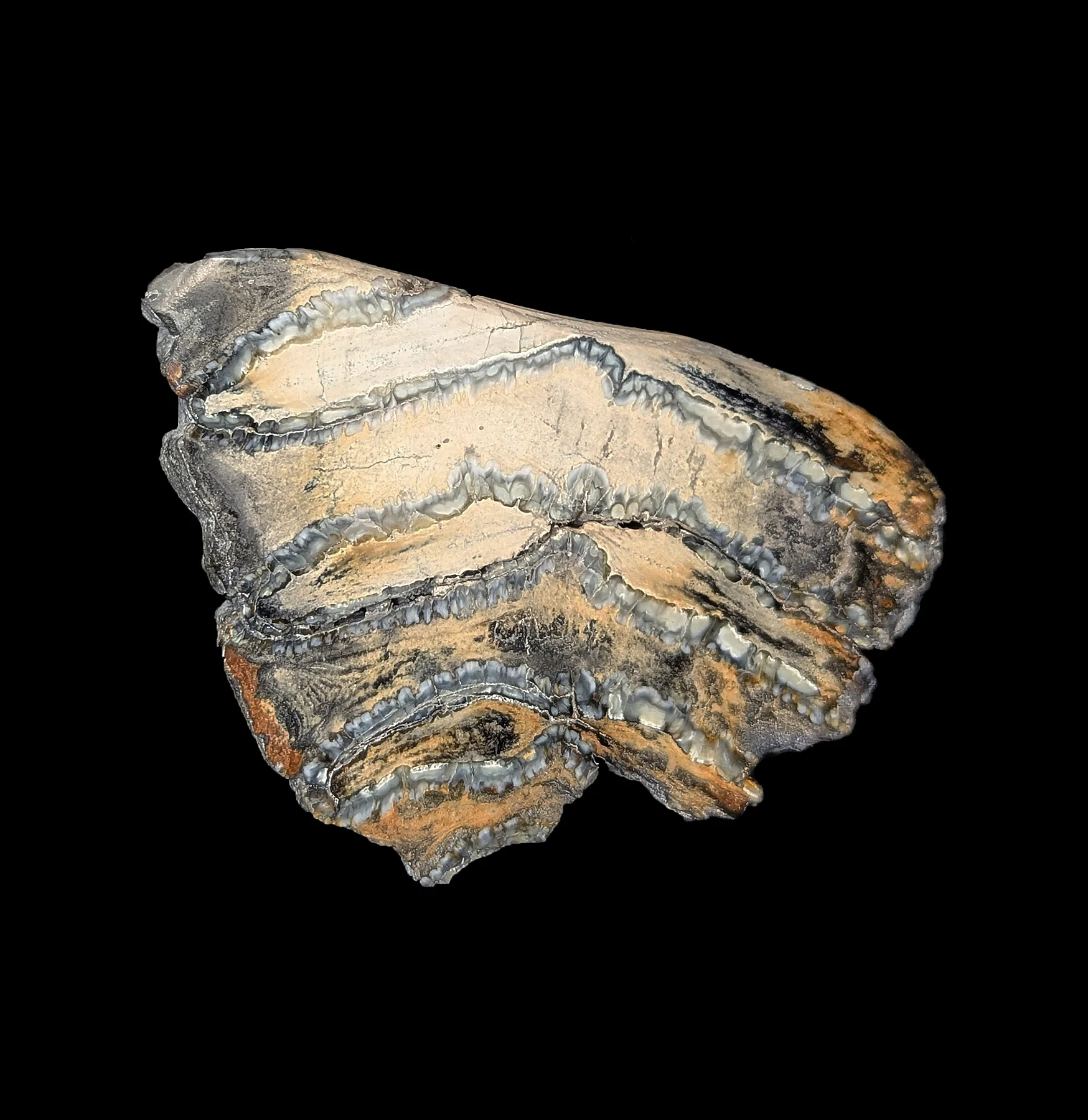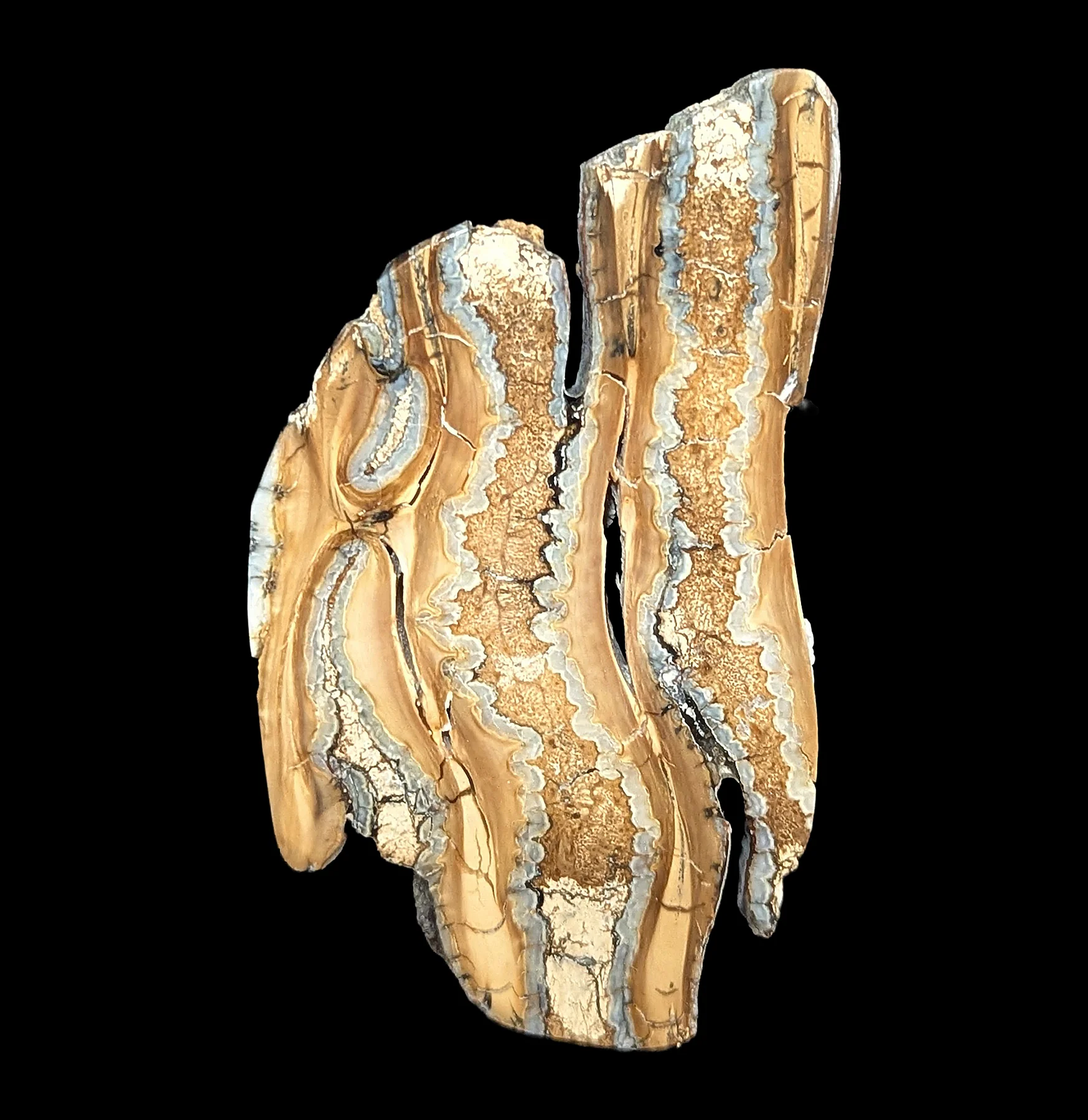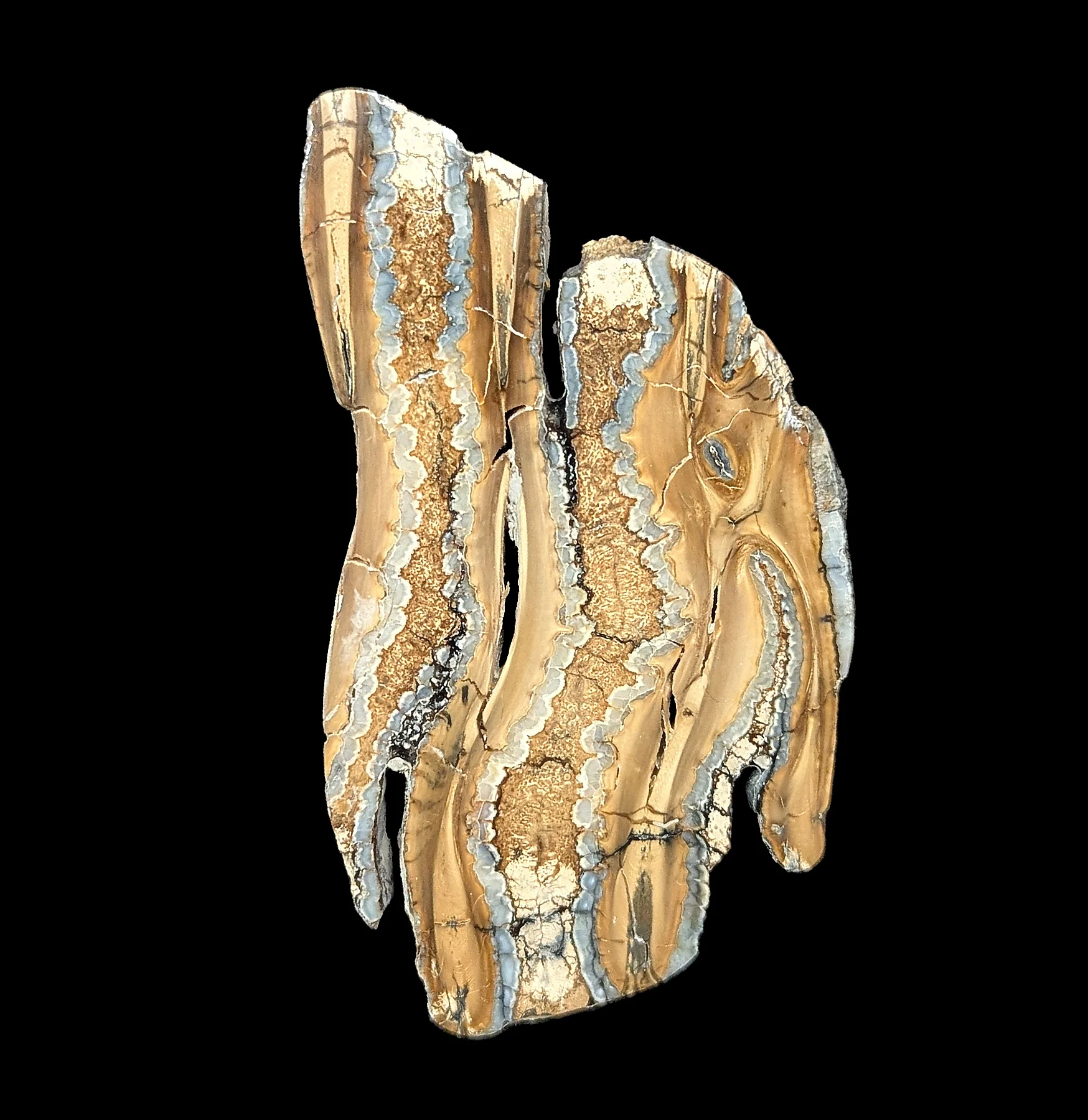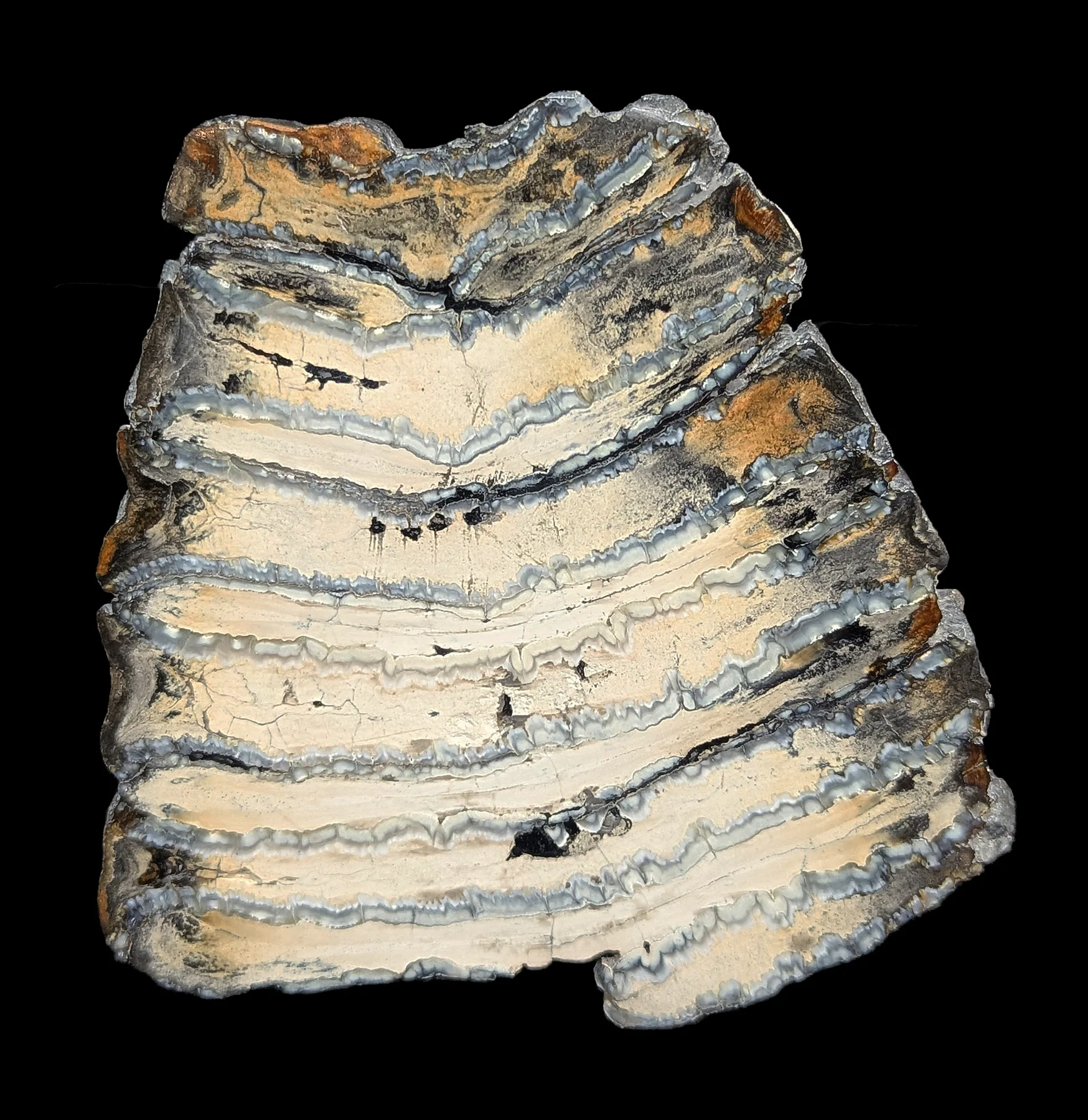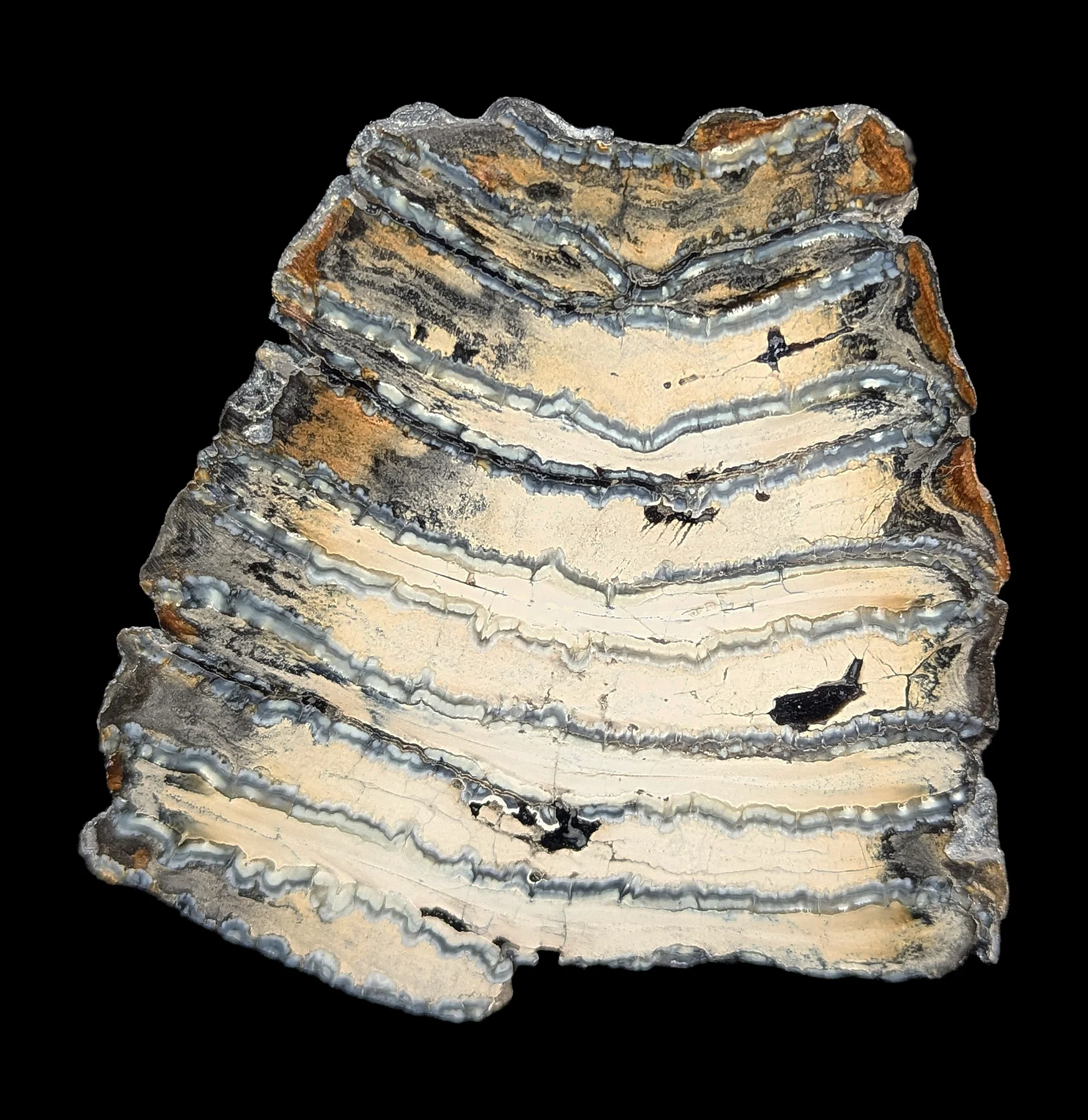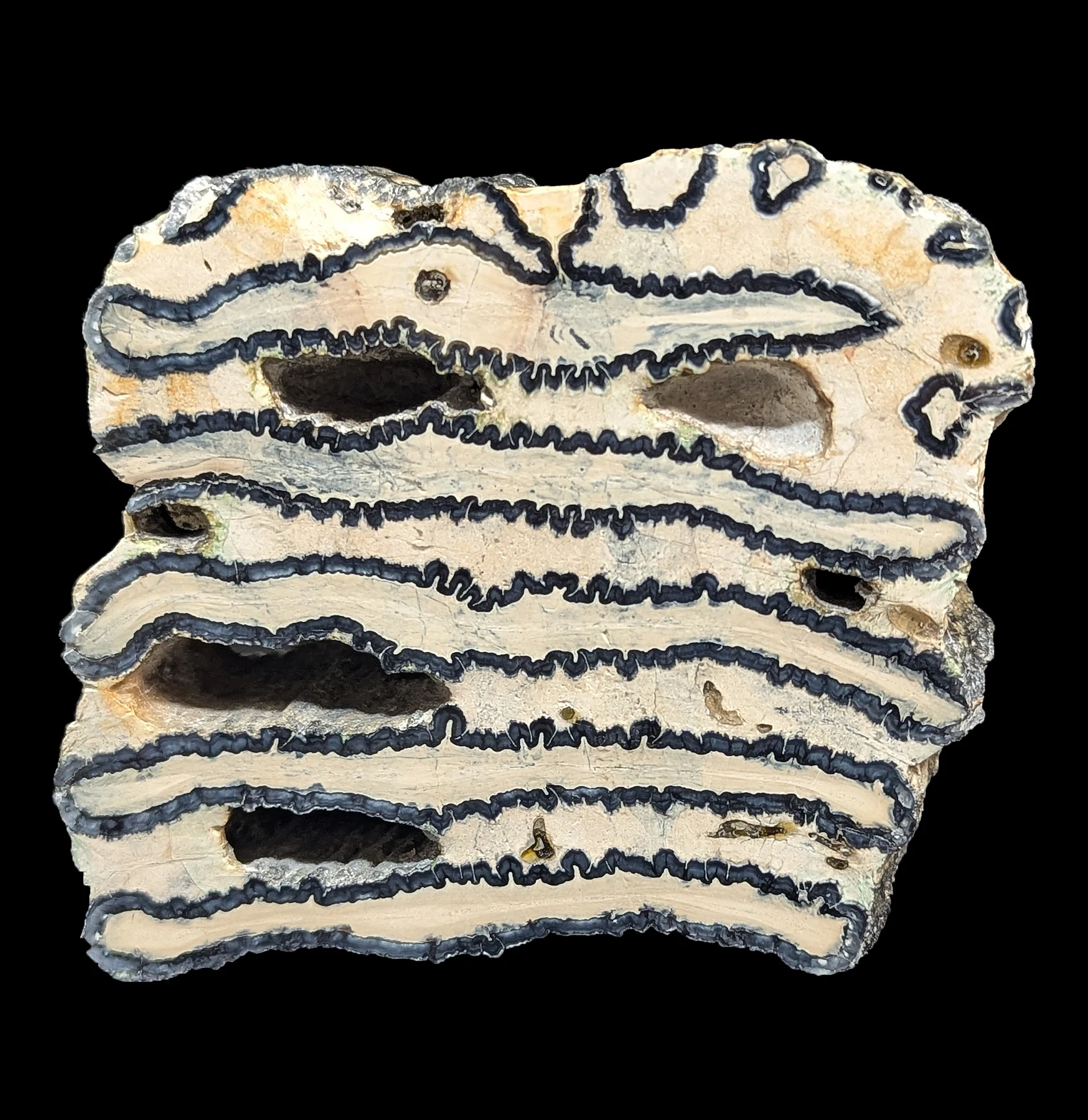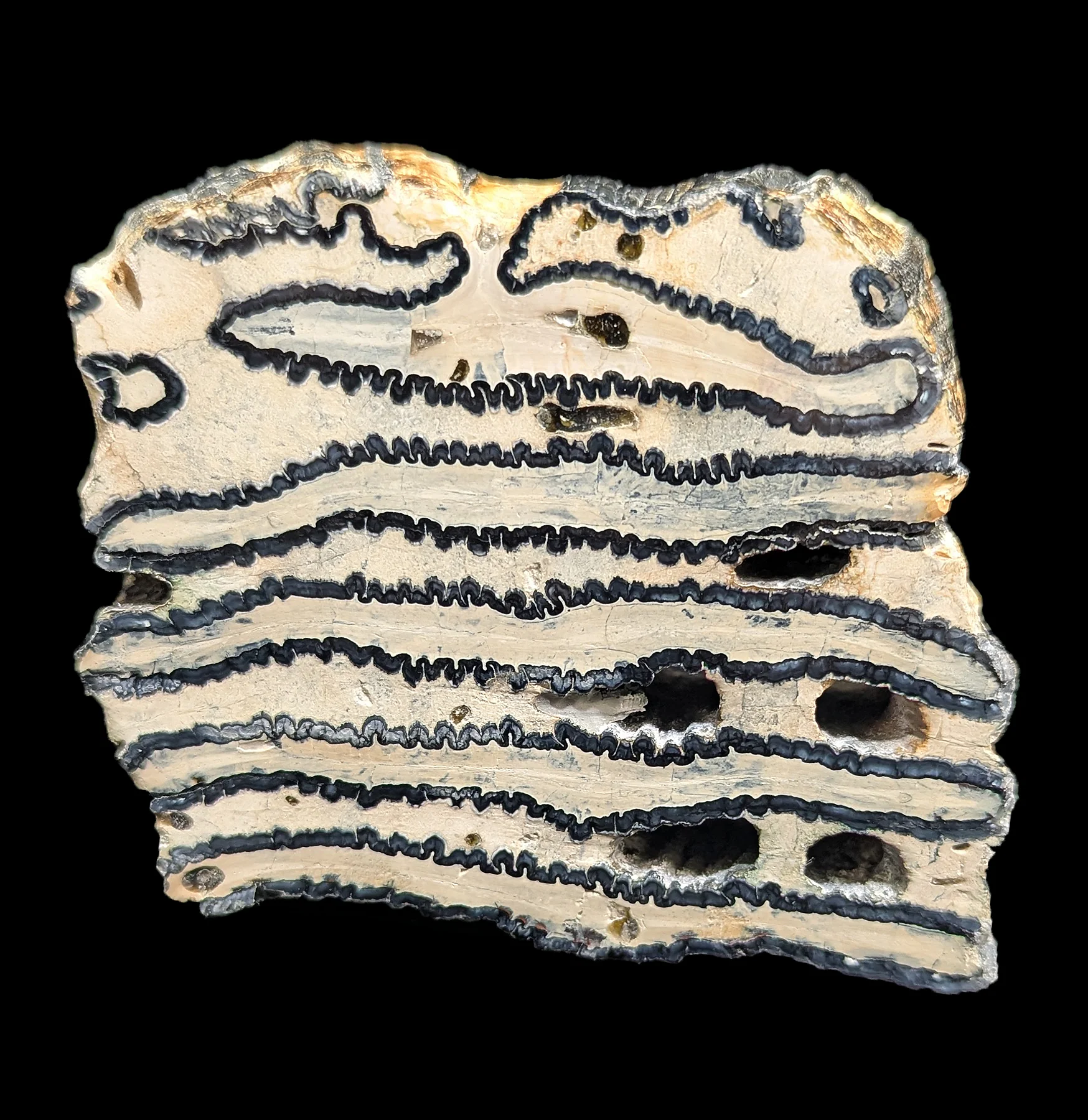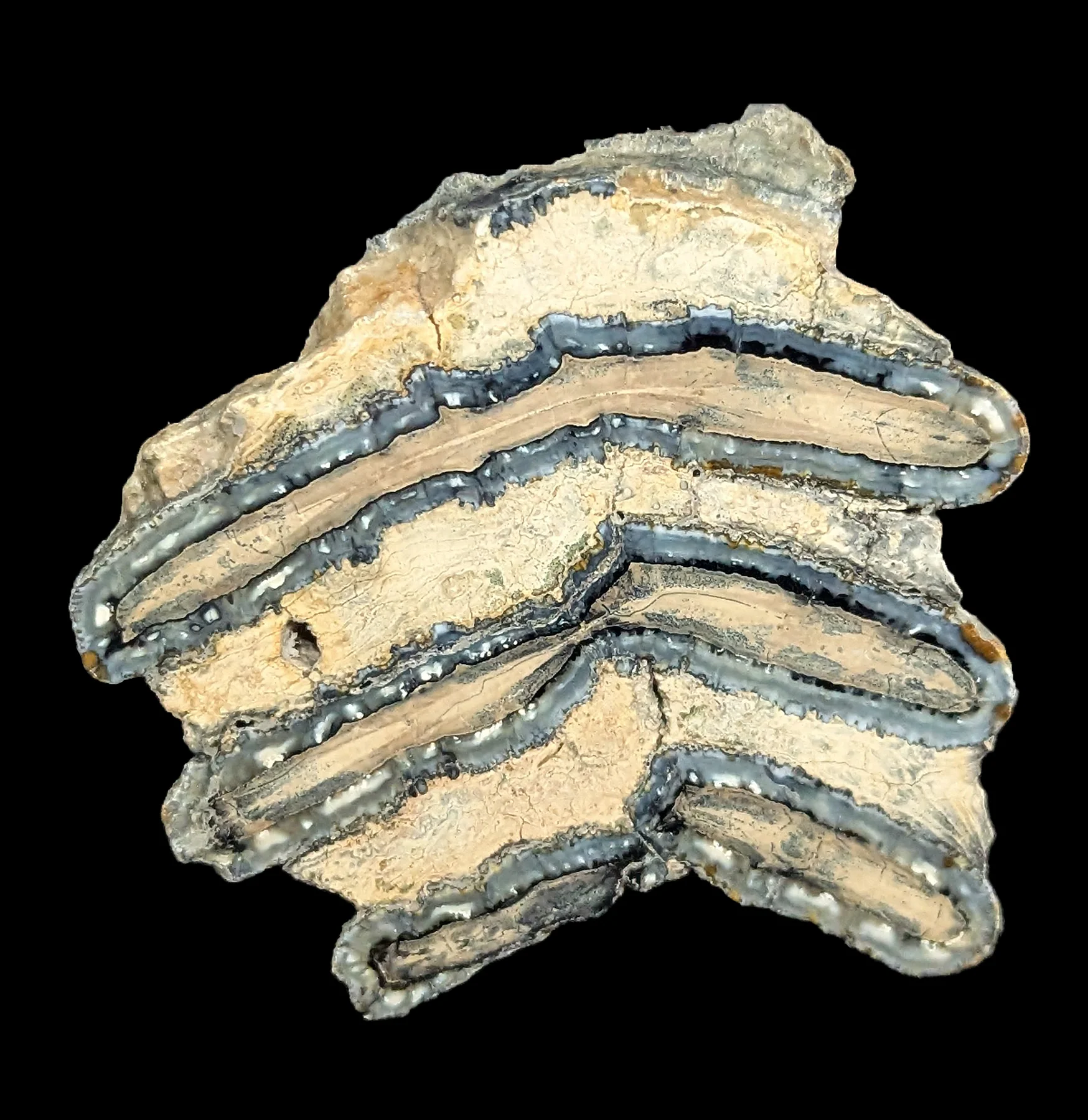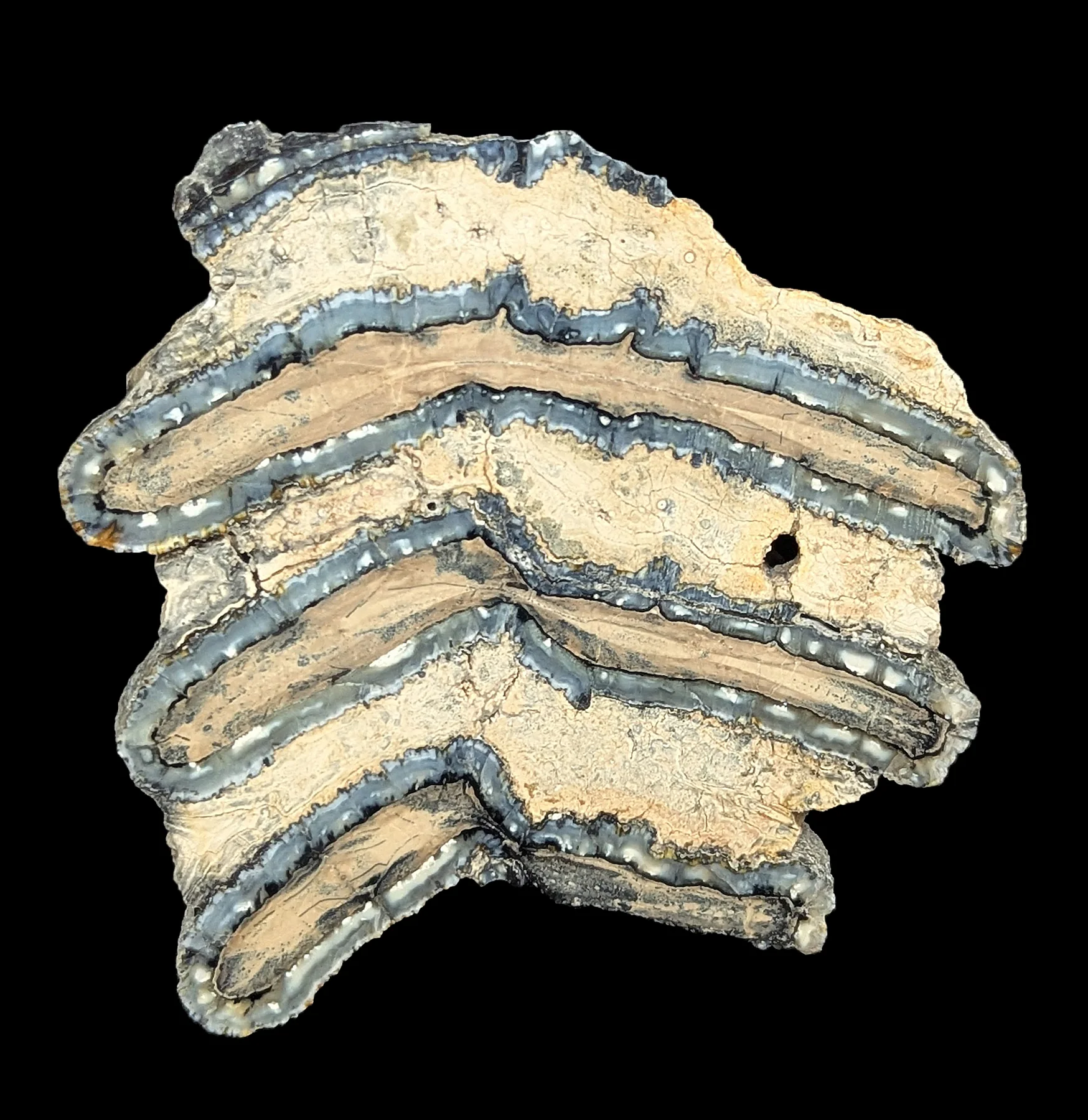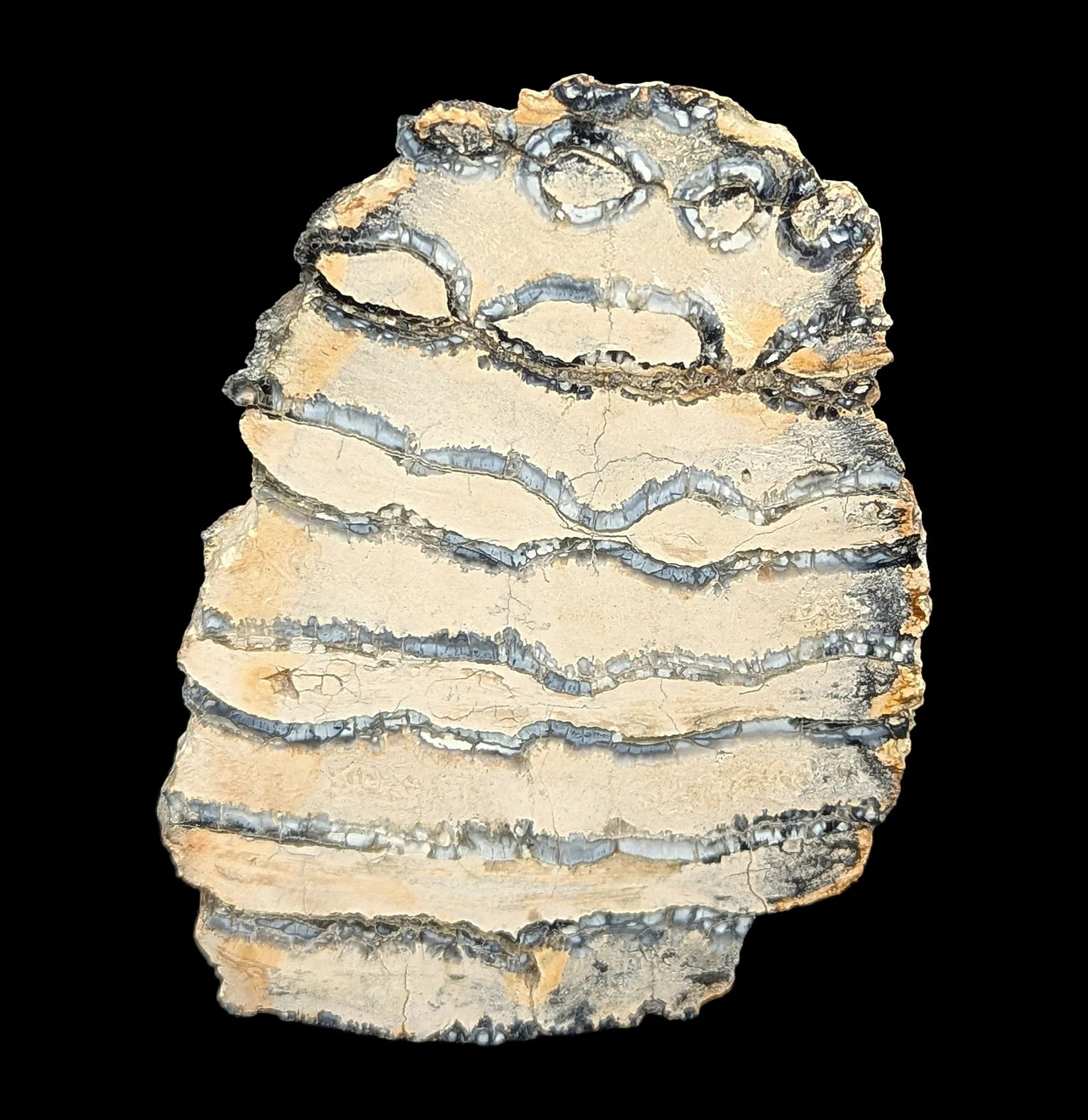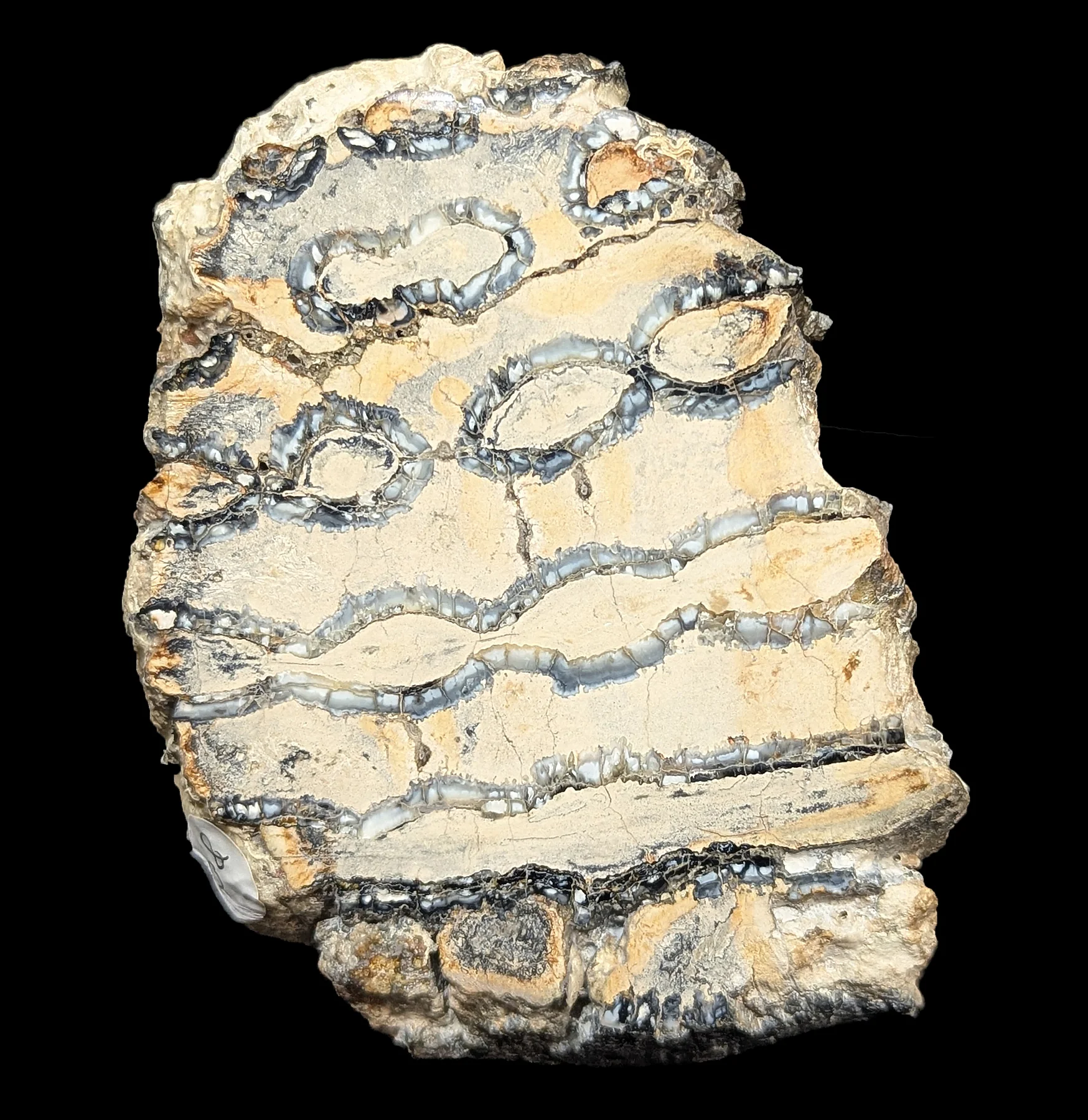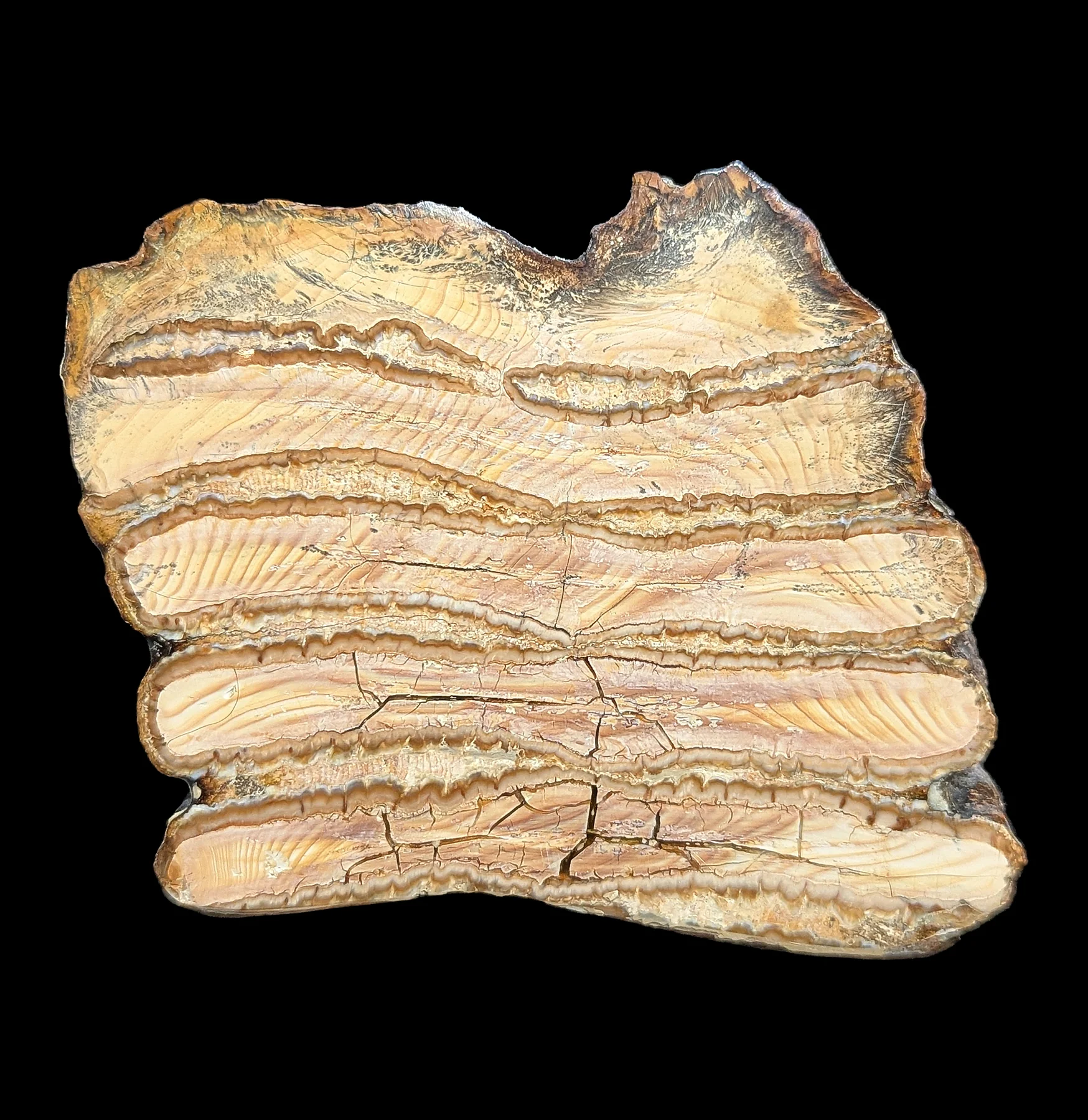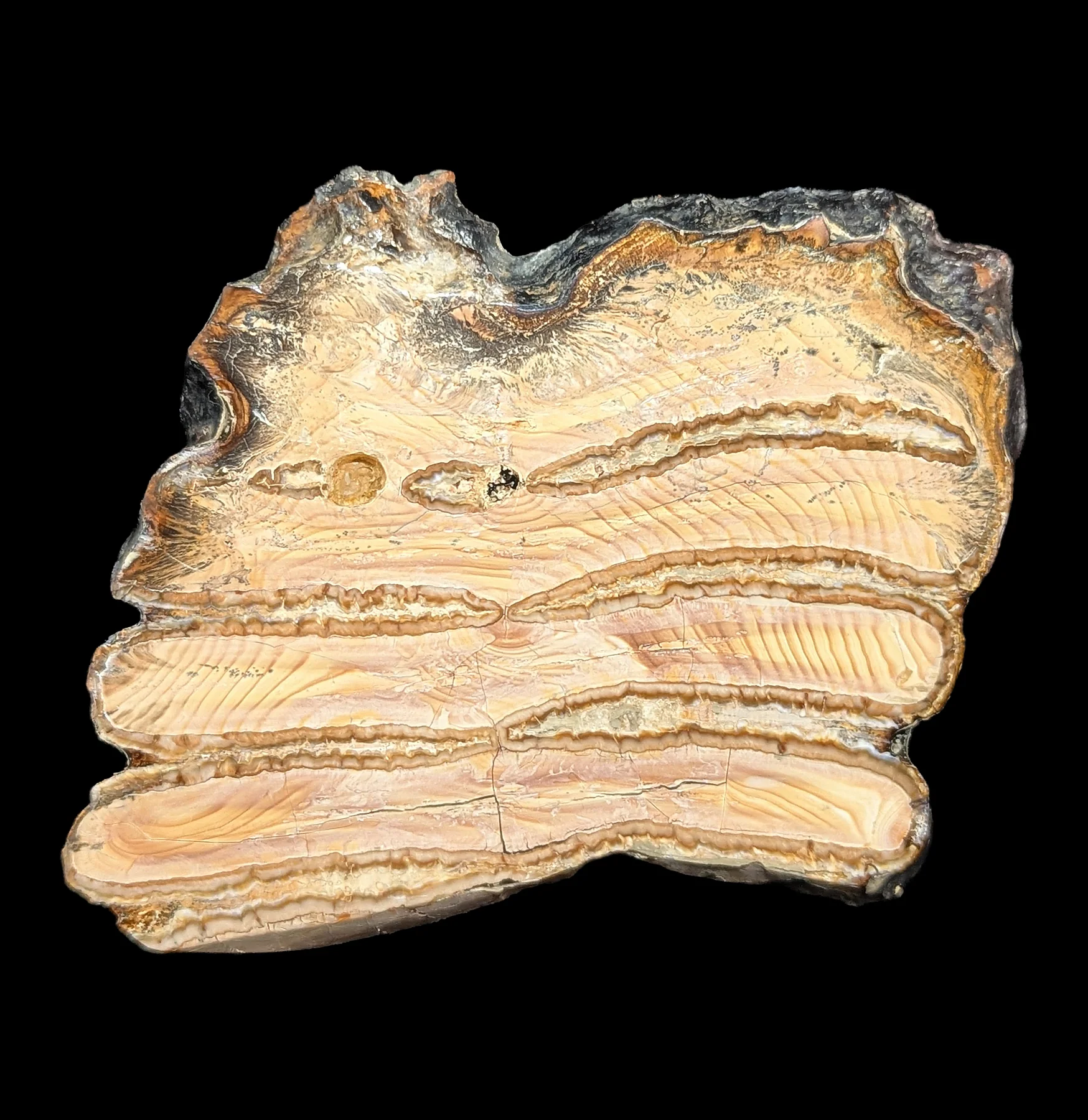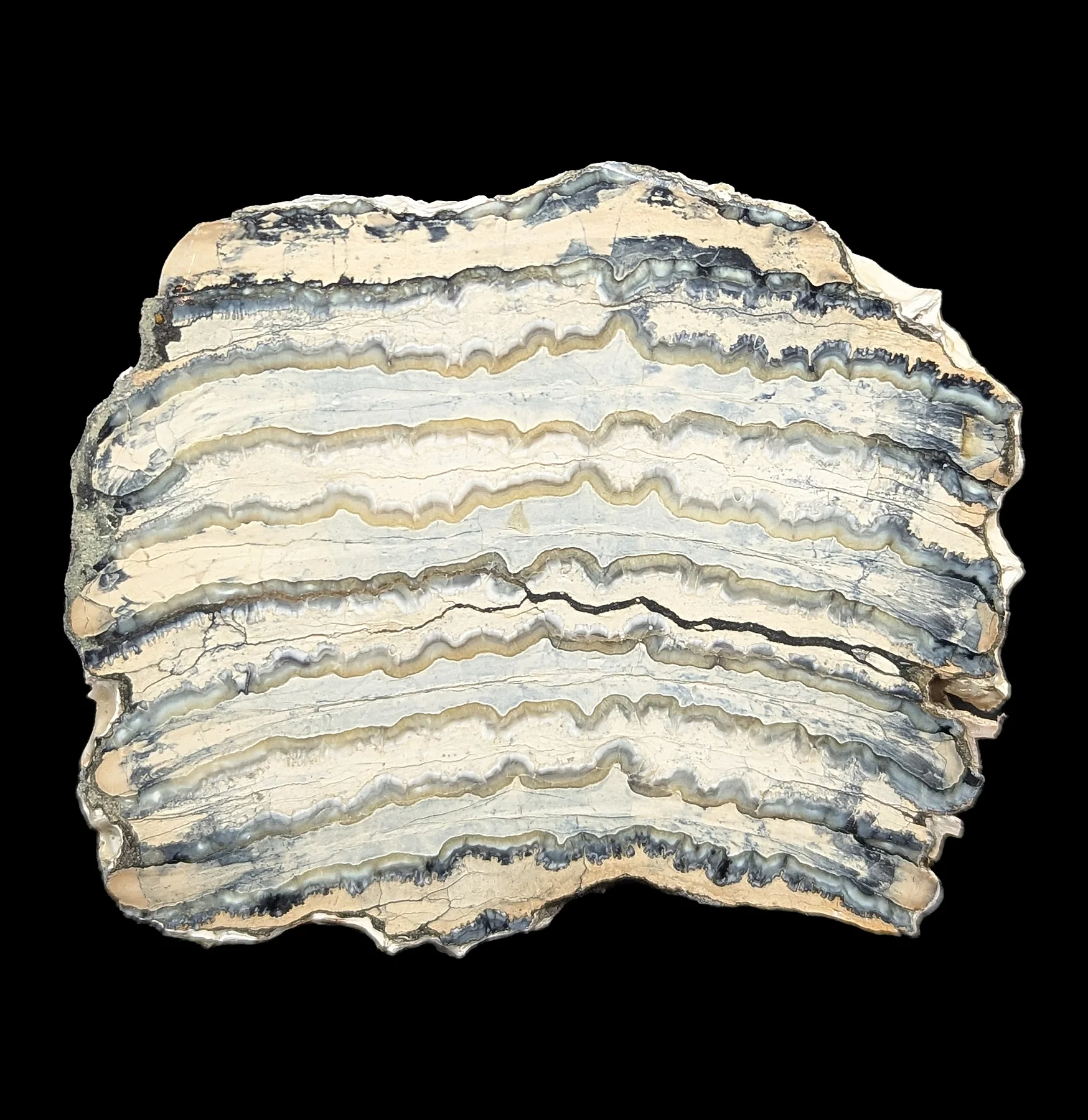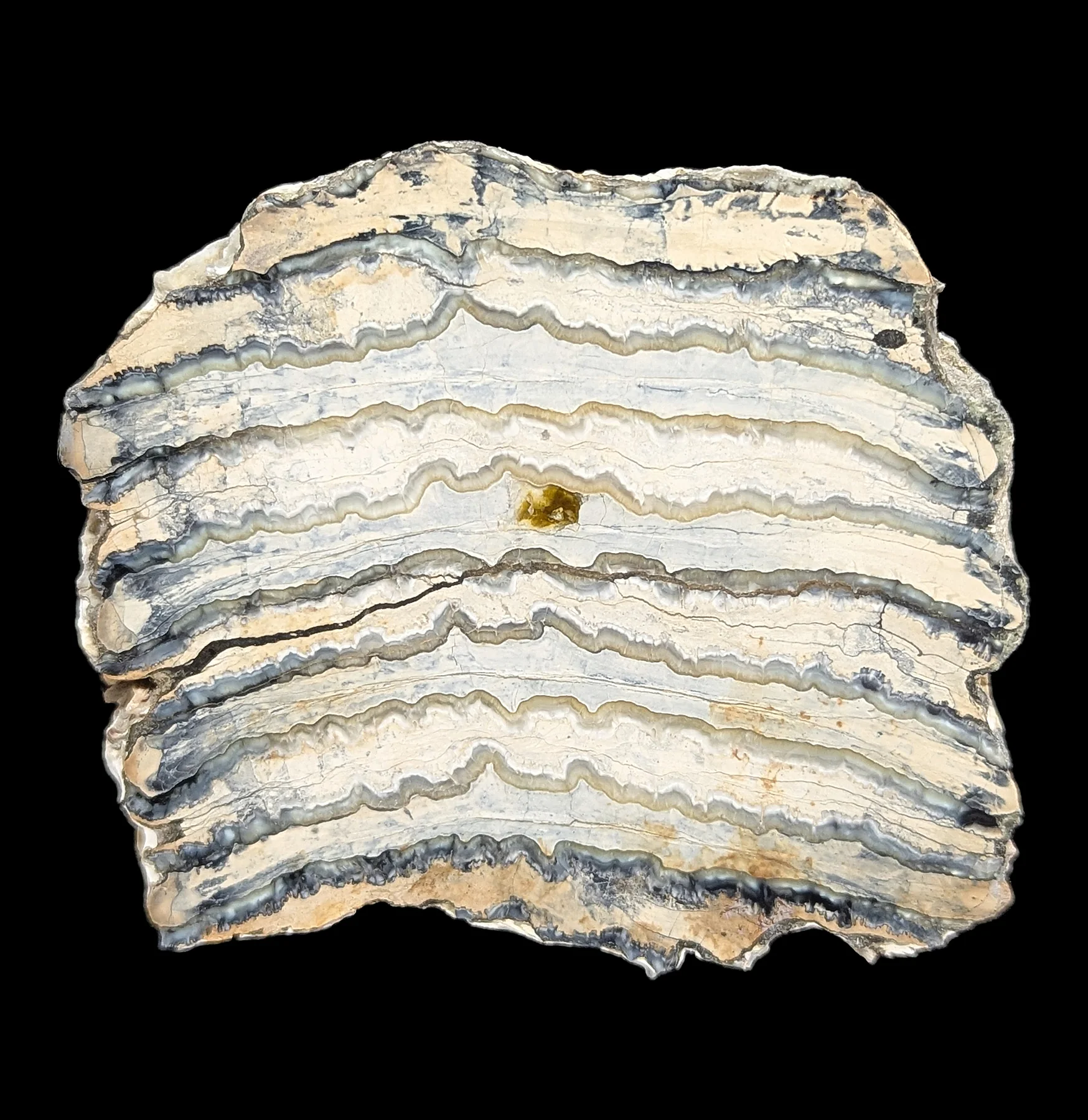
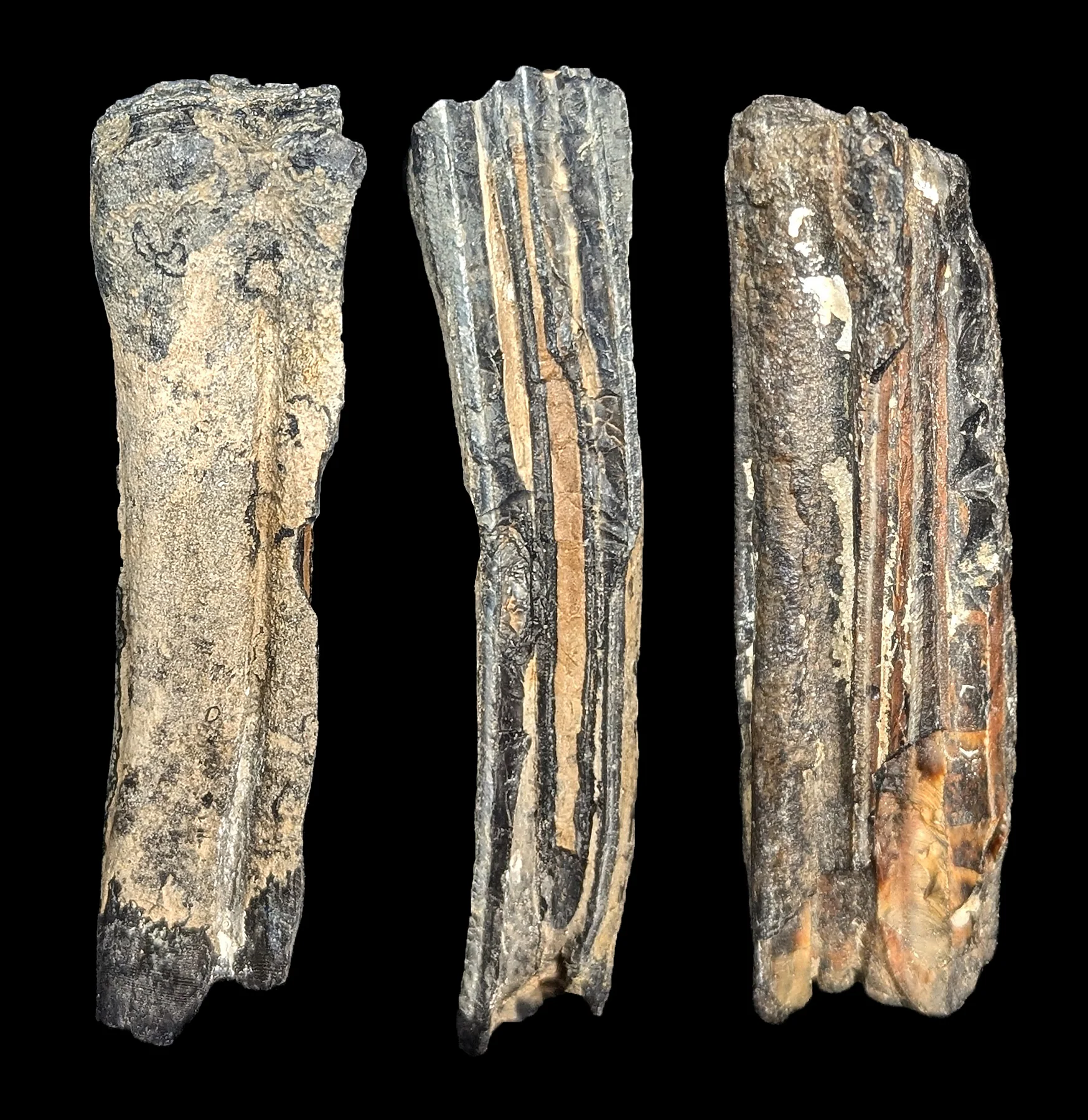
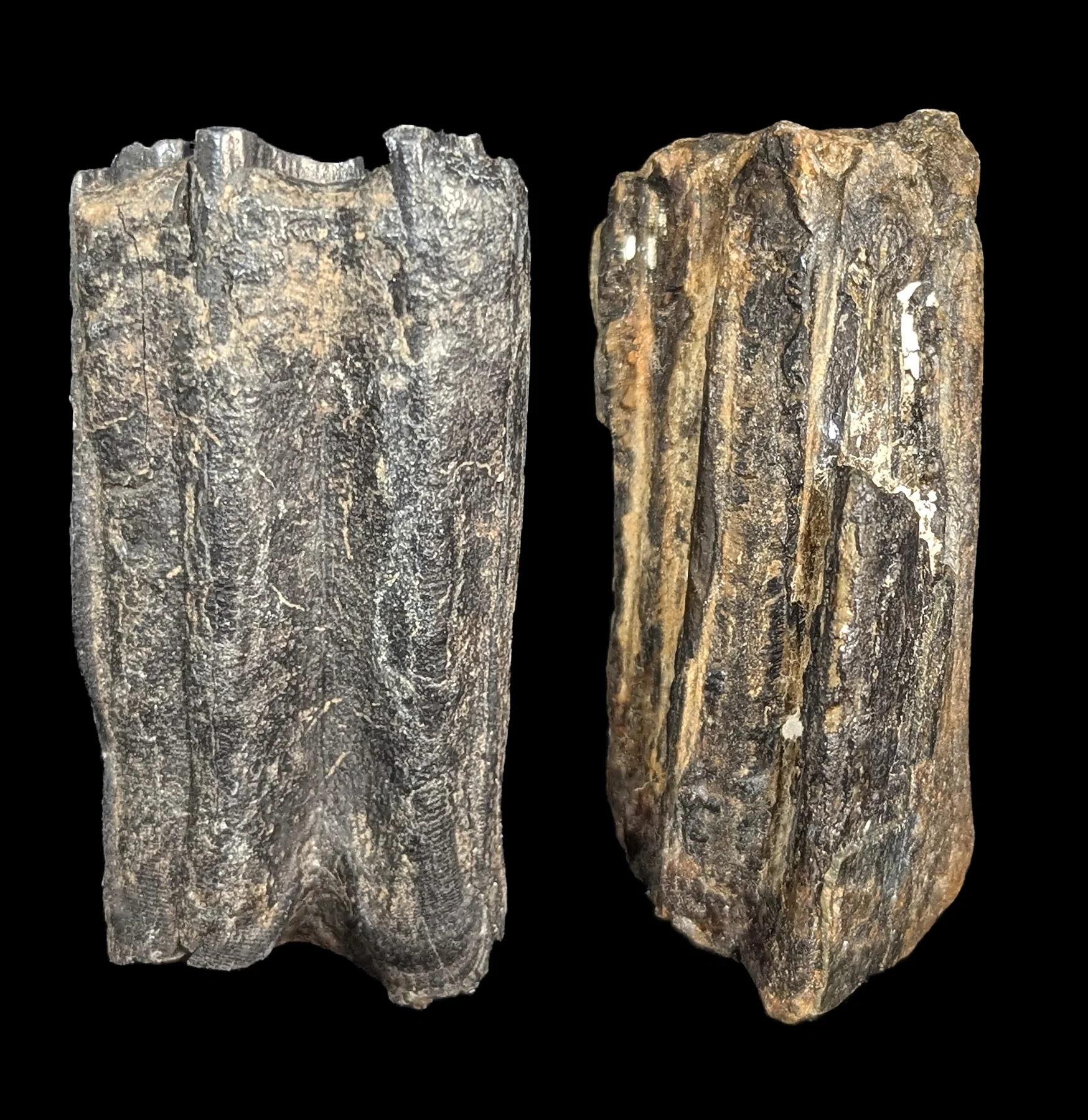
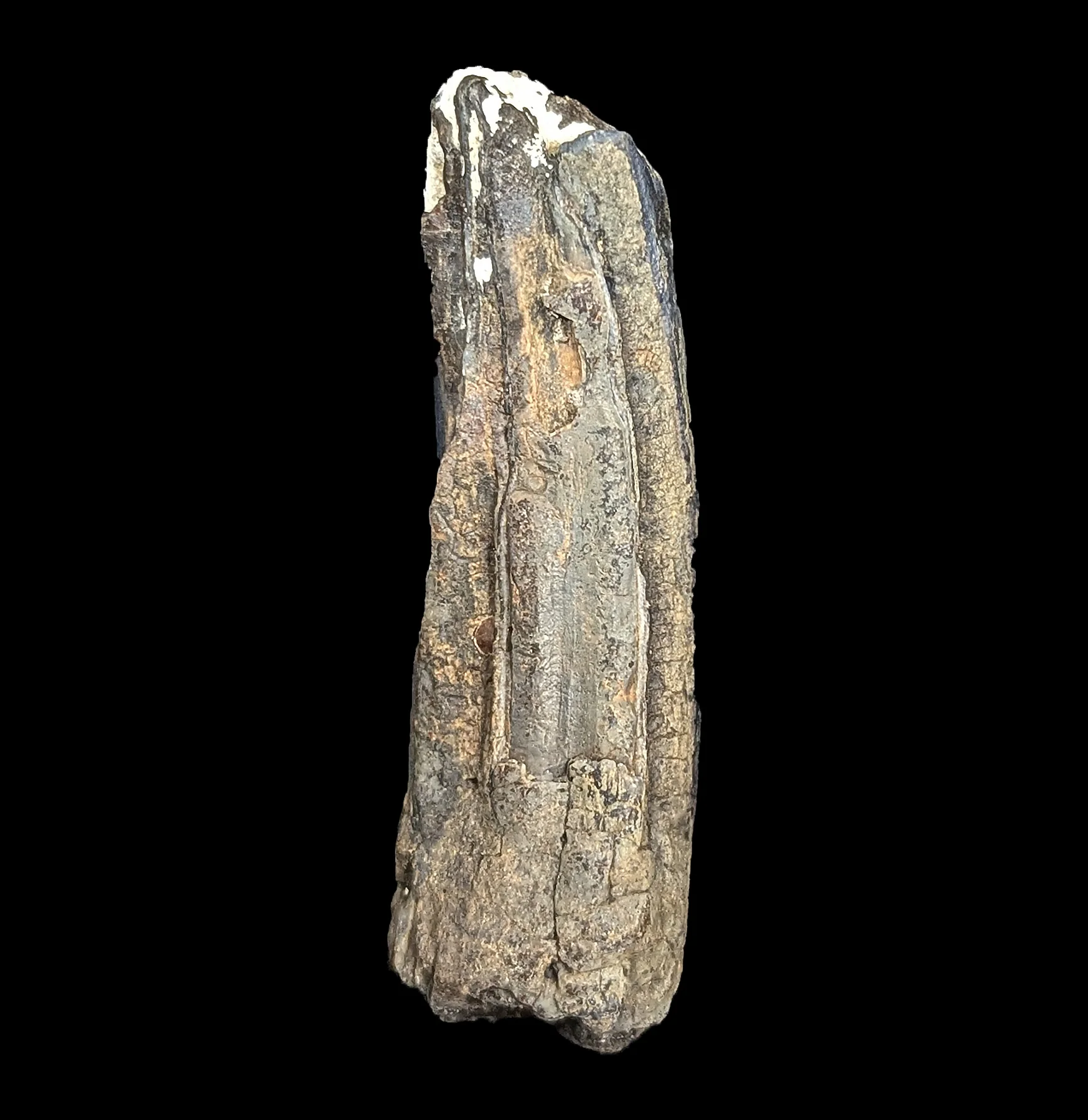
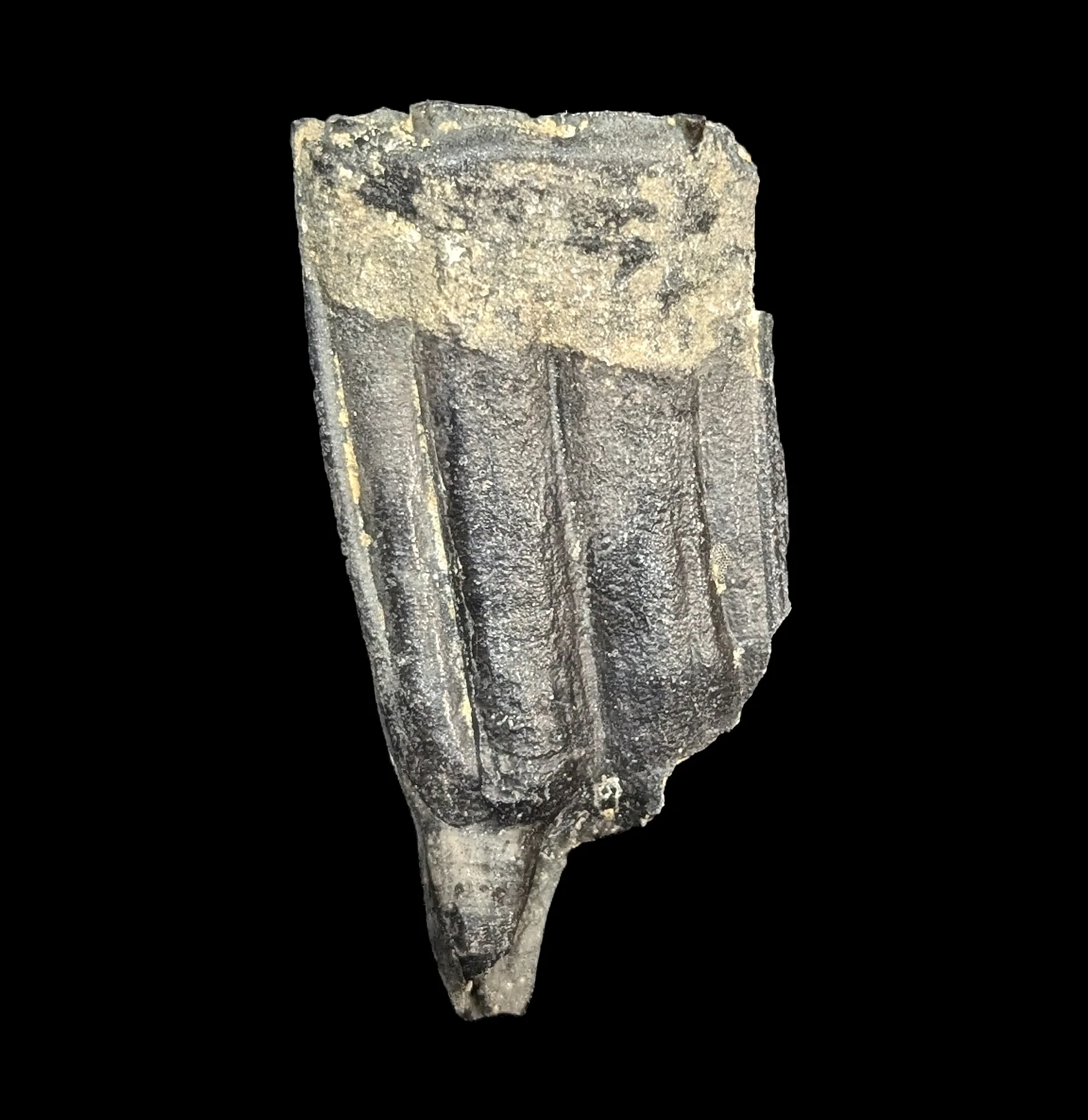
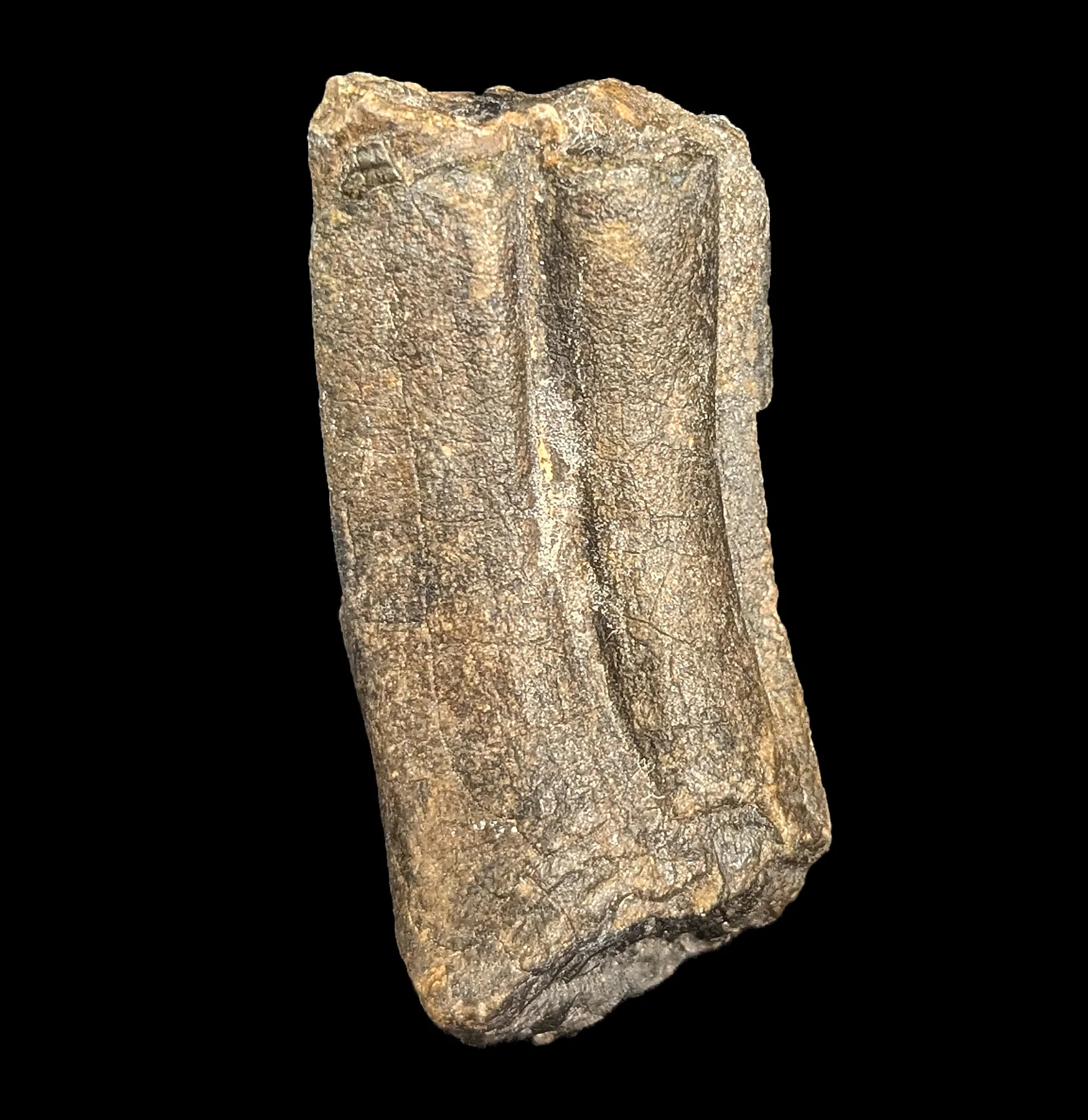
Partial Fossilized Horse Tooth
Sold Individually
Each tooth varies in size. Some are around 4" long and .75" wide while others around around 2" long and 1" wide. If you're looking for a certain size, let us know in the notes at checkout.
The Equus fossil horse is part of the Equidae family, which falls under Perissodactyls, or “odd-toed” ungulates. That just means they put most of their weight on one main toe, which eventually became the single hoof we see in horses today.
The genus Equus includes modern horses, zebras, and donkeys. Equus caballus is the modern domestic horse, but the prehistoric Ice Age horses looked a lot like the tough, stocky horses of Mongolia, especially the Przewalski's horse. They were built to handle cold climates and wide-open grasslands.
Horses actually evolved in North America but went extinct here about 11,000 years ago, likely due to climate change and human hunting. They didn’t return until the 1500s, when Spanish explorers brought them back, reintroducing horses to the continent after thousands of years.
Original: $5.00
-70%$5.00
$1.50Product Information
Product Information
Shipping & Returns
Shipping & Returns
Description
Sold Individually
Each tooth varies in size. Some are around 4" long and .75" wide while others around around 2" long and 1" wide. If you're looking for a certain size, let us know in the notes at checkout.
The Equus fossil horse is part of the Equidae family, which falls under Perissodactyls, or “odd-toed” ungulates. That just means they put most of their weight on one main toe, which eventually became the single hoof we see in horses today.
The genus Equus includes modern horses, zebras, and donkeys. Equus caballus is the modern domestic horse, but the prehistoric Ice Age horses looked a lot like the tough, stocky horses of Mongolia, especially the Przewalski's horse. They were built to handle cold climates and wide-open grasslands.
Horses actually evolved in North America but went extinct here about 11,000 years ago, likely due to climate change and human hunting. They didn’t return until the 1500s, when Spanish explorers brought them back, reintroducing horses to the continent after thousands of years.