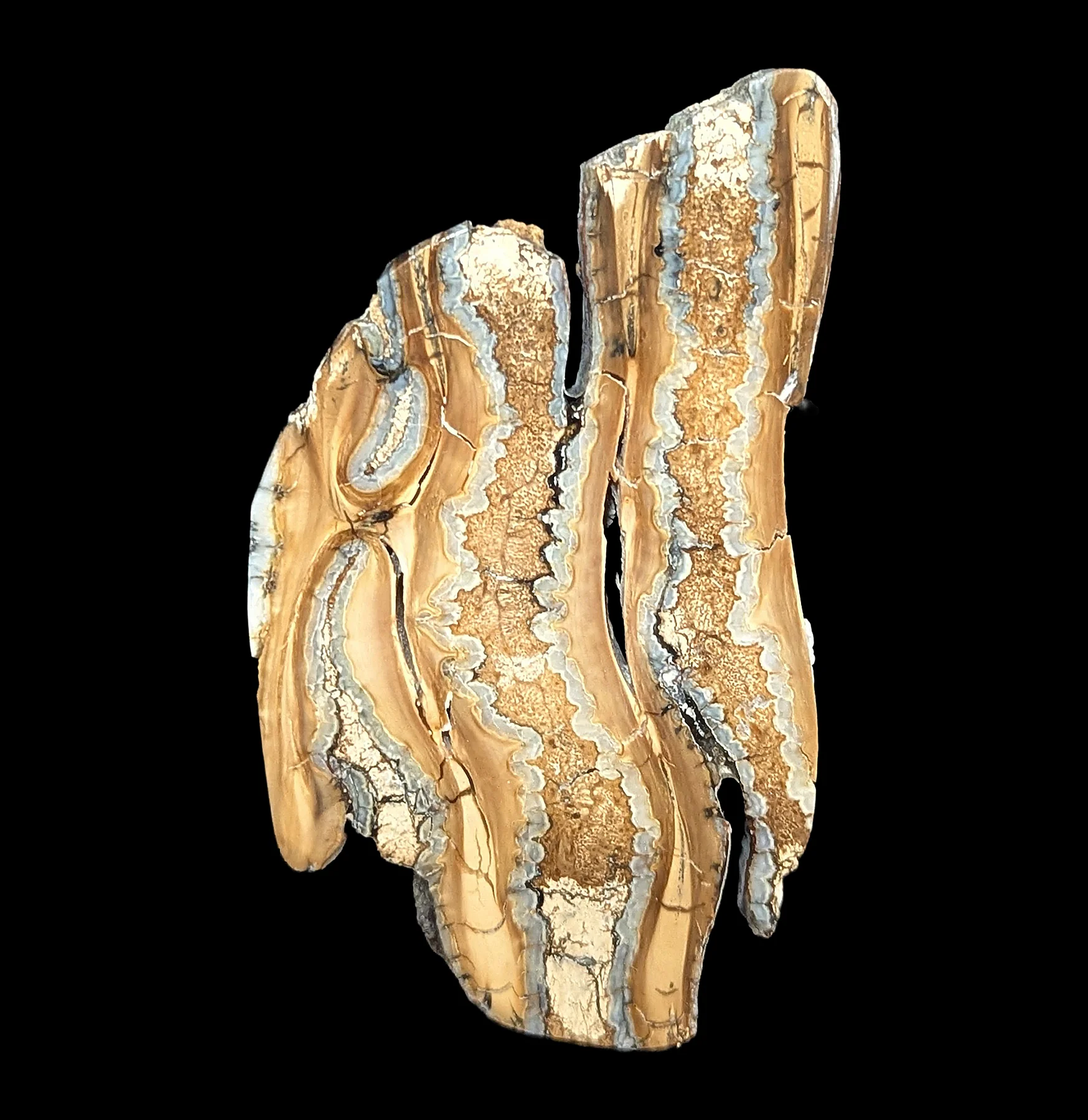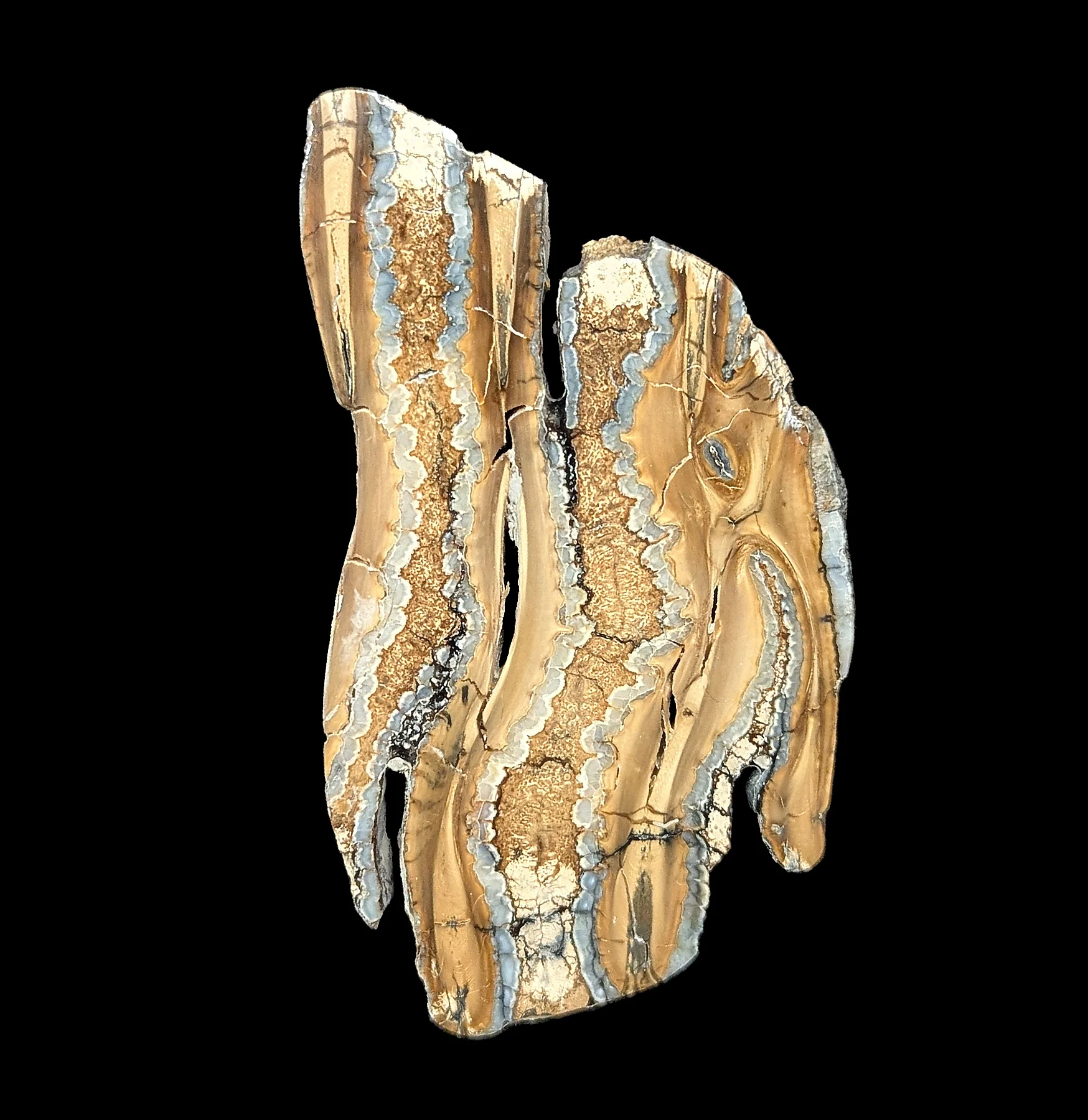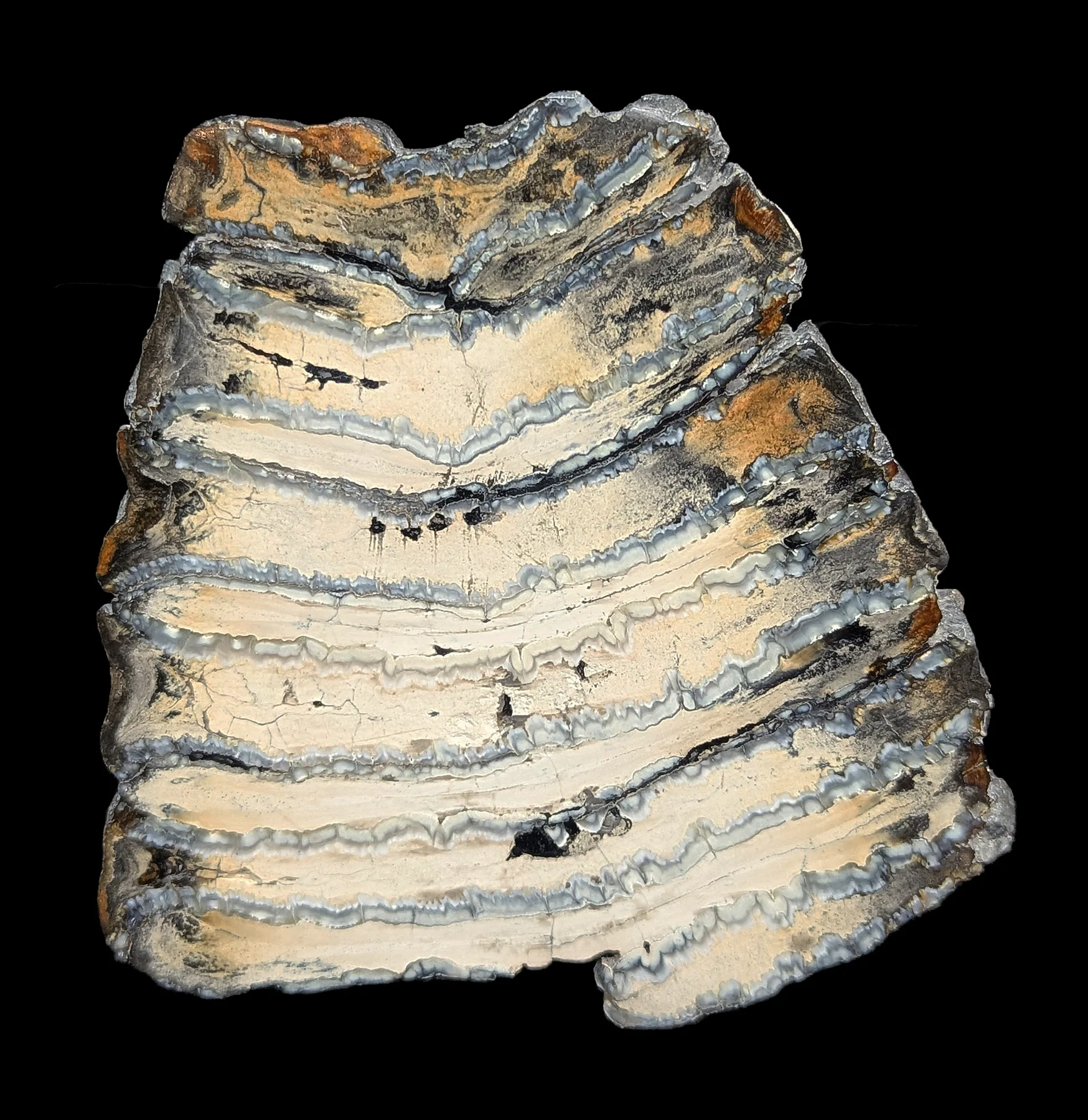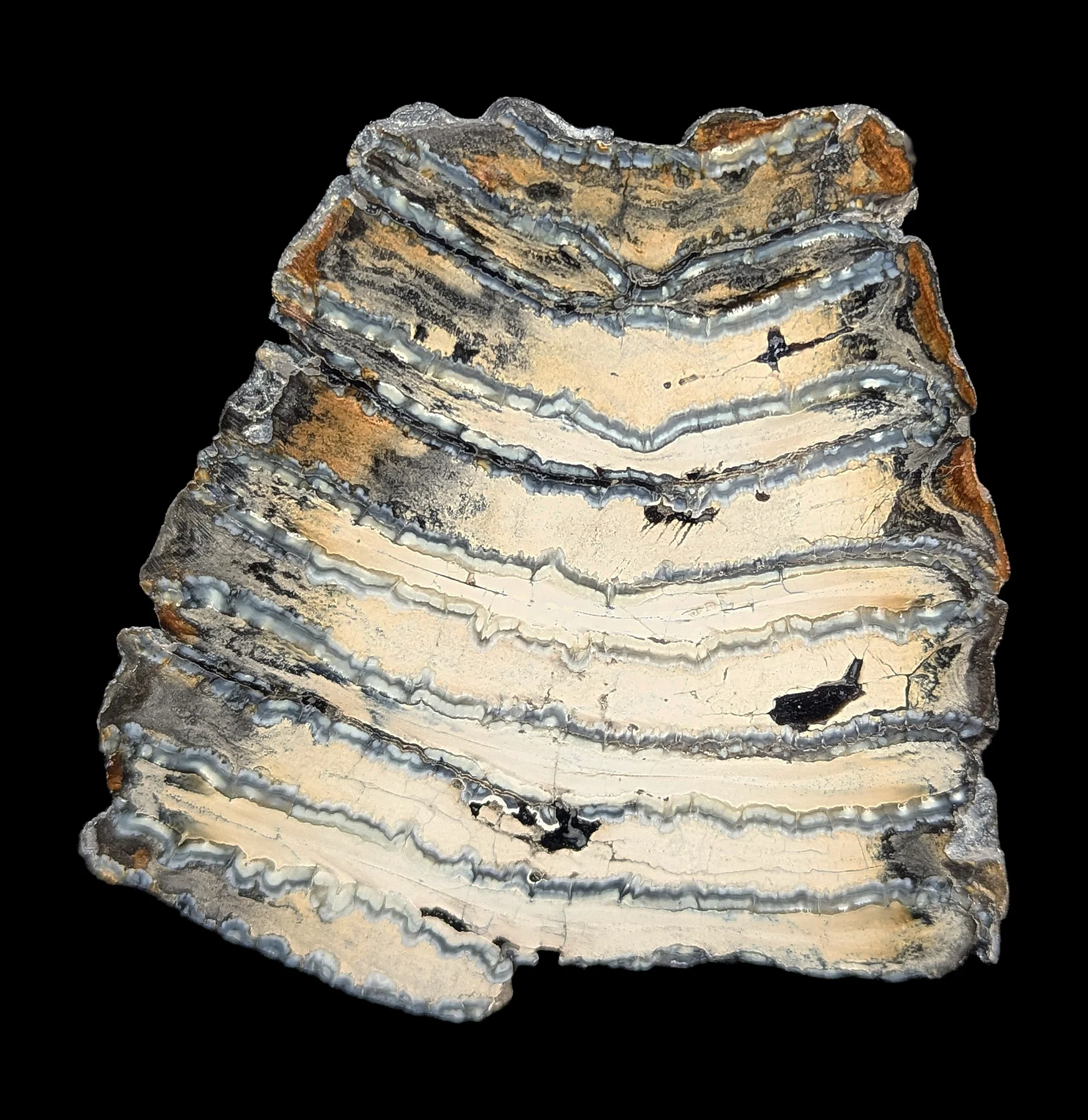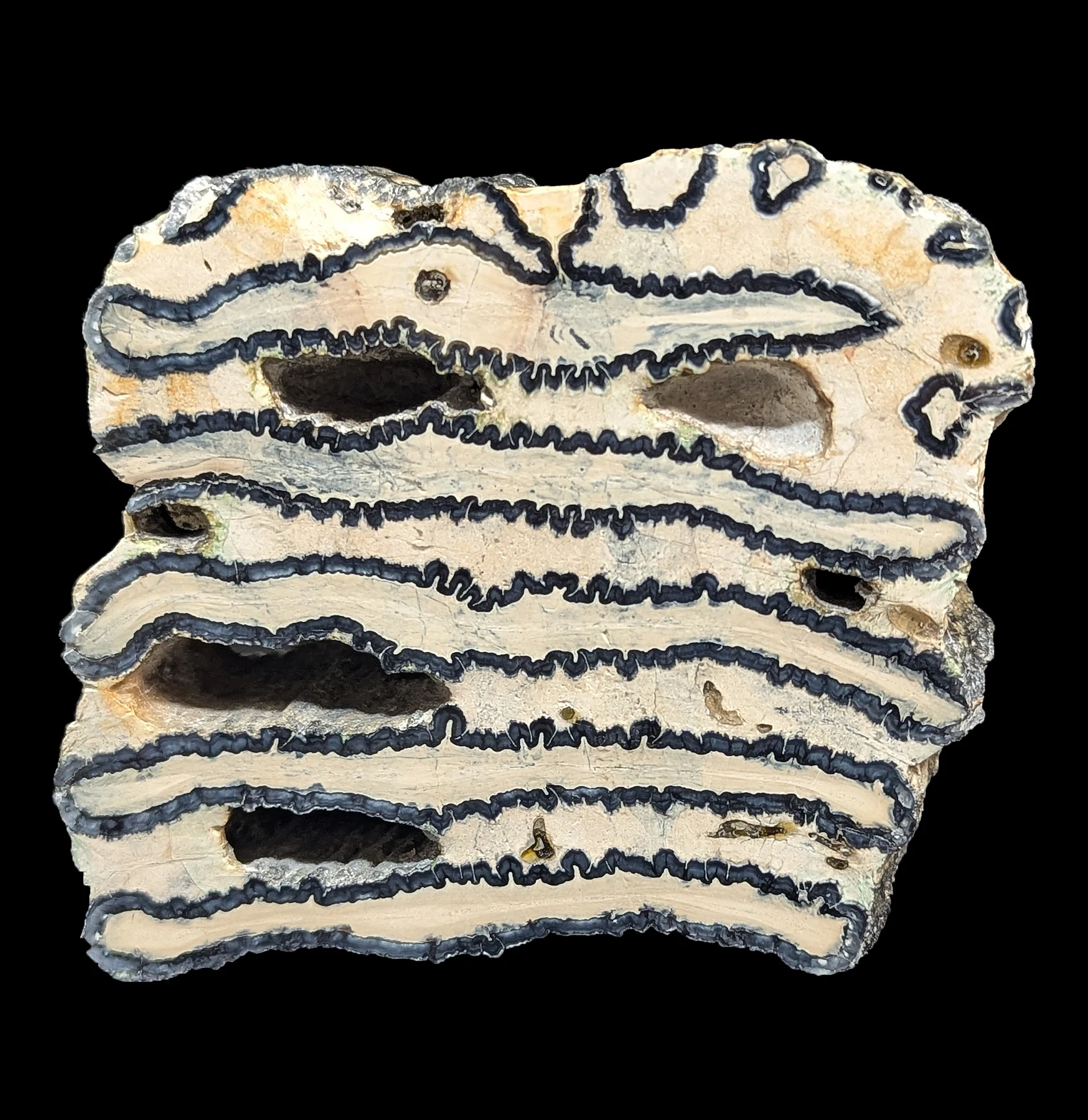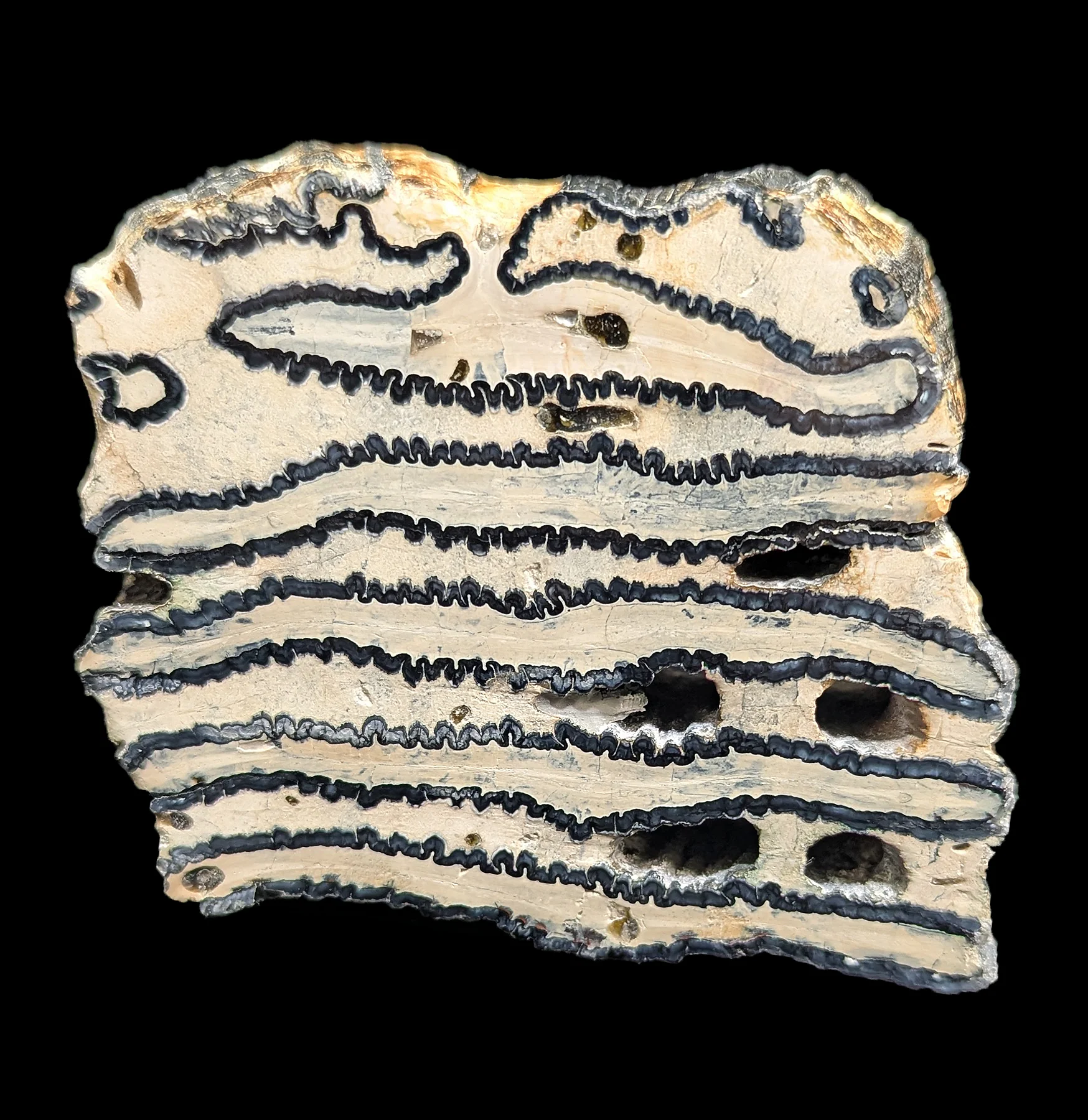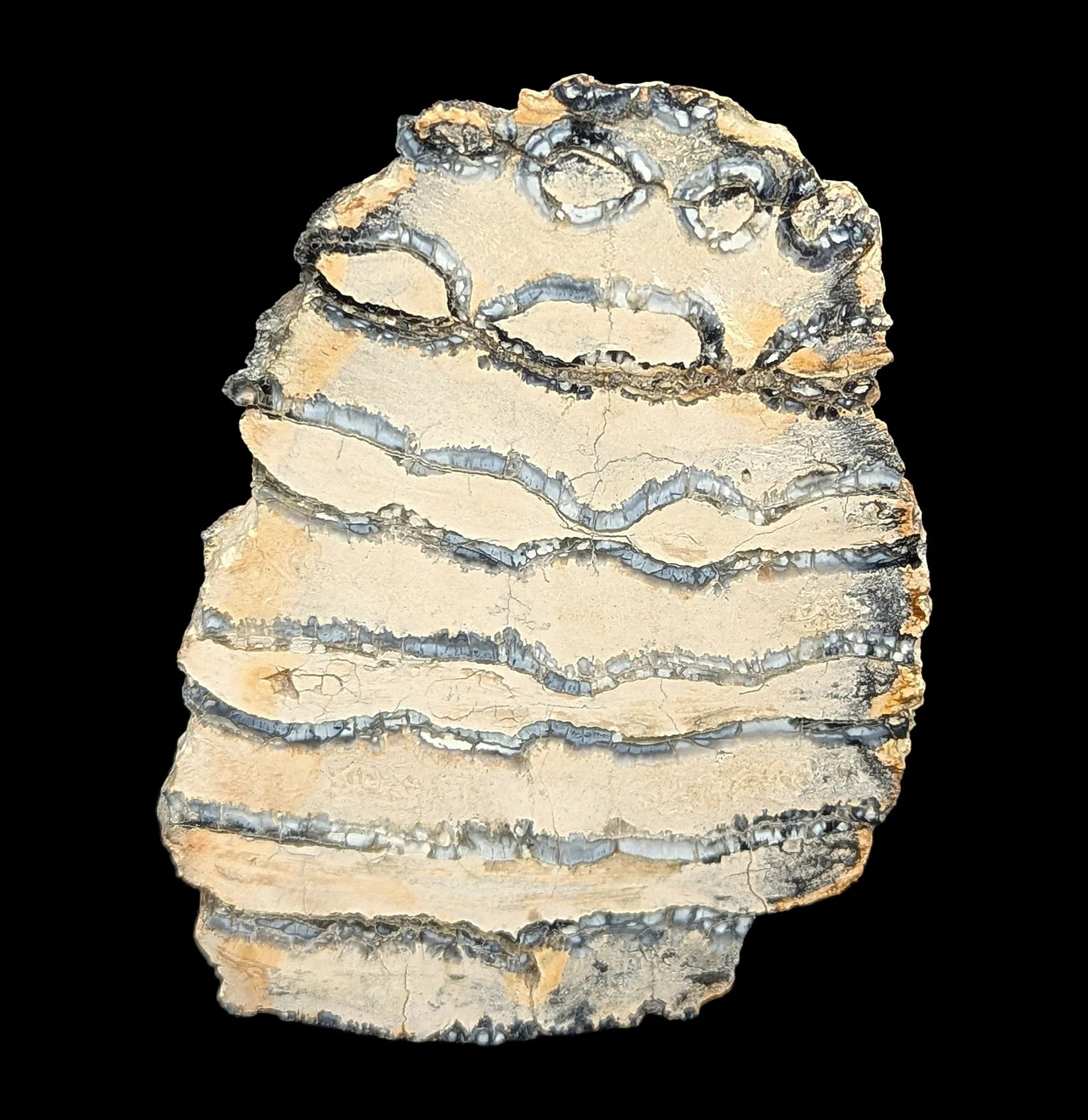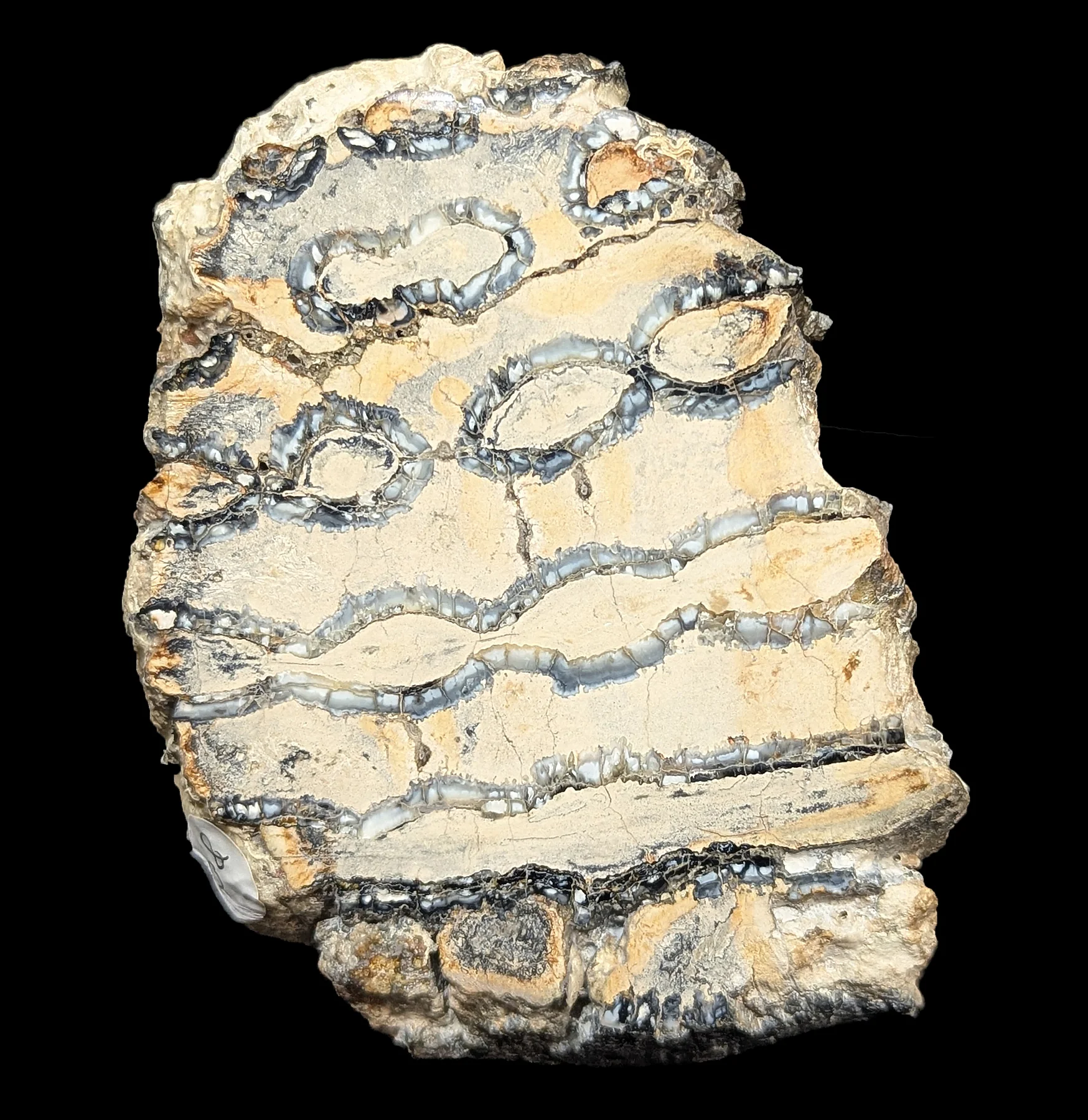
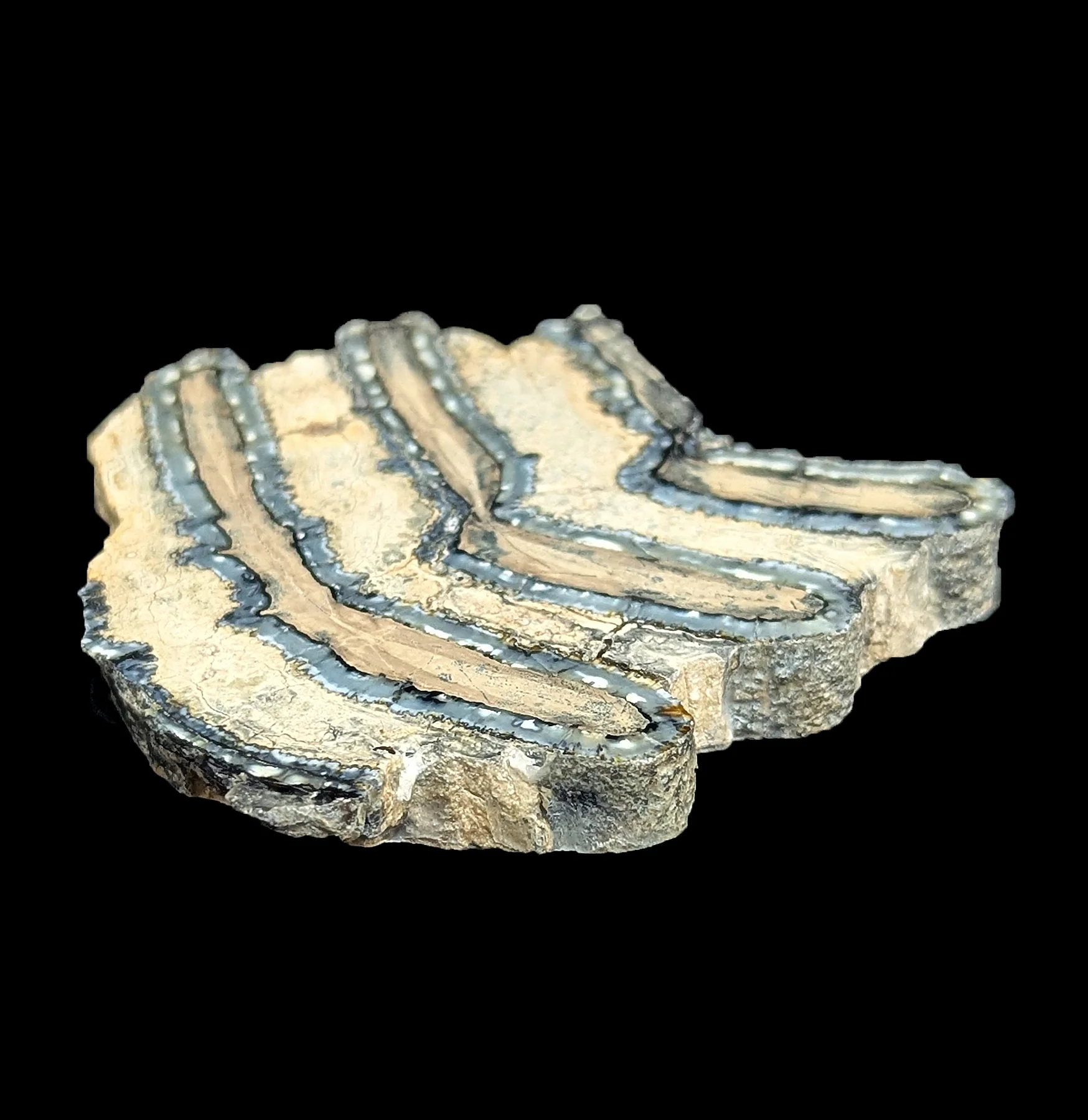
Sliced Mammoth Tooth Fossil Specimen F
Roughly 2.6 million to 11,500 years old
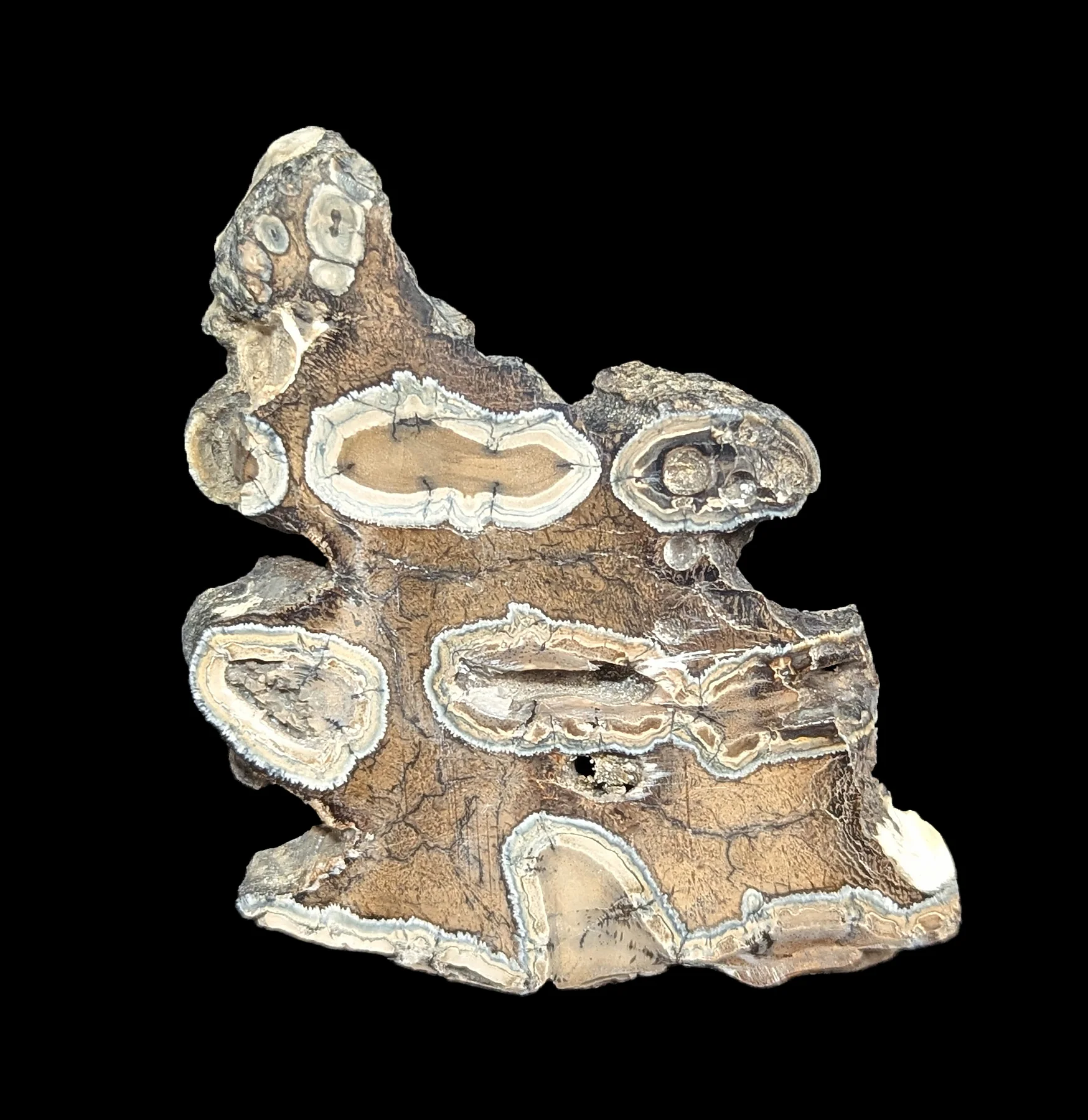
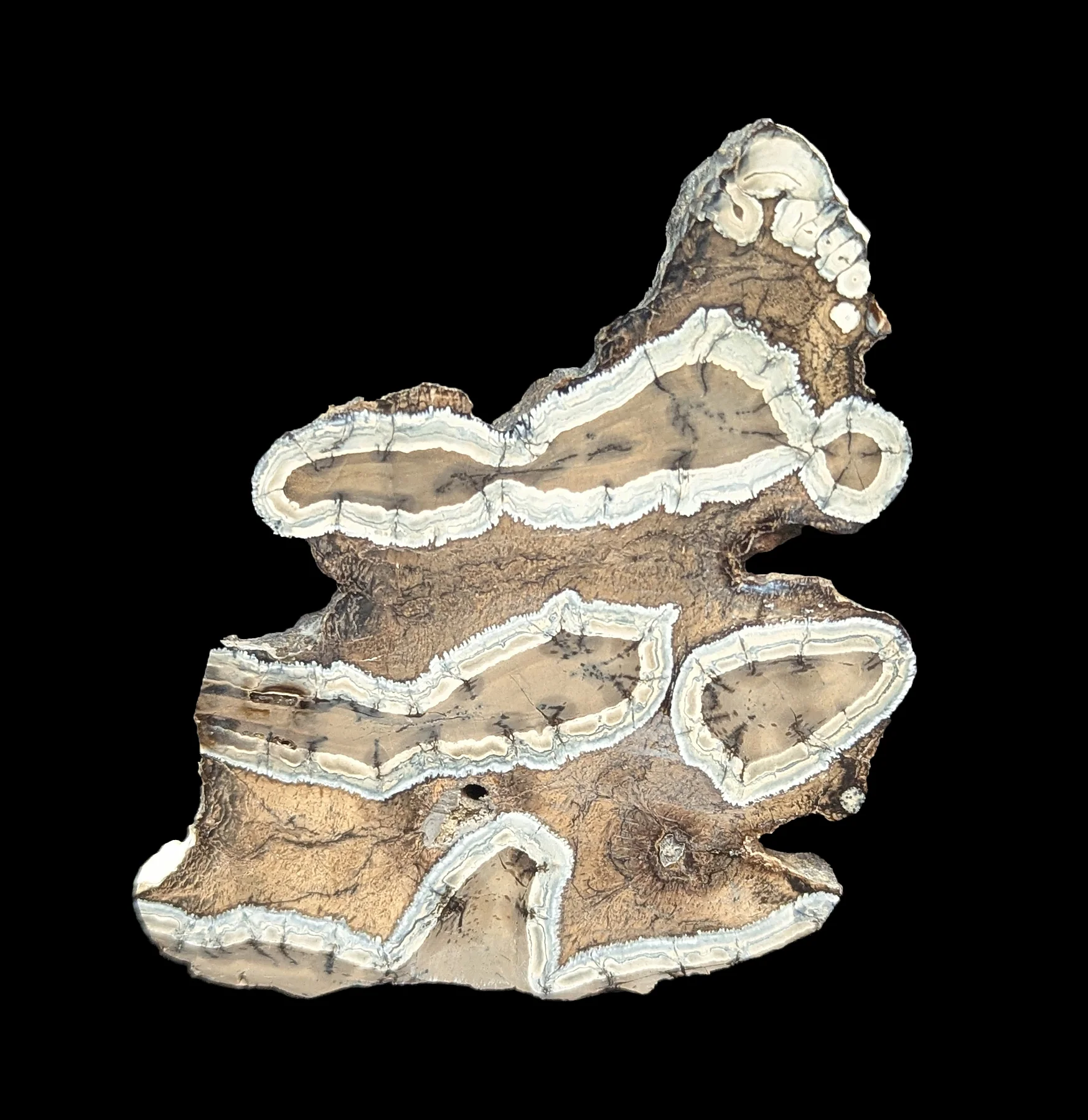
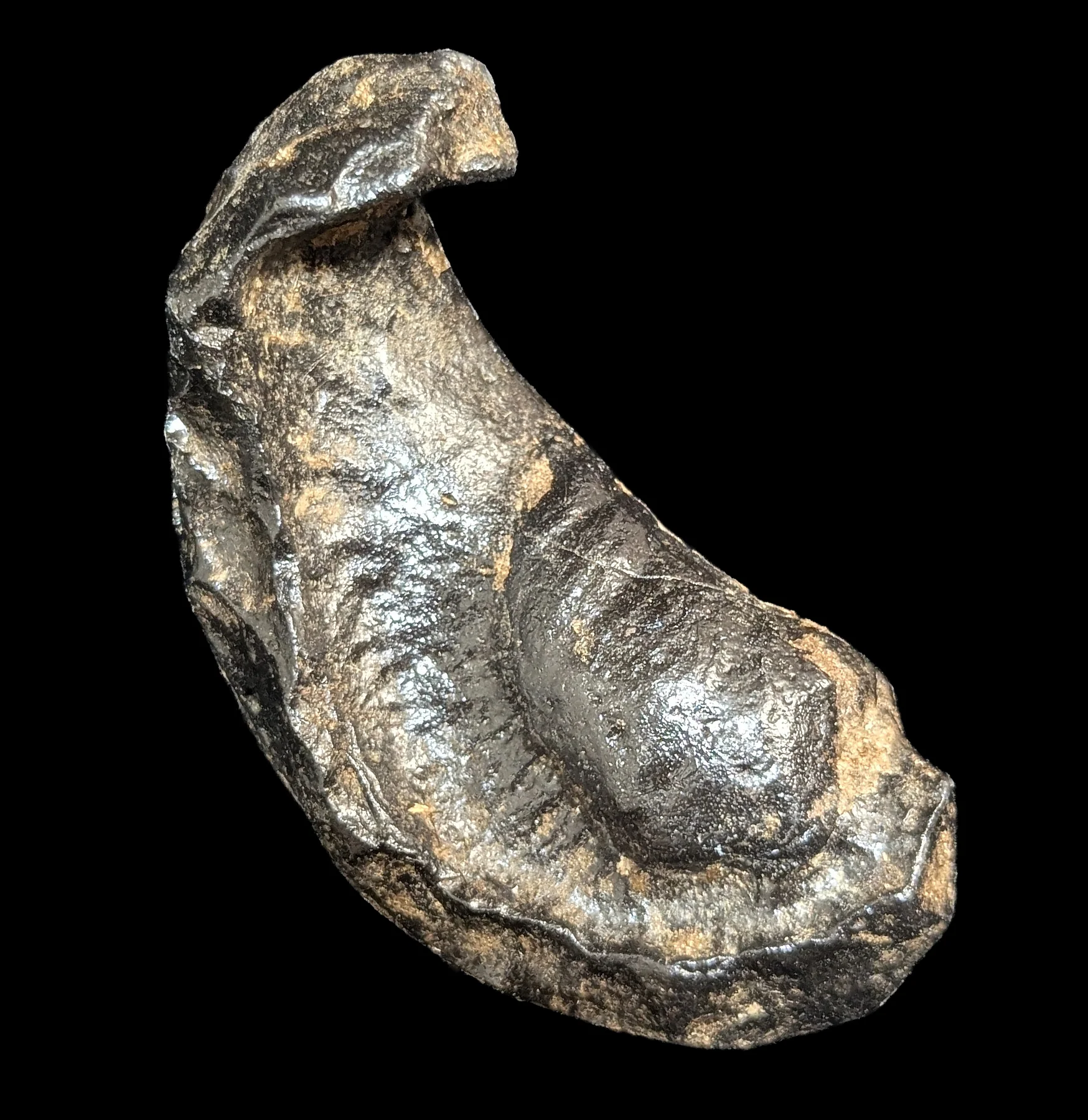
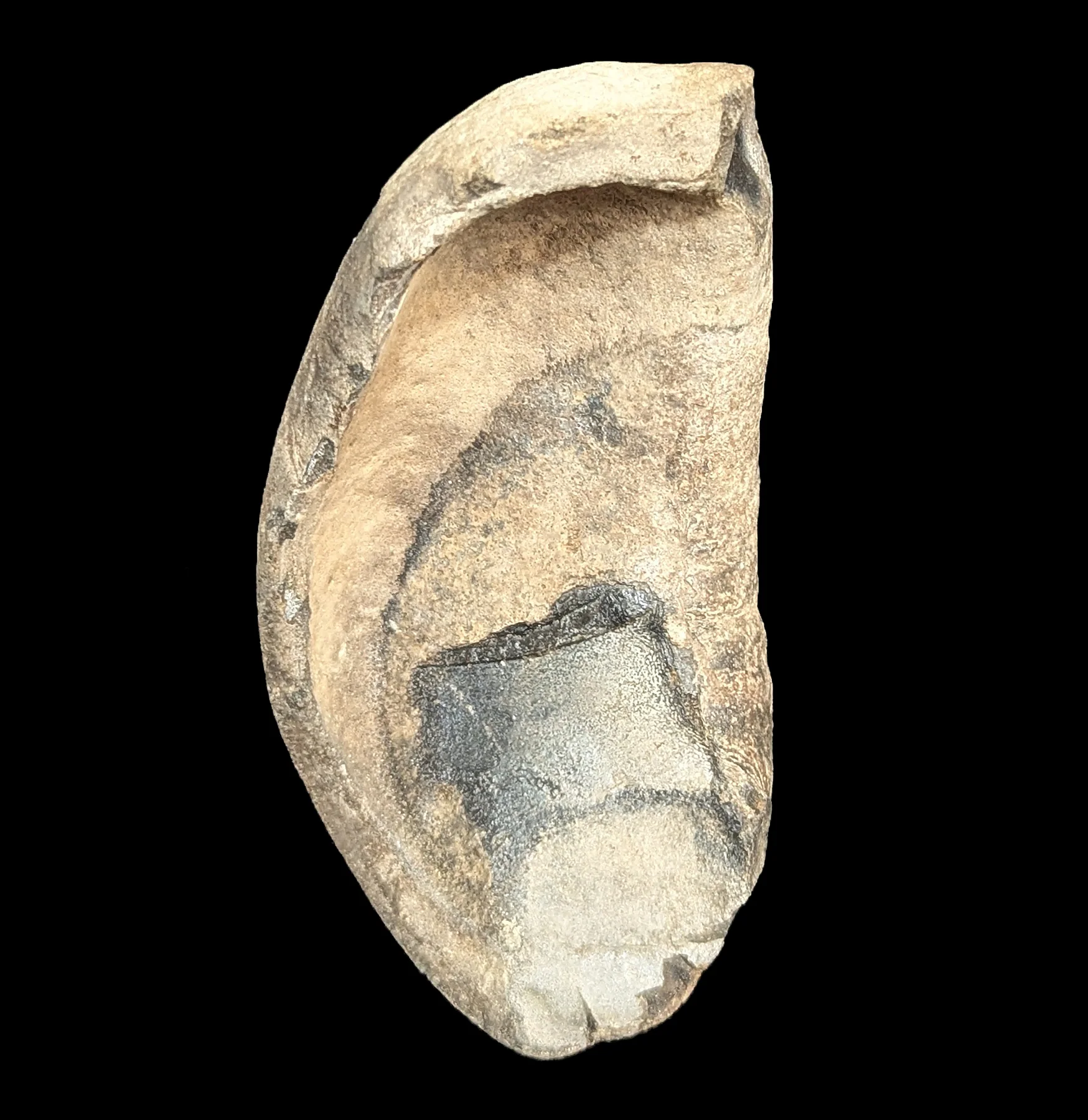
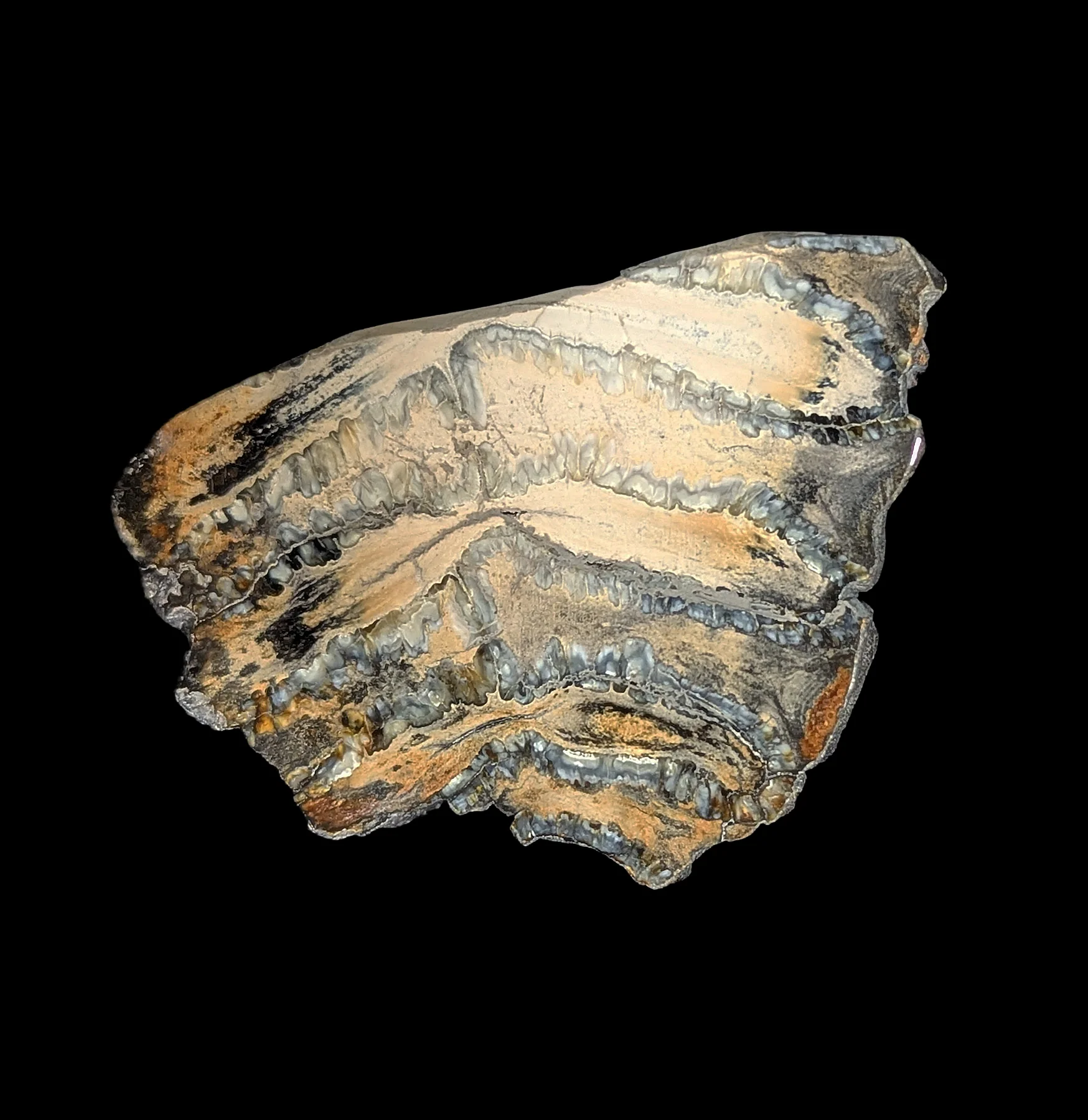
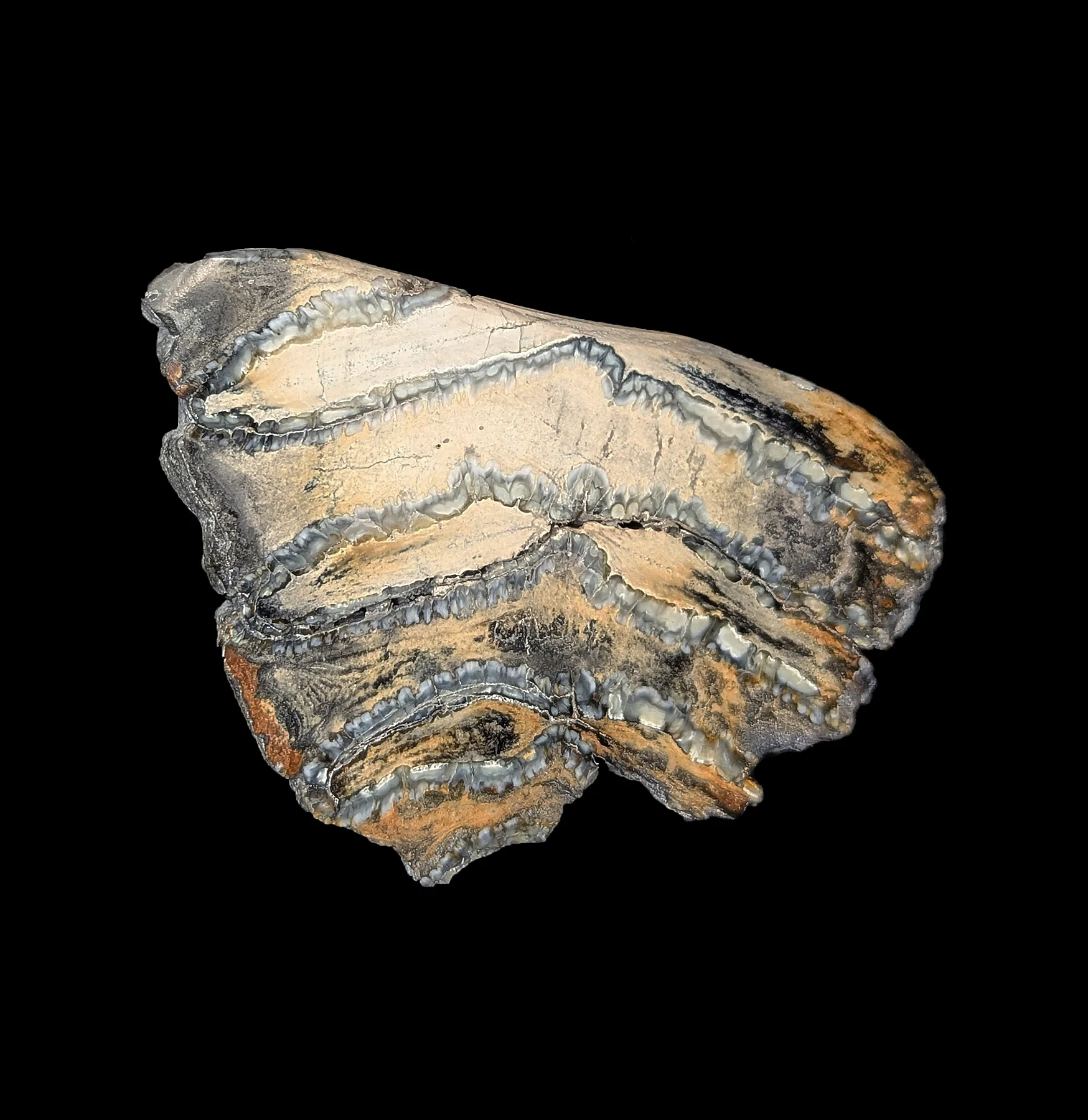
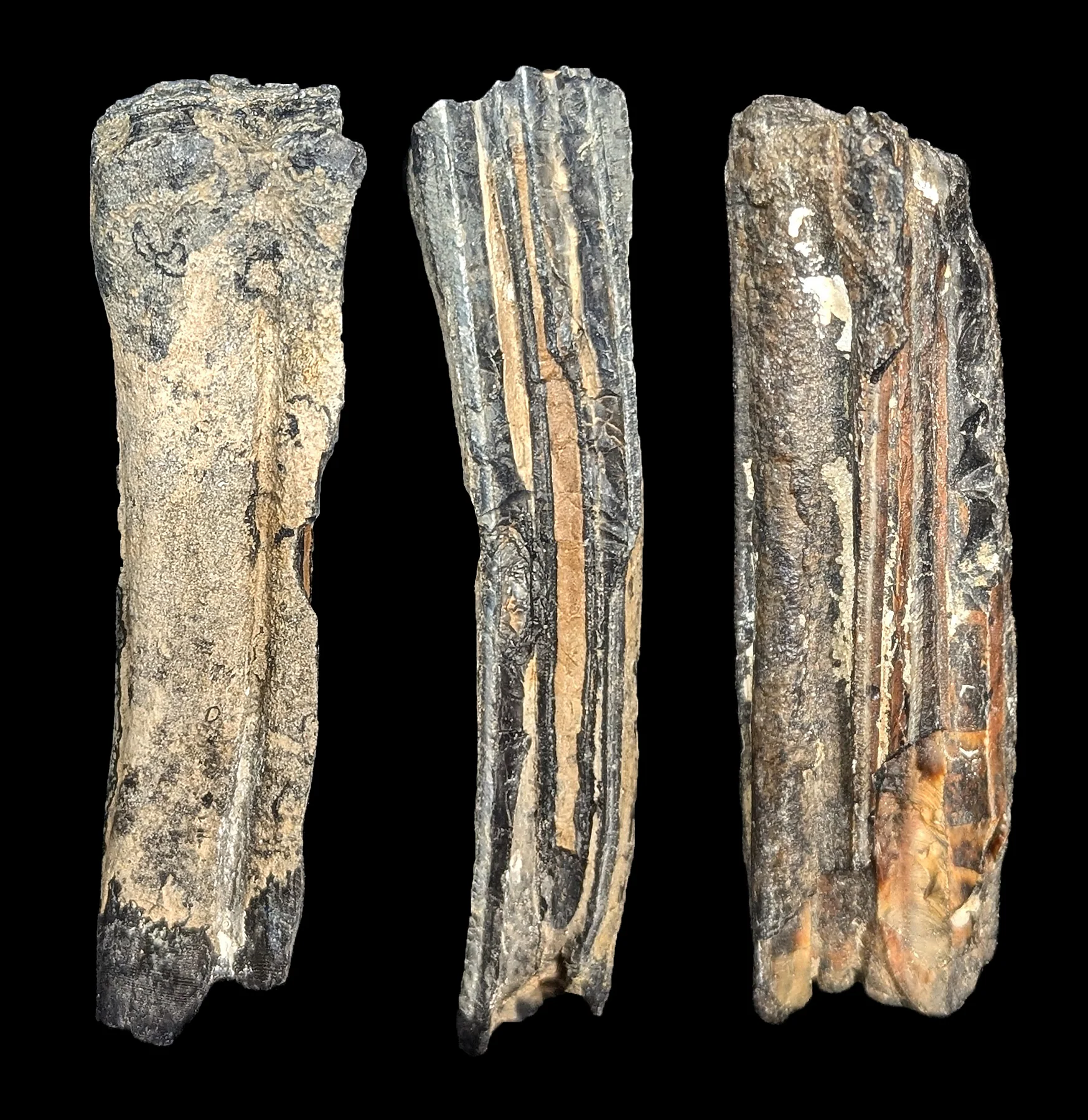
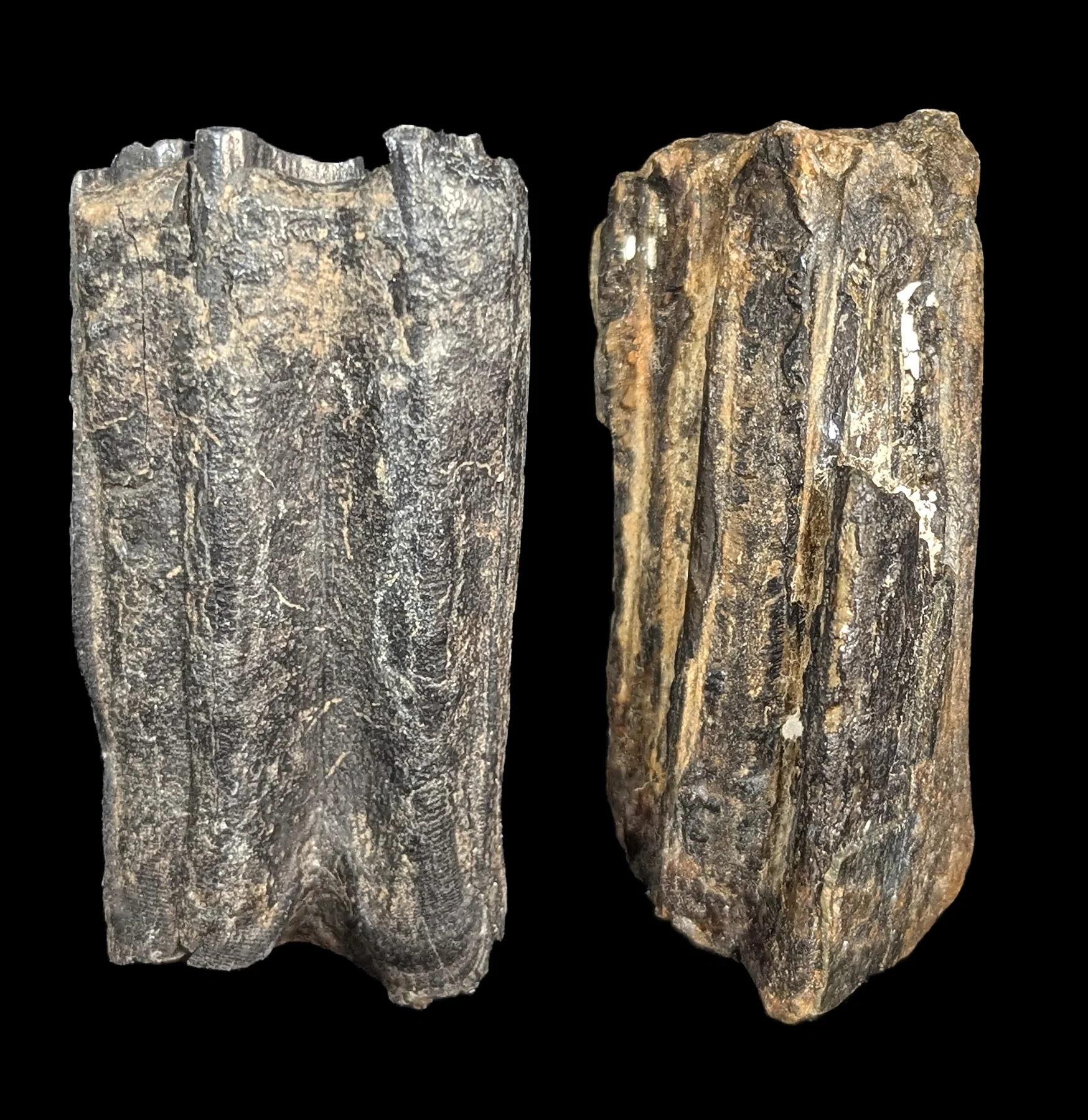
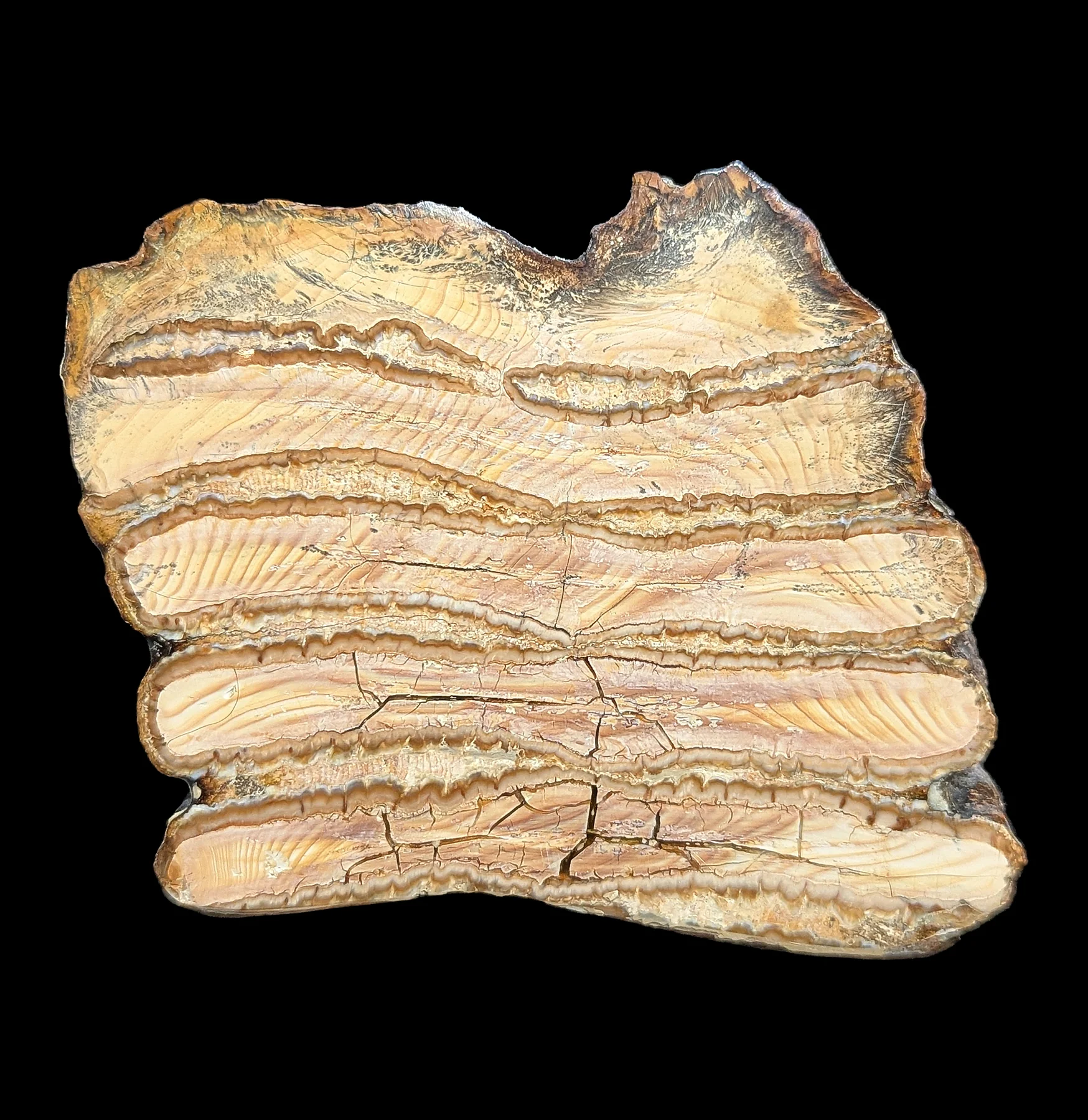
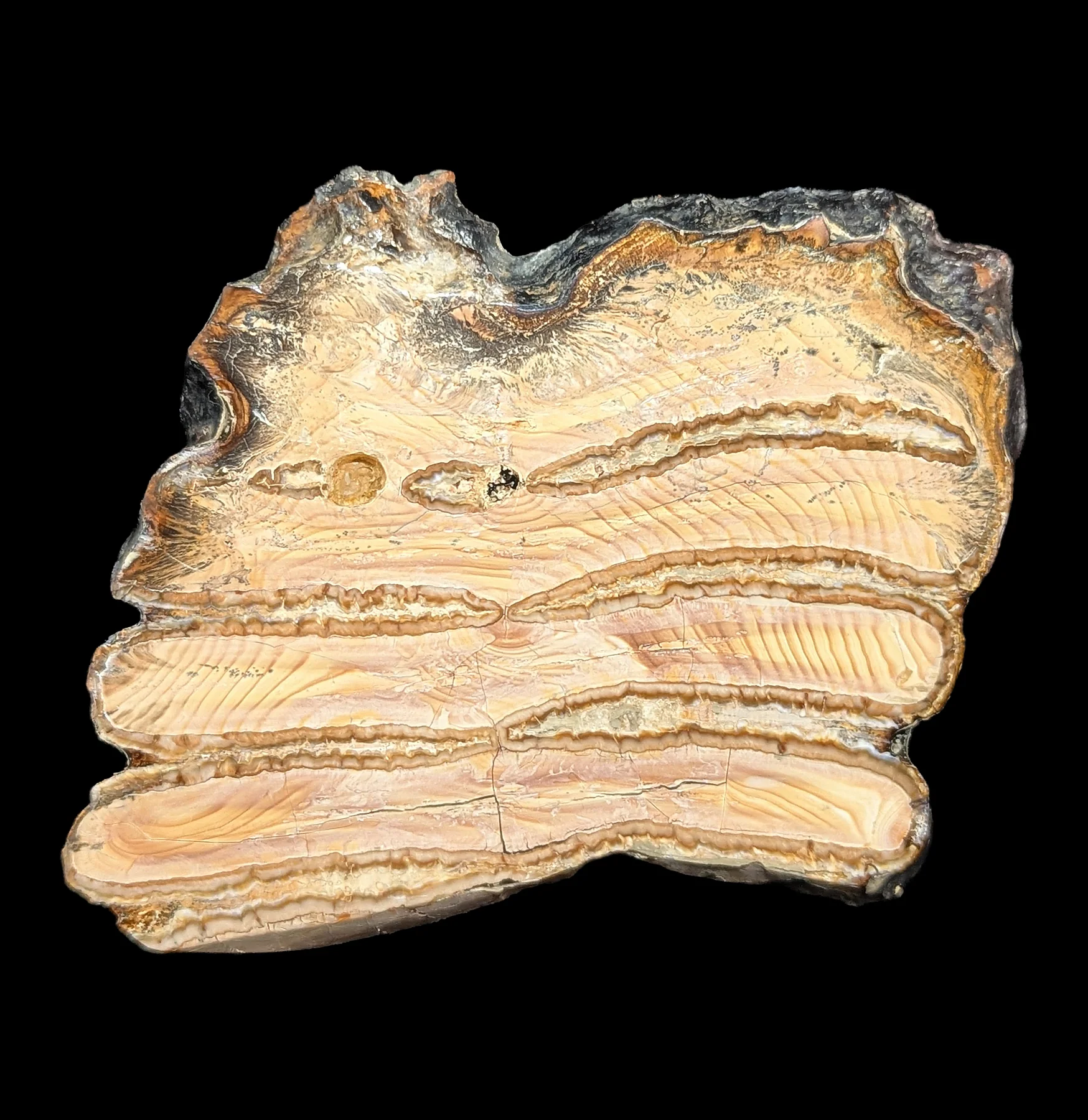
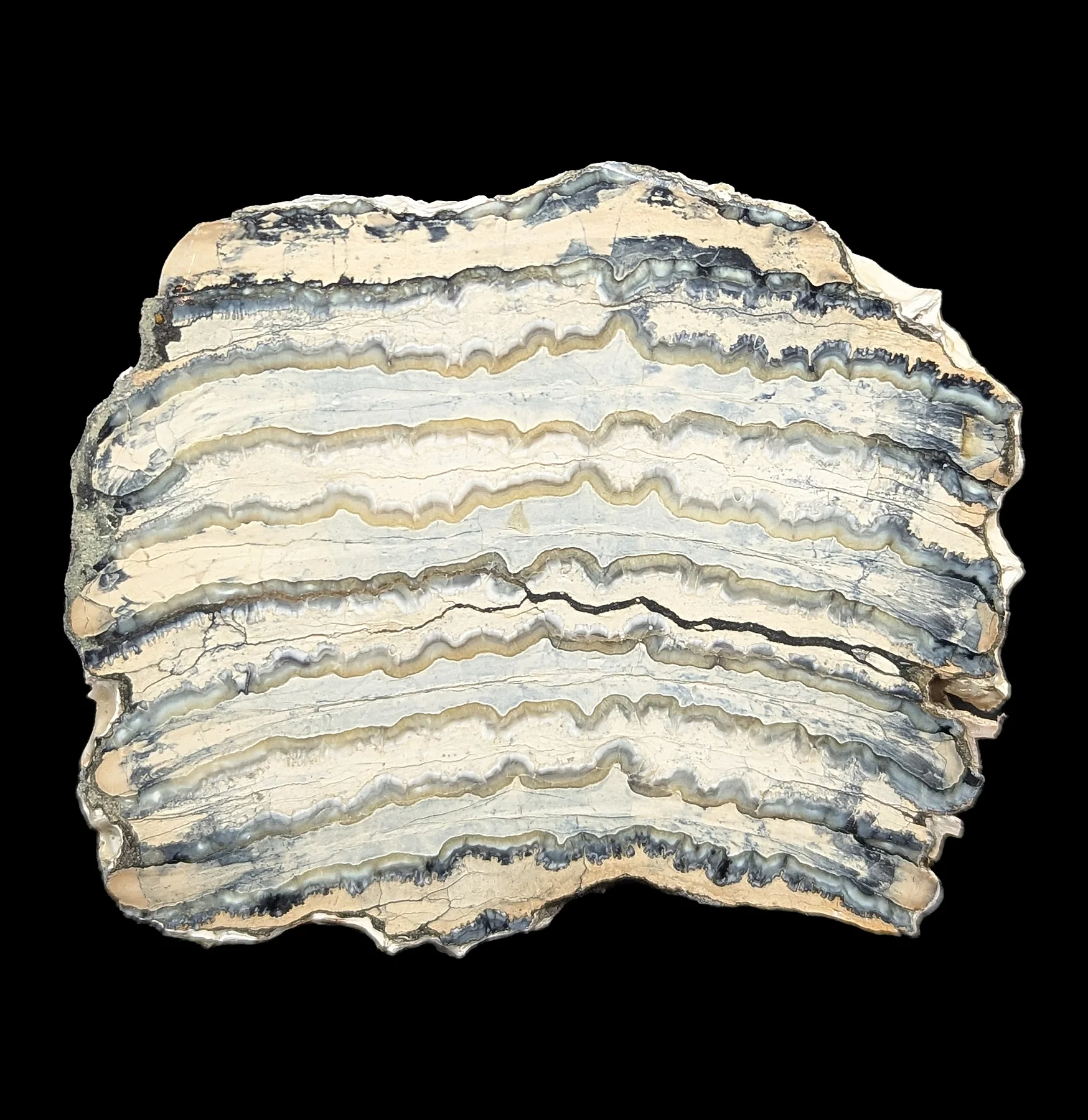
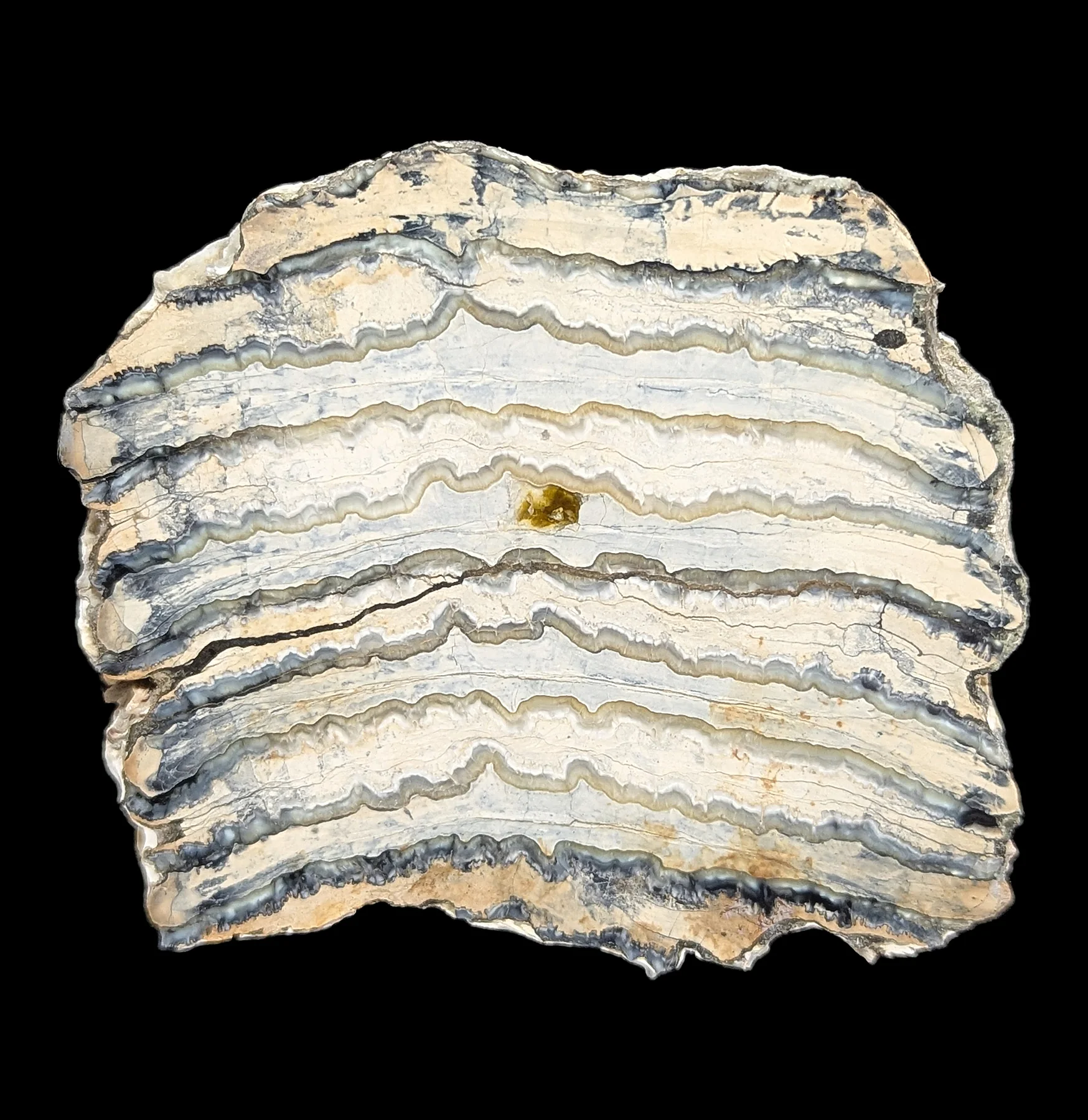
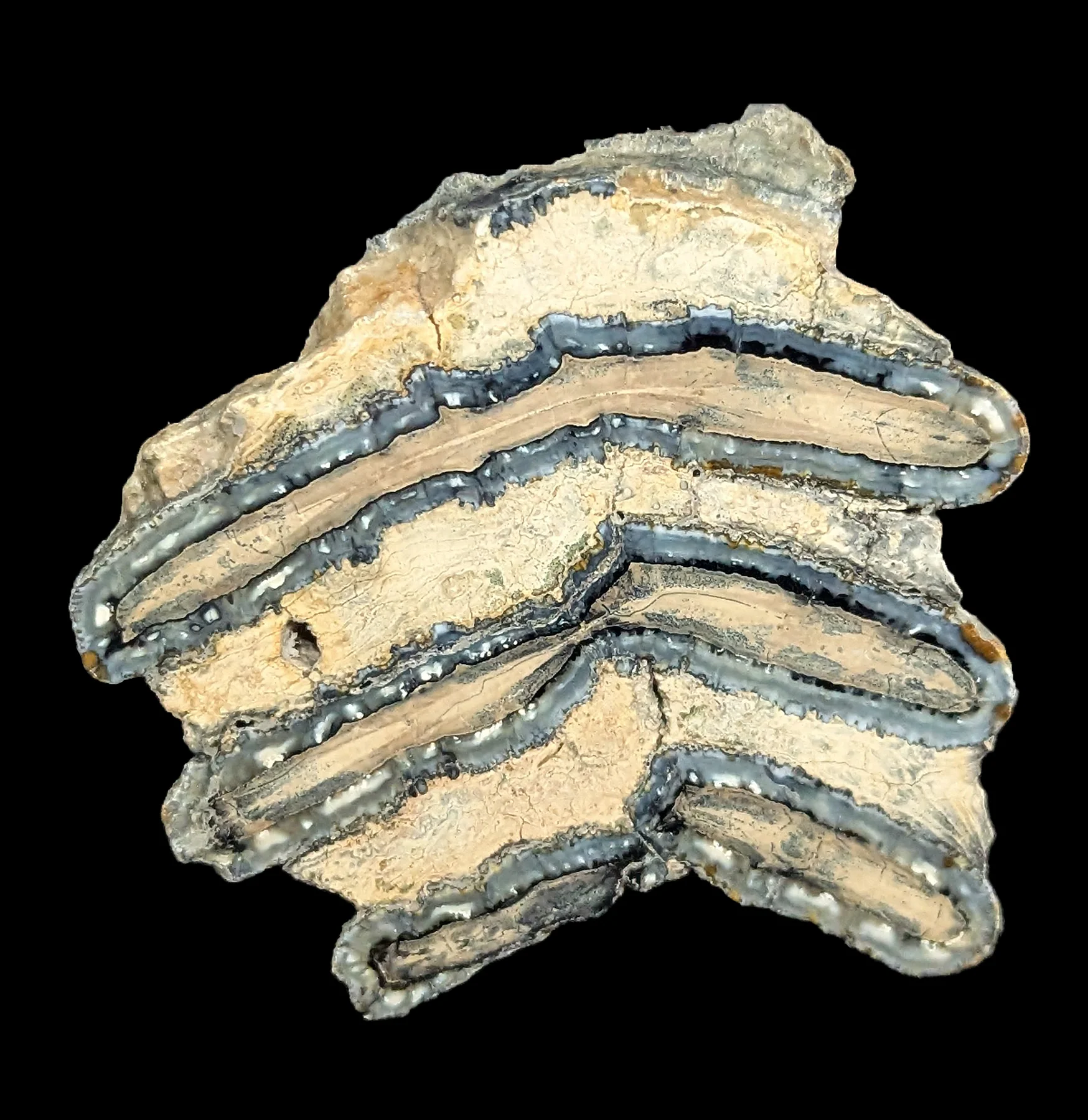
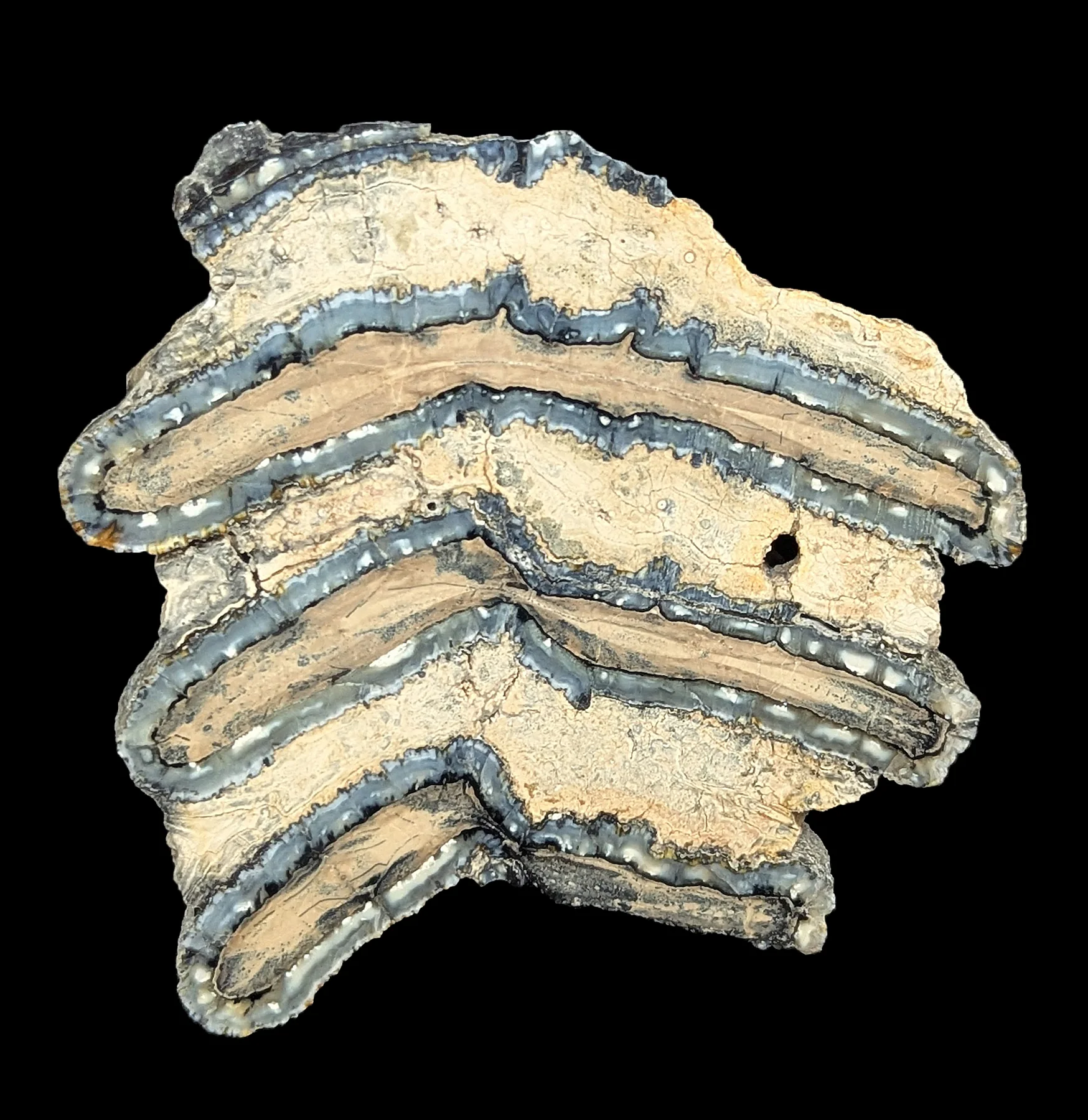
Geodes get all of the attention when it comes to cracking open a wonder from the earth, but as it turns out, fossils are equally, if not more, cool when it comes to what is hidden within. This sliced mammoth tooth reveals an intricate pattern of fossilized bone and contrasting bands of mineralization. Who would have thought something so mesmerizing was waiting inside a tooth?
About the Woolly Mammoth:
Practically the mascot of prehistoric America, these iconic beasts are truly fascinating. For many people, the woolly mammoth is the prime example of an Ice Age mammal. These large, furry elephants were perfectly adapted to living on the Mammoth Steppe of Ice Age Yukon. About the size of an African elephant, a woolly mammoth stood a little over three meters tall at the shoulder and consumed more than 200 kilograms of grass each day.
The discoveries of complete frozen woolly mammoth carcasses have revealed detailed glimpses into the life and appearance of these iconic animals. Some preserved physical characteristics can even be linked back to specific adaptations to life in the cold, for example, thick fur, small ears, and a short tail were all adaptations to minimize heat loss.
Woolly mammoths, like many giant animals of the Ice Age, went extinct as the climate warmed at the end of the last glacial period. Fossils from North America and Asia indicate woolly mammoths disappeared from the mainland around 12,000 years ago. Remarkably, they managed to survive on small Arctic islands off northern Siberia until around 4,000 years ago.
All Paxton Gate specimens are guaranteed to be of the highest quality, sourced from ethical vendors and private collectors around the world.
Original: $120.00
-70%$120.00
$36.00Product Information
Product Information
Shipping & Returns
Shipping & Returns
Description
Roughly 2.6 million to 11,500 years old
Geodes get all of the attention when it comes to cracking open a wonder from the earth, but as it turns out, fossils are equally, if not more, cool when it comes to what is hidden within. This sliced mammoth tooth reveals an intricate pattern of fossilized bone and contrasting bands of mineralization. Who would have thought something so mesmerizing was waiting inside a tooth?
About the Woolly Mammoth:
Practically the mascot of prehistoric America, these iconic beasts are truly fascinating. For many people, the woolly mammoth is the prime example of an Ice Age mammal. These large, furry elephants were perfectly adapted to living on the Mammoth Steppe of Ice Age Yukon. About the size of an African elephant, a woolly mammoth stood a little over three meters tall at the shoulder and consumed more than 200 kilograms of grass each day.
The discoveries of complete frozen woolly mammoth carcasses have revealed detailed glimpses into the life and appearance of these iconic animals. Some preserved physical characteristics can even be linked back to specific adaptations to life in the cold, for example, thick fur, small ears, and a short tail were all adaptations to minimize heat loss.
Woolly mammoths, like many giant animals of the Ice Age, went extinct as the climate warmed at the end of the last glacial period. Fossils from North America and Asia indicate woolly mammoths disappeared from the mainland around 12,000 years ago. Remarkably, they managed to survive on small Arctic islands off northern Siberia until around 4,000 years ago.
All Paxton Gate specimens are guaranteed to be of the highest quality, sourced from ethical vendors and private collectors around the world.